Sagittarius
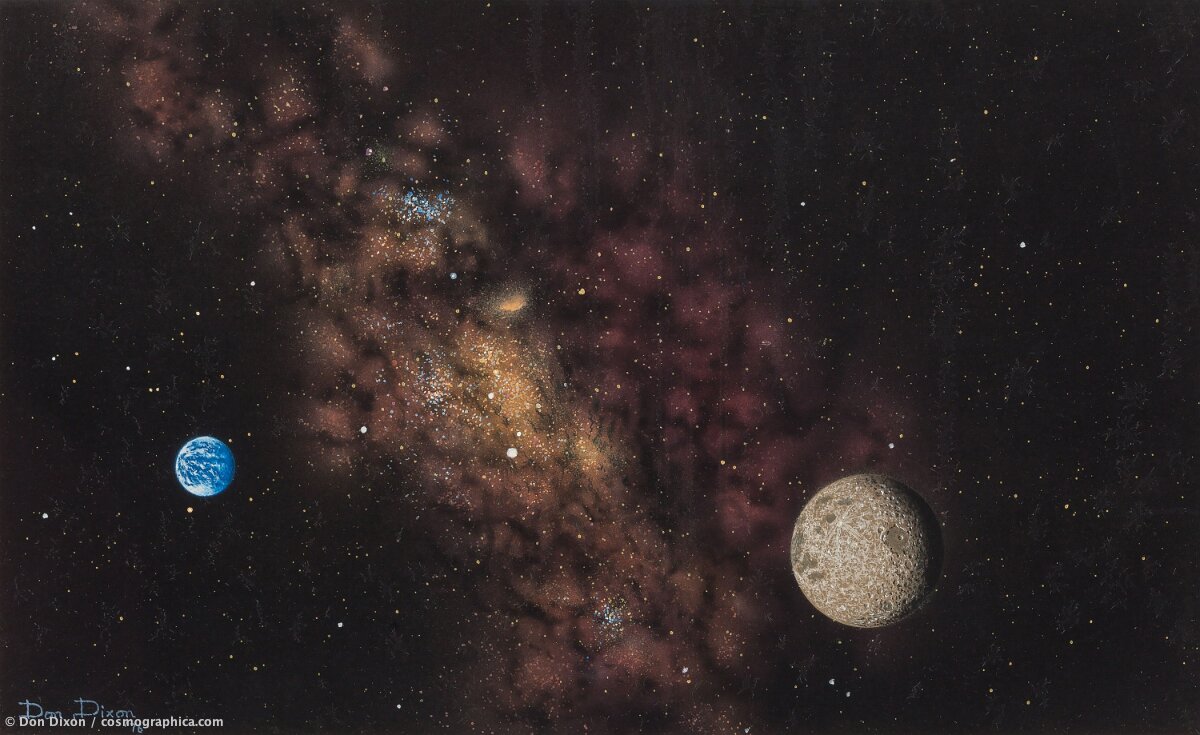
078-sagittarius-dixon – This illustration depicts a wide cosmic vista focused on a dense, reddish-brown band of the Milky Way star clouds towards the Sagittarius constellation, rich with clusters and dark nebulae. In the foreground, a heavily cratered, airless moon hangs on the lower right, balancing a bright blue, cloud-covered Earth. The background is speckled with fine field stars, framing the two planetary bodies within the vast expanse of the galactic core region. ; acrylic on illustration board, Don Dixon 1976
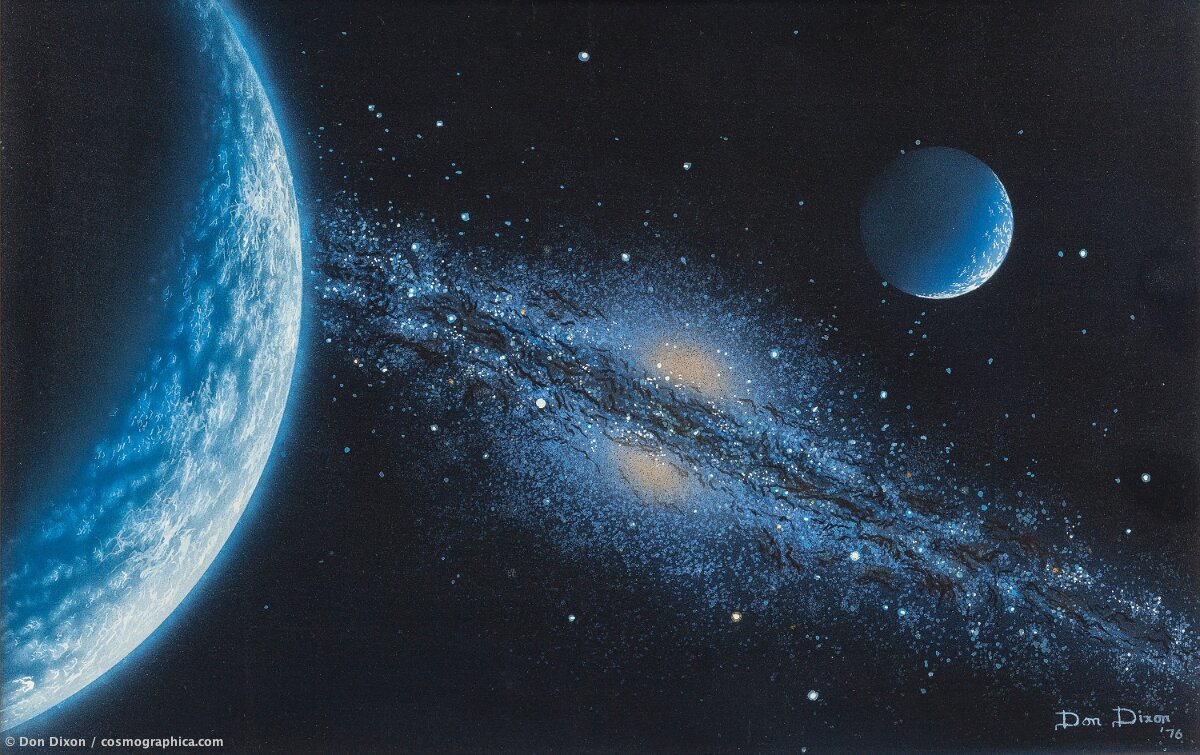
079-view-from-the-periphery-dixon ; The lenticular shape of the Milky Way galaxy becomes apparent when viewed from outside. Acrylic and gouache on illustration board, 1976, Don Dixon
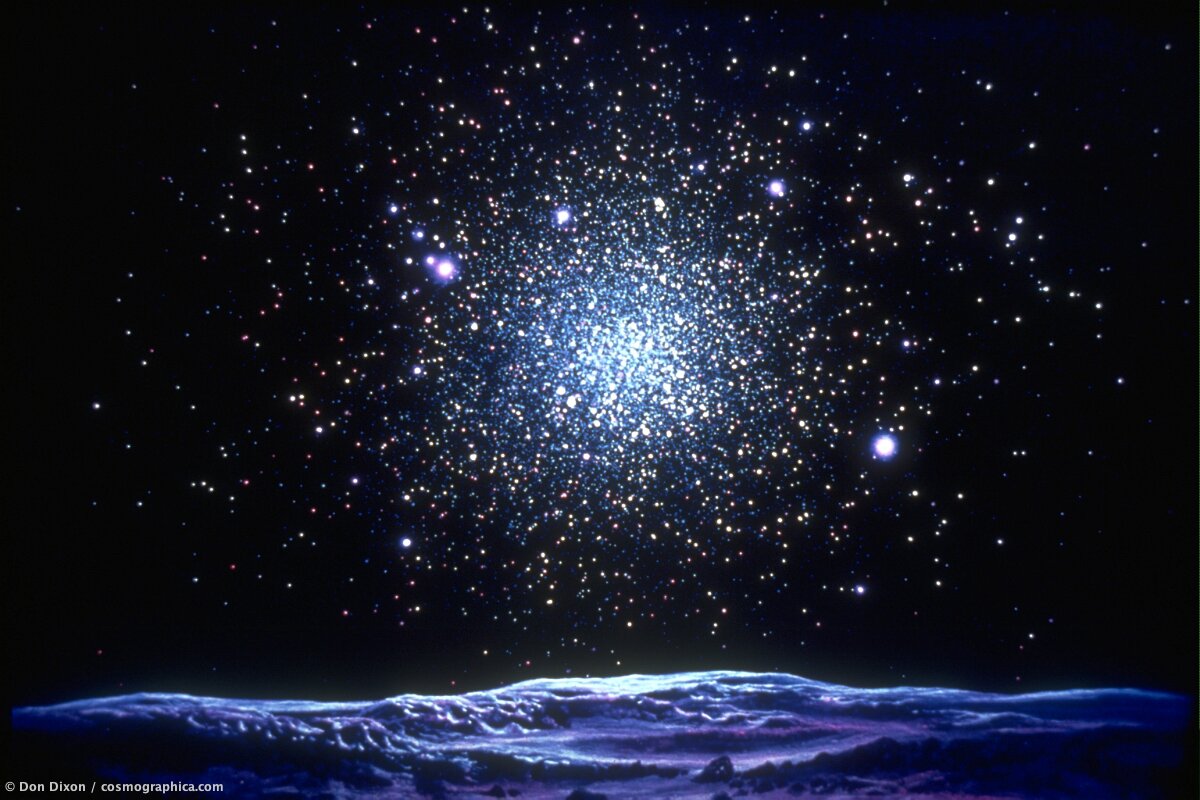
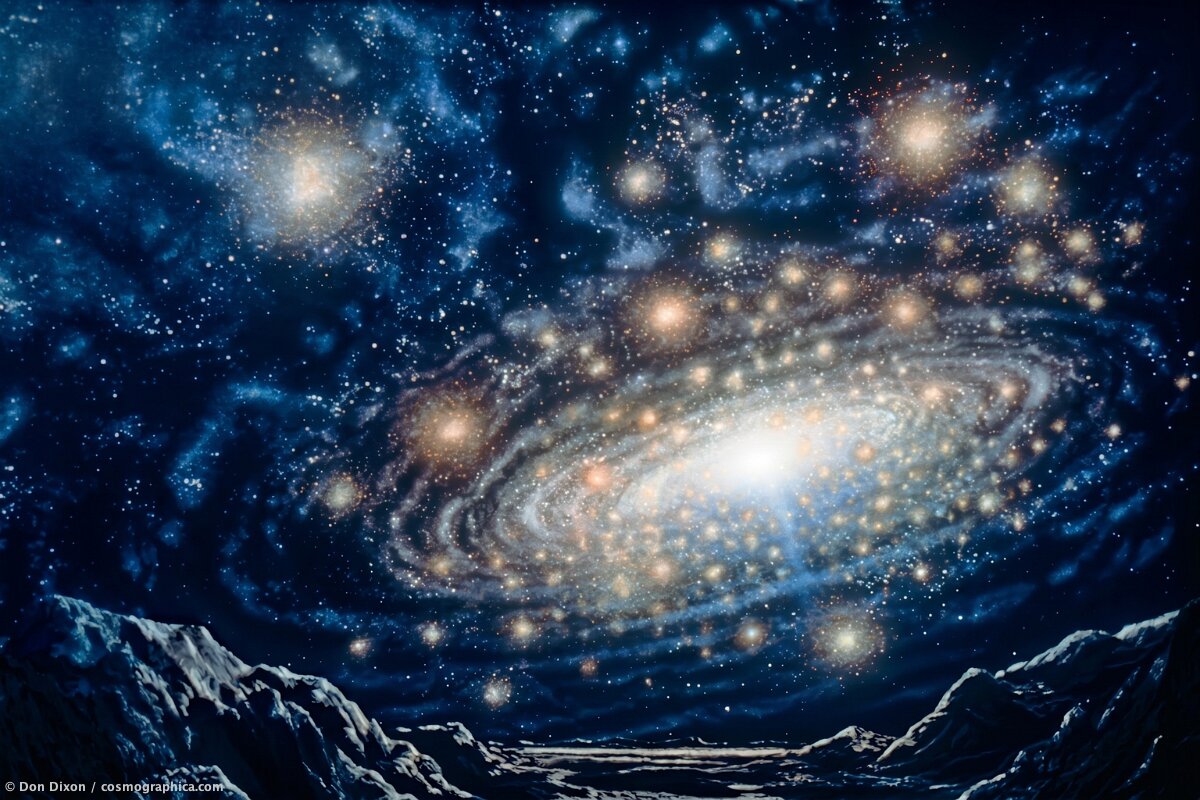
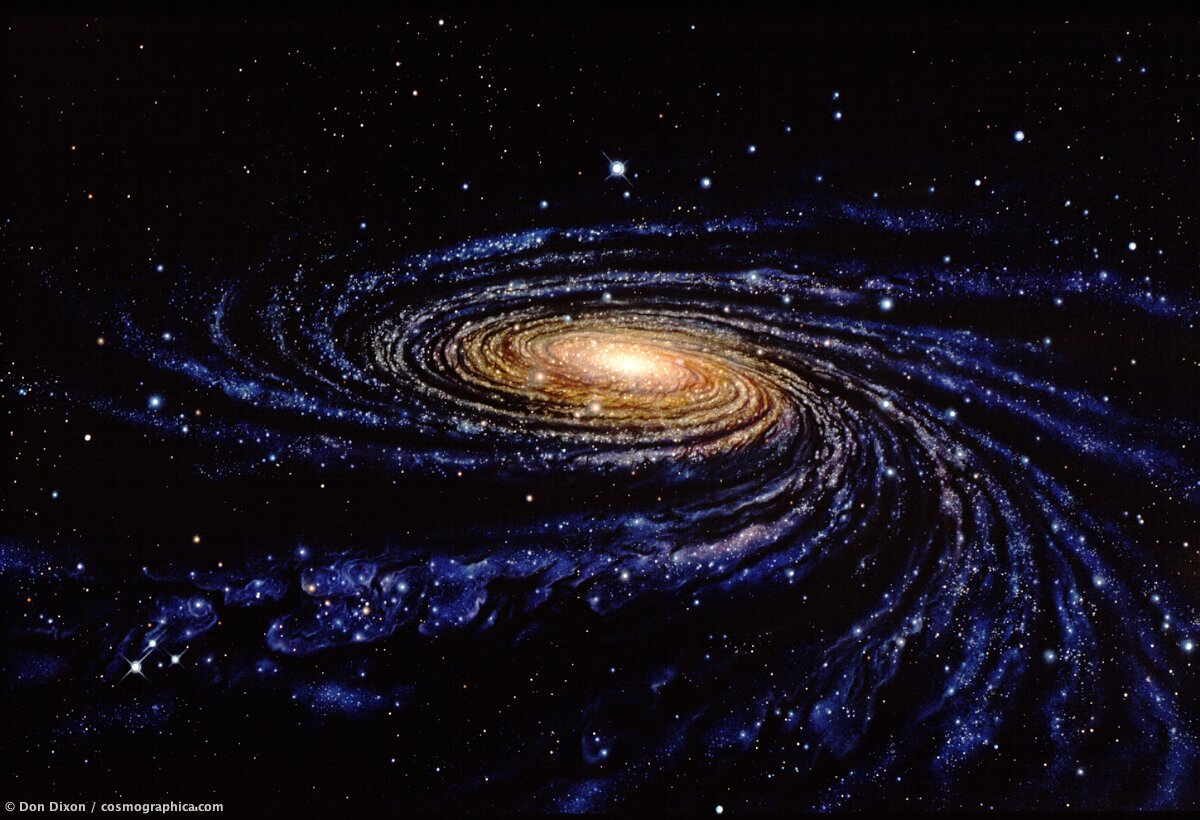
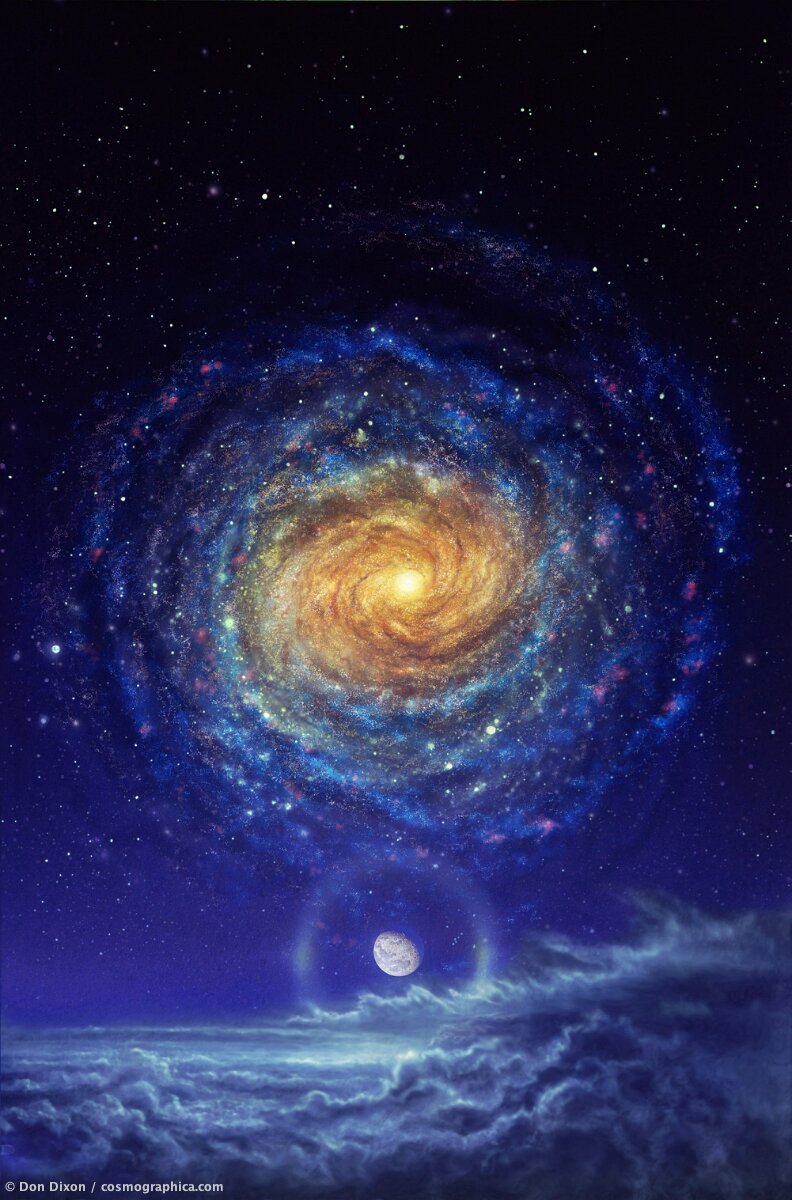
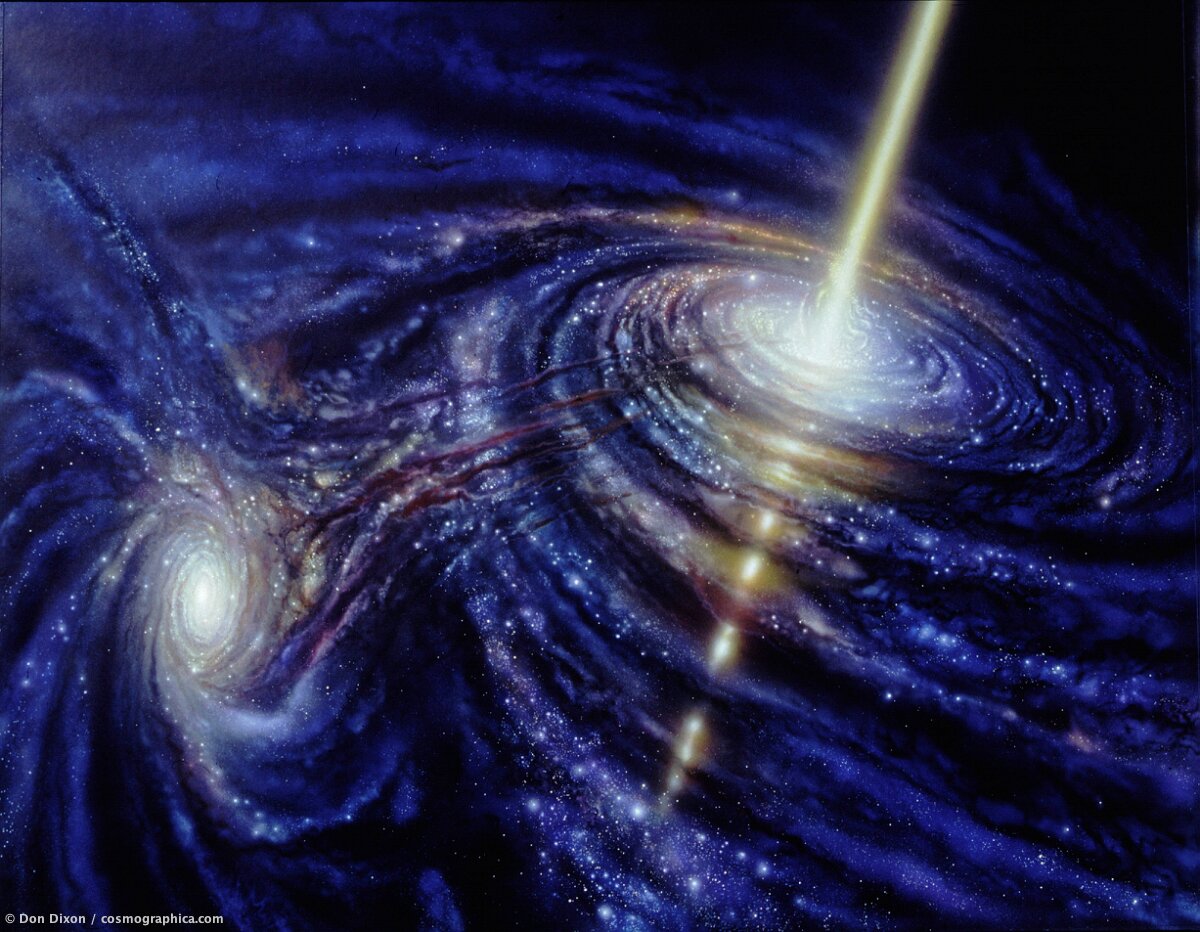

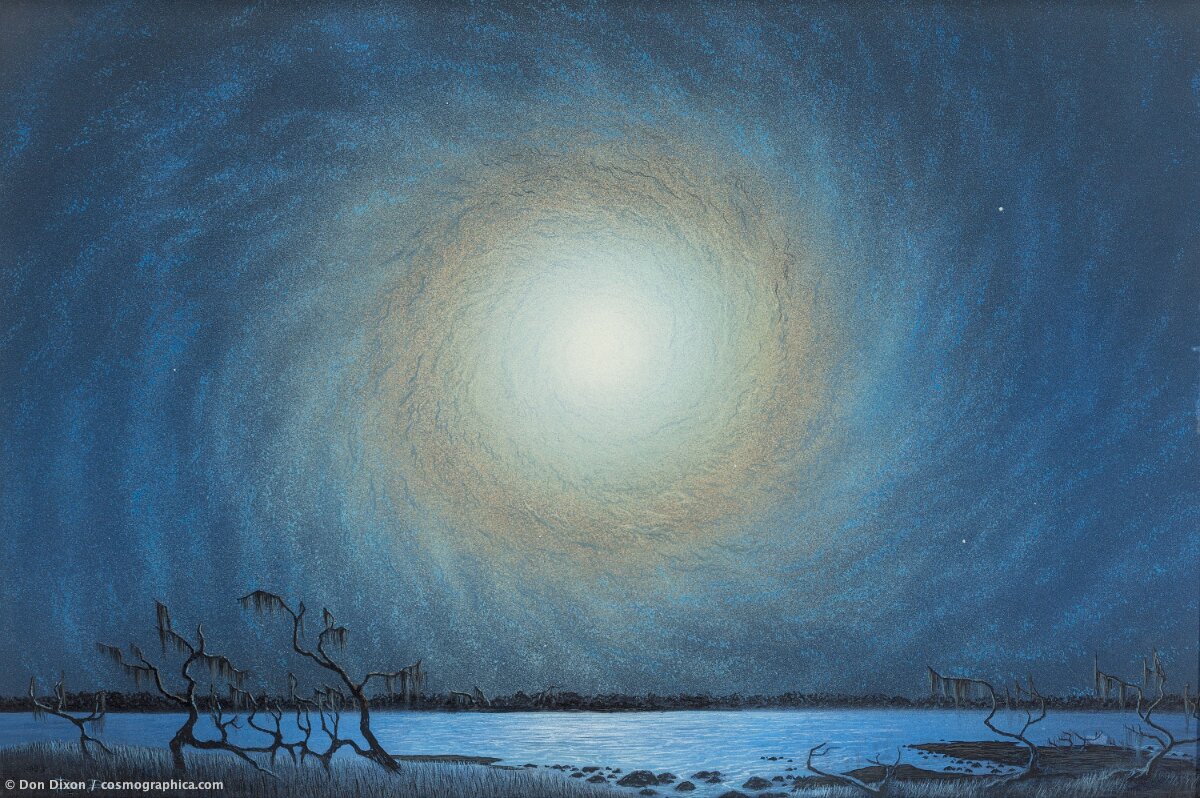
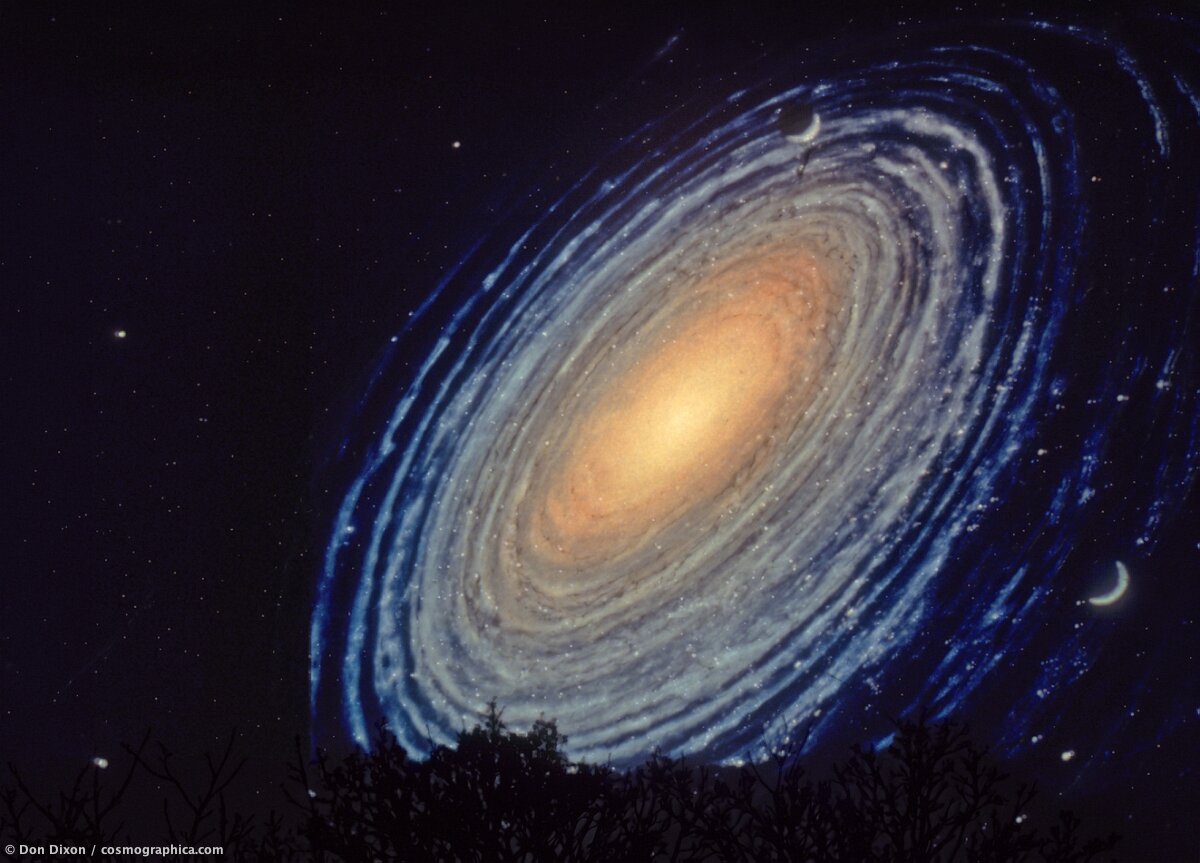
495-milky-way-rising-dixon – Milky Way Rising over an extragalactic planet; A dramatic fine art painting depicting a massive spiral galaxy, representing the Milky Way, dominating the night sky from a low-angle planetary perspective. The glowing core and sweeping, textured dust lanes of the galactic arms fill the upper atmosphere with brilliant white, gold, and deep blue starlight. Below, a serene, illuminated body of water reflects the celestial glow, bordered by a dark shoreline featuring the silhouettes of gnarled, moss-draped trees. Originally Spacescapes Number 60, this early gouache on illustration board painting shows our galaxy in the sky of an alien world high above the galactic pole; 1974 by Don Dixon.
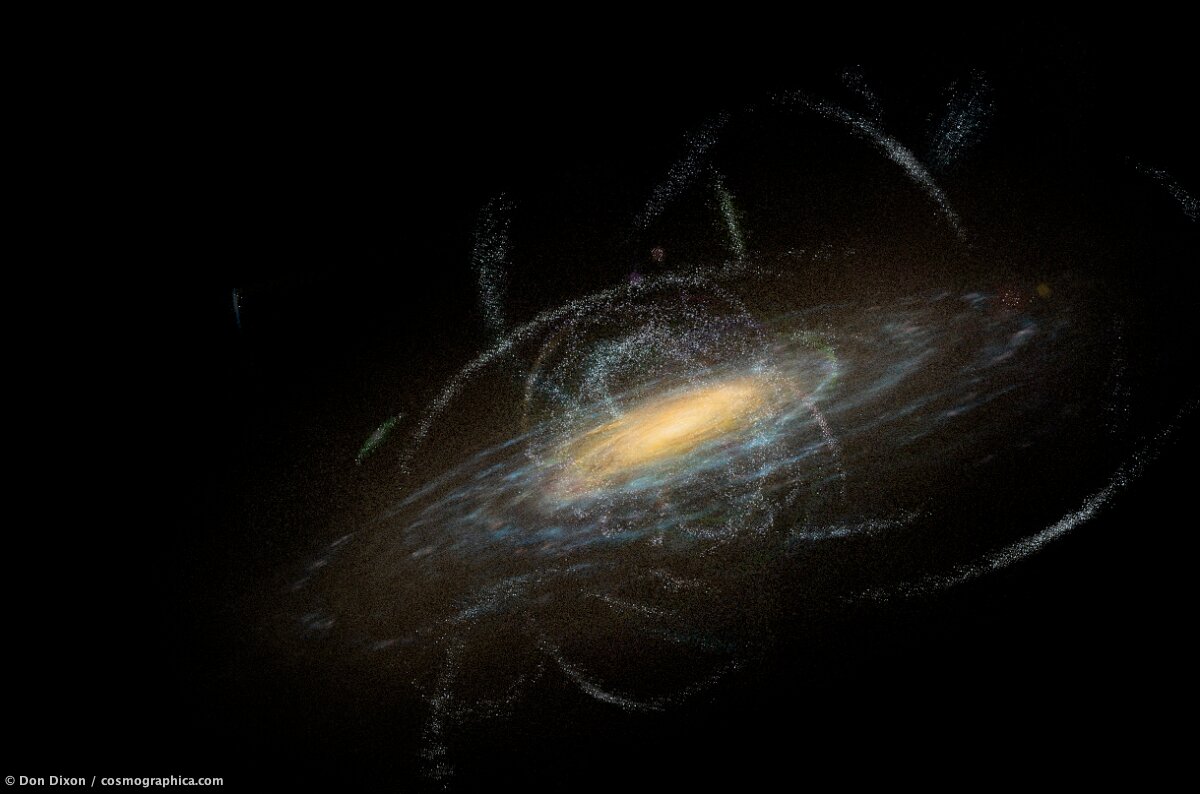
Galactic Star Streams
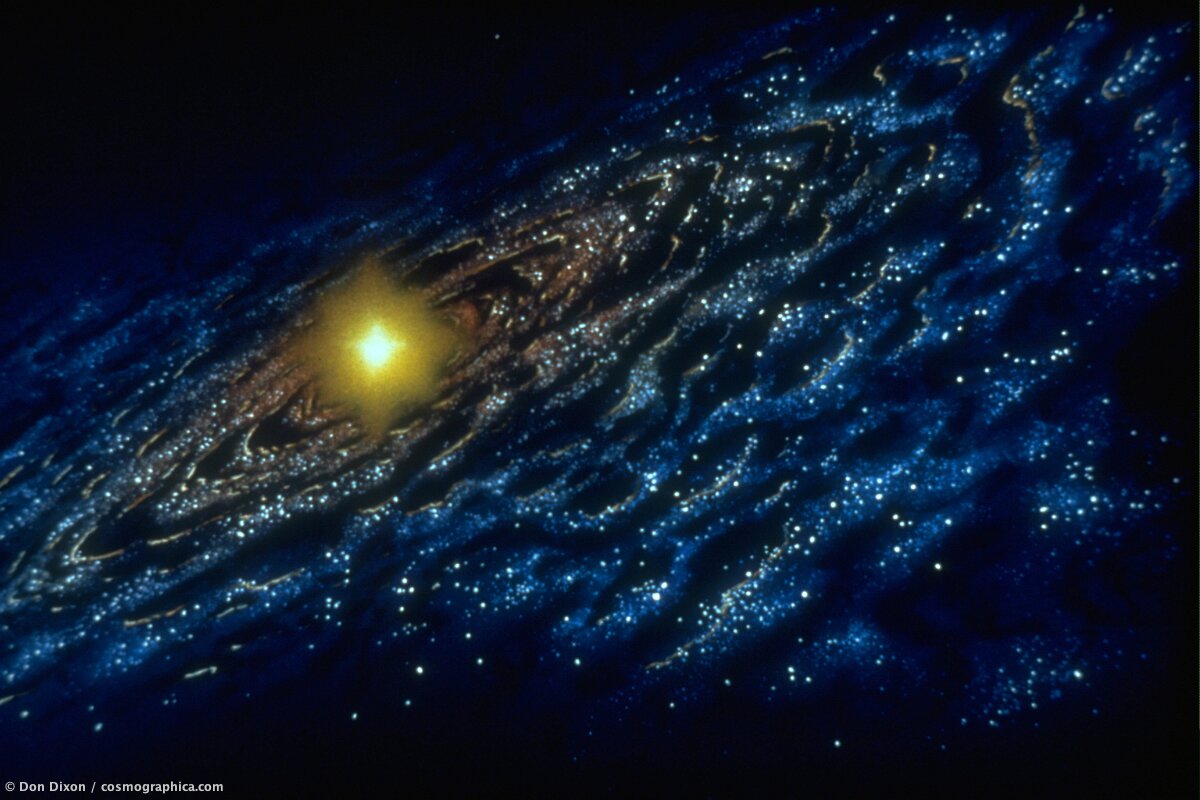
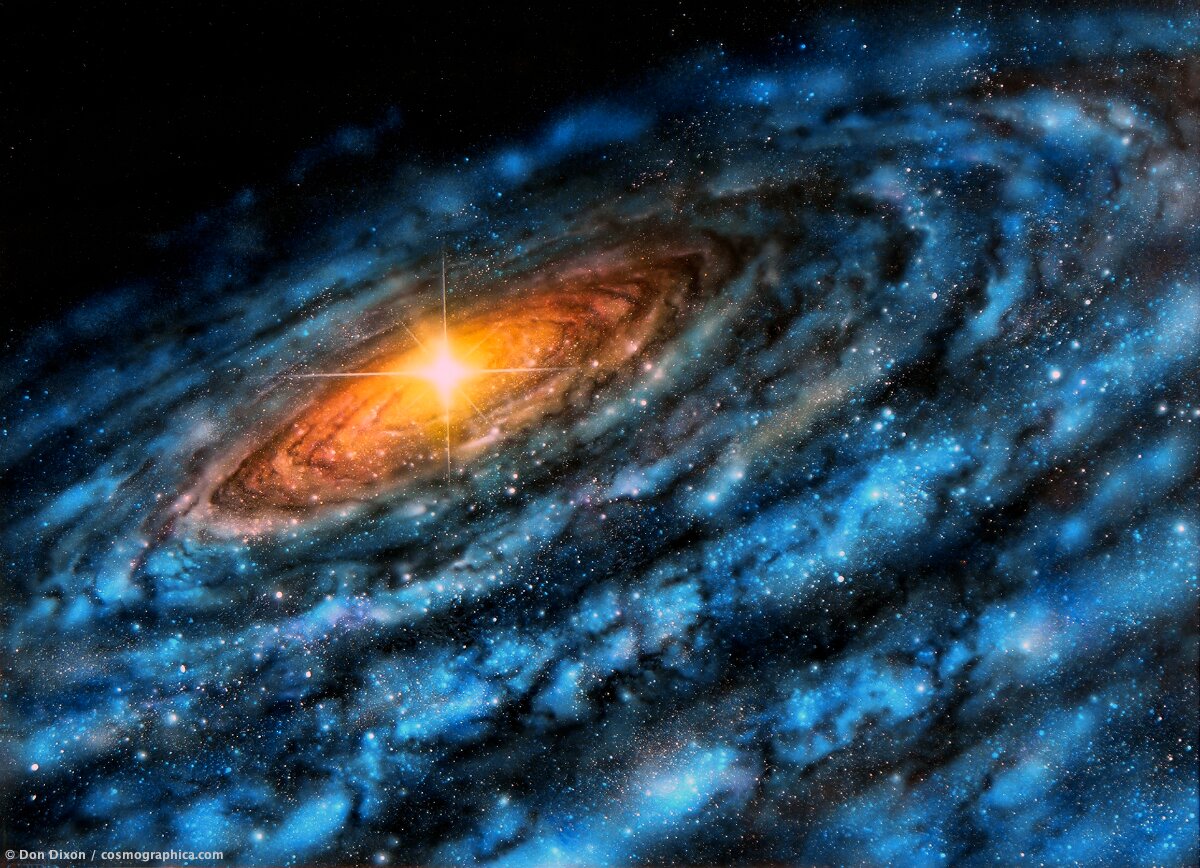
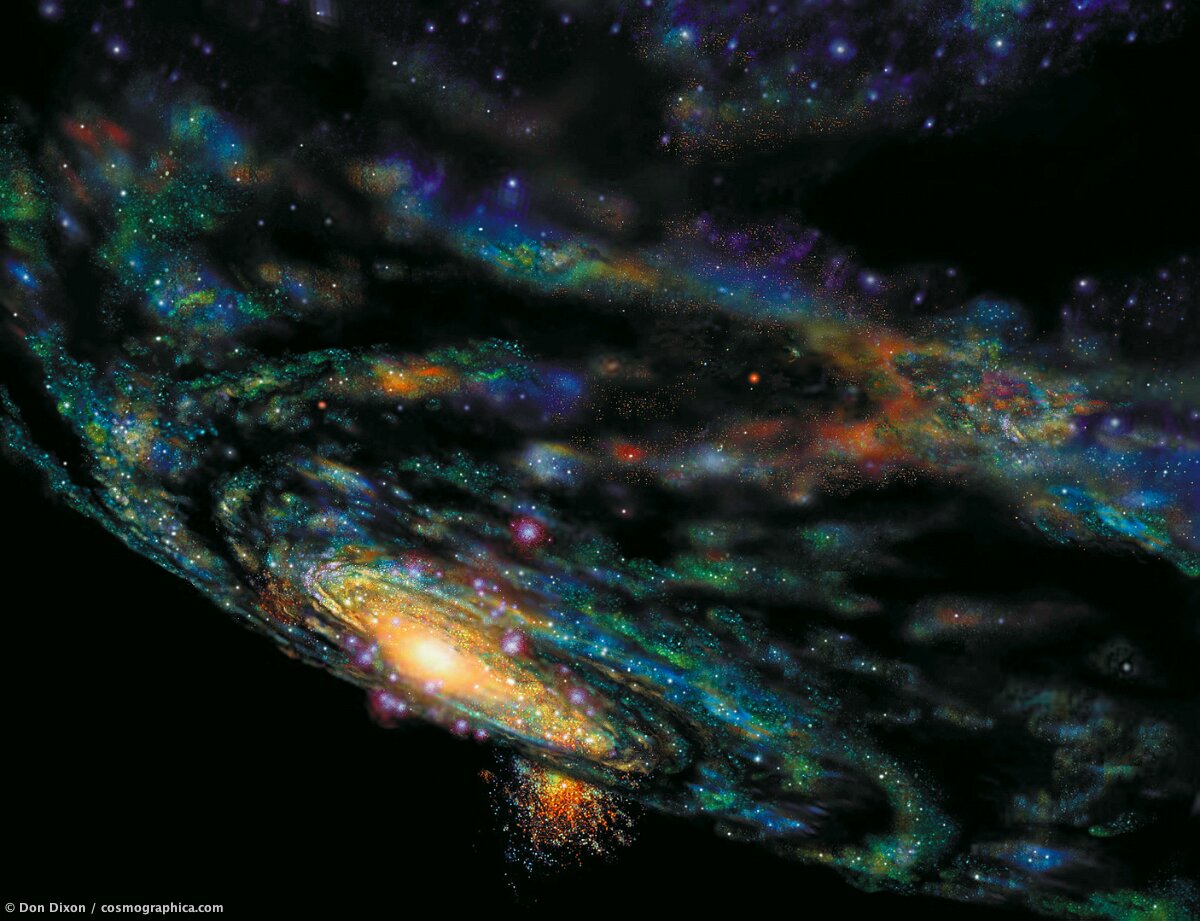
452-galaxy-star-streams-dixon – Streams of stars orbiting outside the plane of the Milky Way are thought to be the remains of small galaxies that were disrupted by tidal interactions and which are being assimilated into our own. An astrophysical illustration depicting a mature spiral galaxy enveloped by a complex network of stellar streams within its extended galactic halo. The primary disk of the galaxy glows with a bright yellowish-white nucleus and sprawling, dust-laden spiral arms rotating along an inclined plane. Looping around the main galactic structure are faint, filamentary arcs composed of thousands of stars, representing the tidal remnants of cannibalized dwarf galaxies torn apart by gravitational forces. Digital artwork for Scientific American © 2007 Don Dixon / cosmographica.com
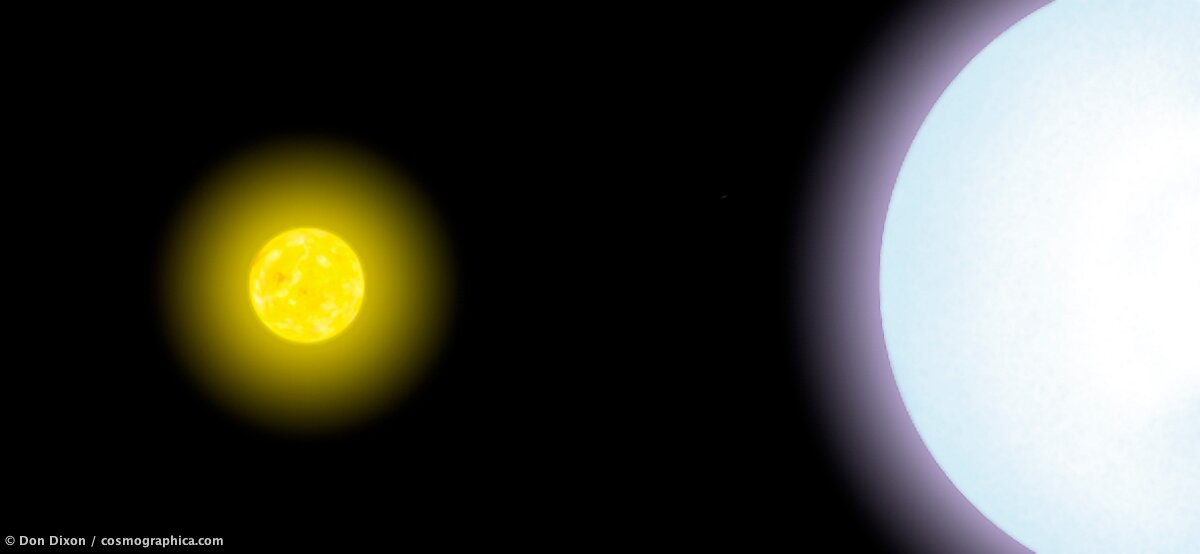
Sun and Ealy Star Compared
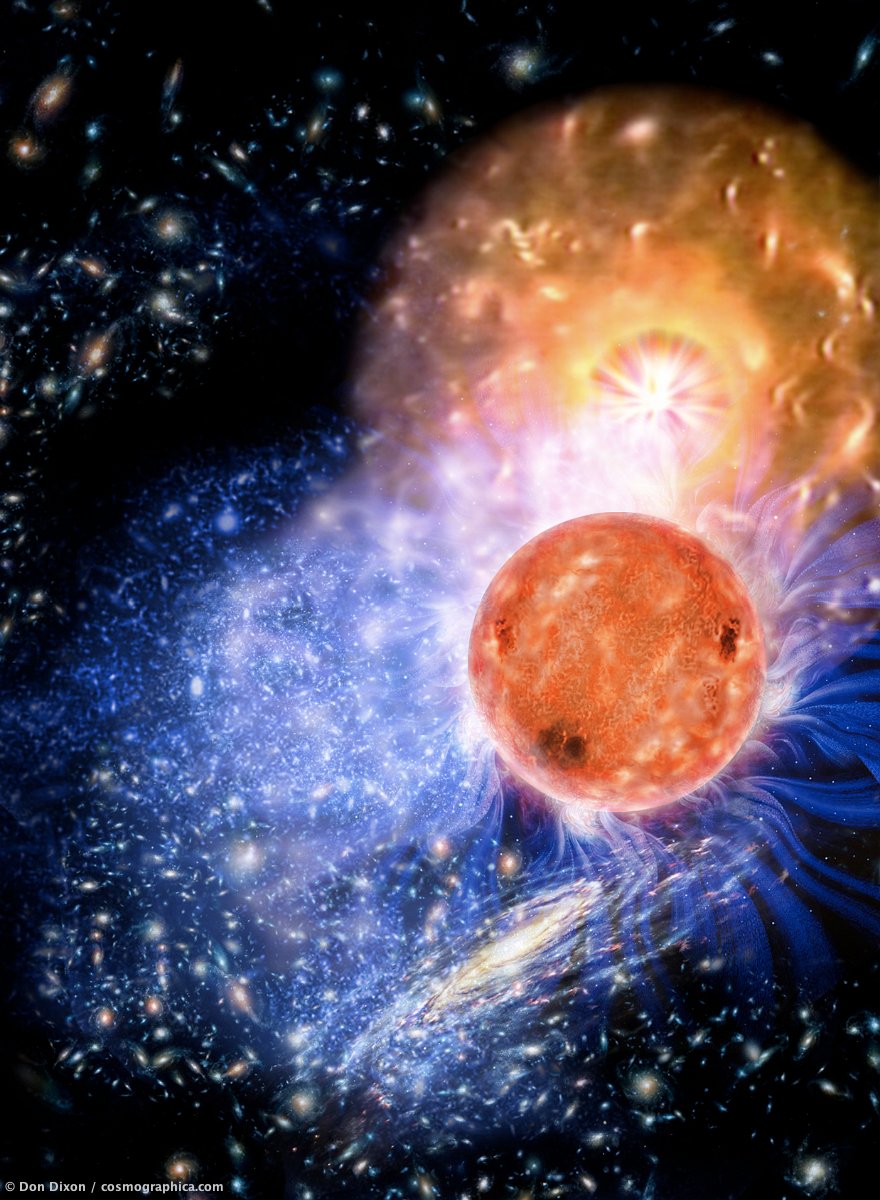
477-sun-early-star-compared-dixon – The first stars, formed perhaps only a few hundred million years after the Big Bang, were much more massive than our sun and much shorter lived, exploding as supernovae after shining for only a few million years. A comparative astronomical illustration contrasting two different classes of main-sequence stars against a deep black space background. On the left, a yellow G-type star, representing our Sun, glows with a distinct golden-yellow corona and subtle surface granulation patterns. On the right, a significantly larger, higher-mass hot blue star dominates the edge of the frame, emitting intense white-blue light and surrounded by a soft violet atmospheric fringe to show the variance in size, temperature, and luminosity between stellar classifications.
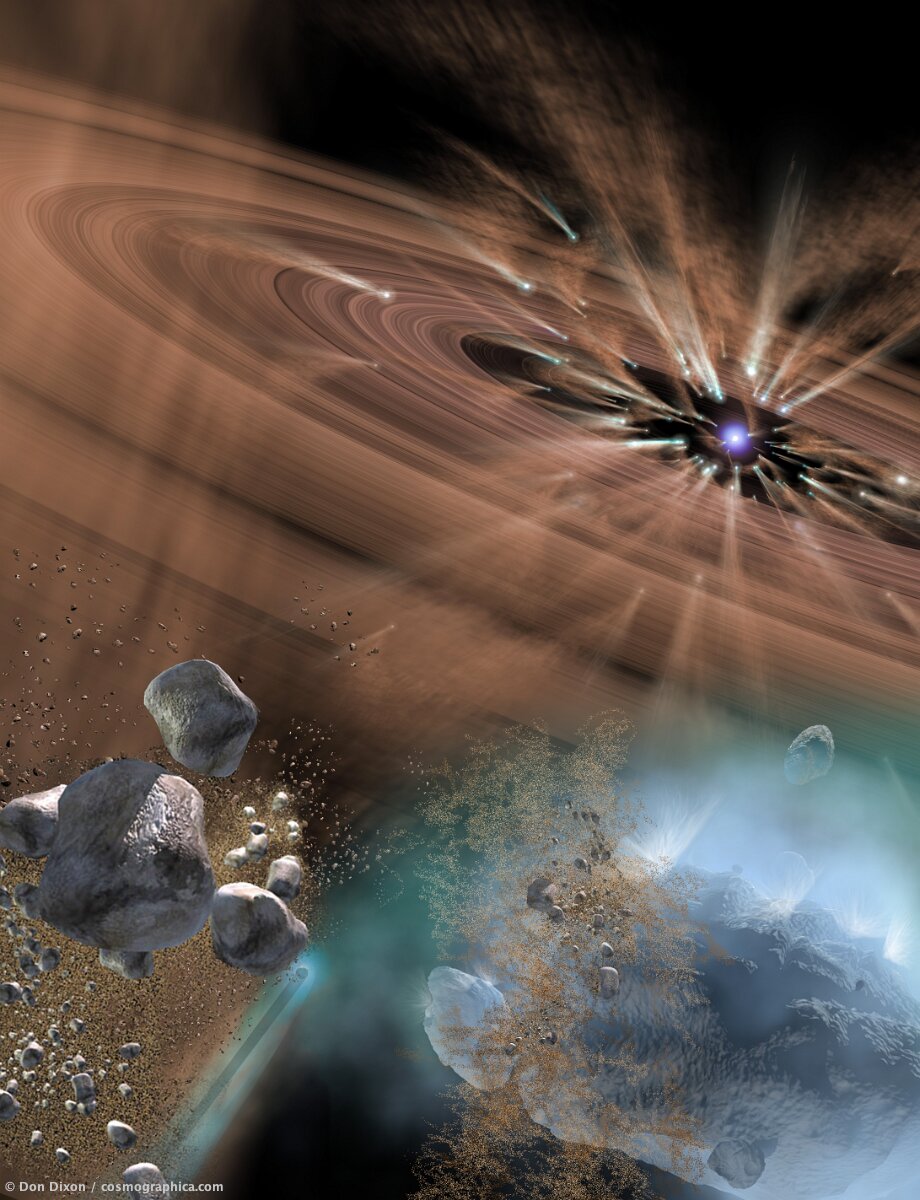
Formation of Brown Dwarf
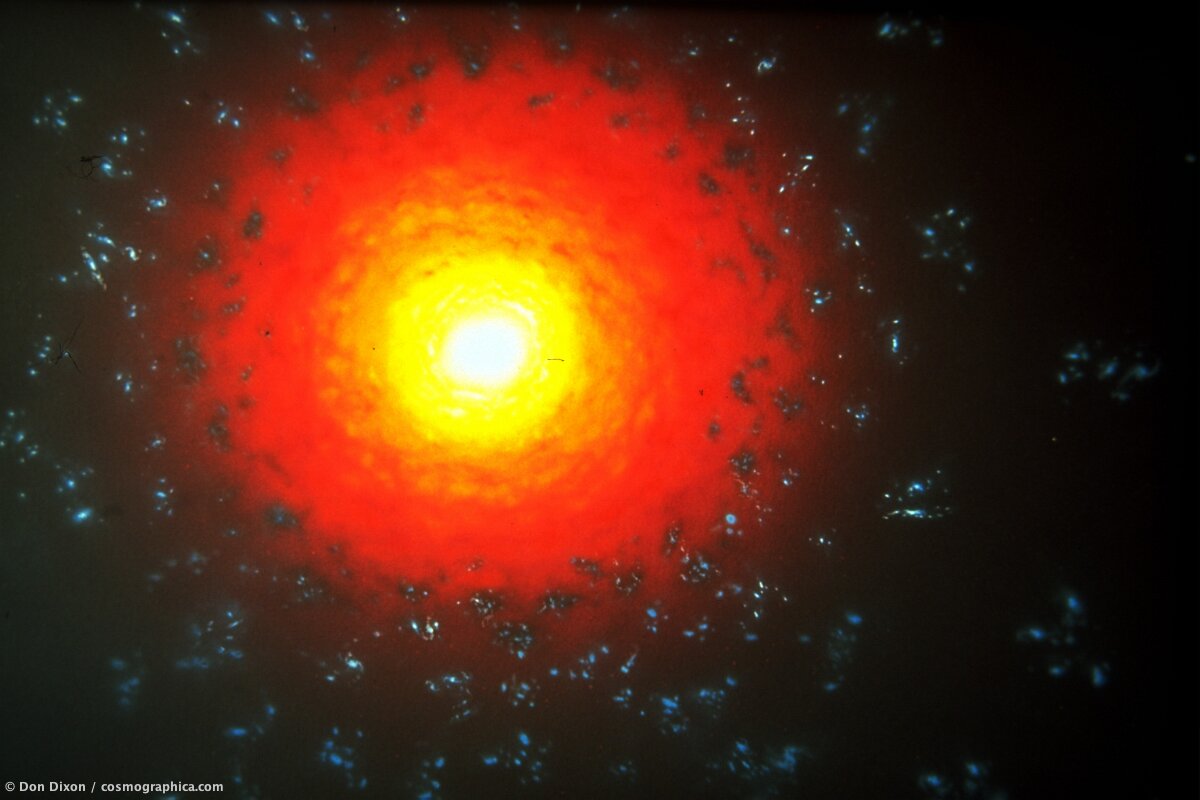
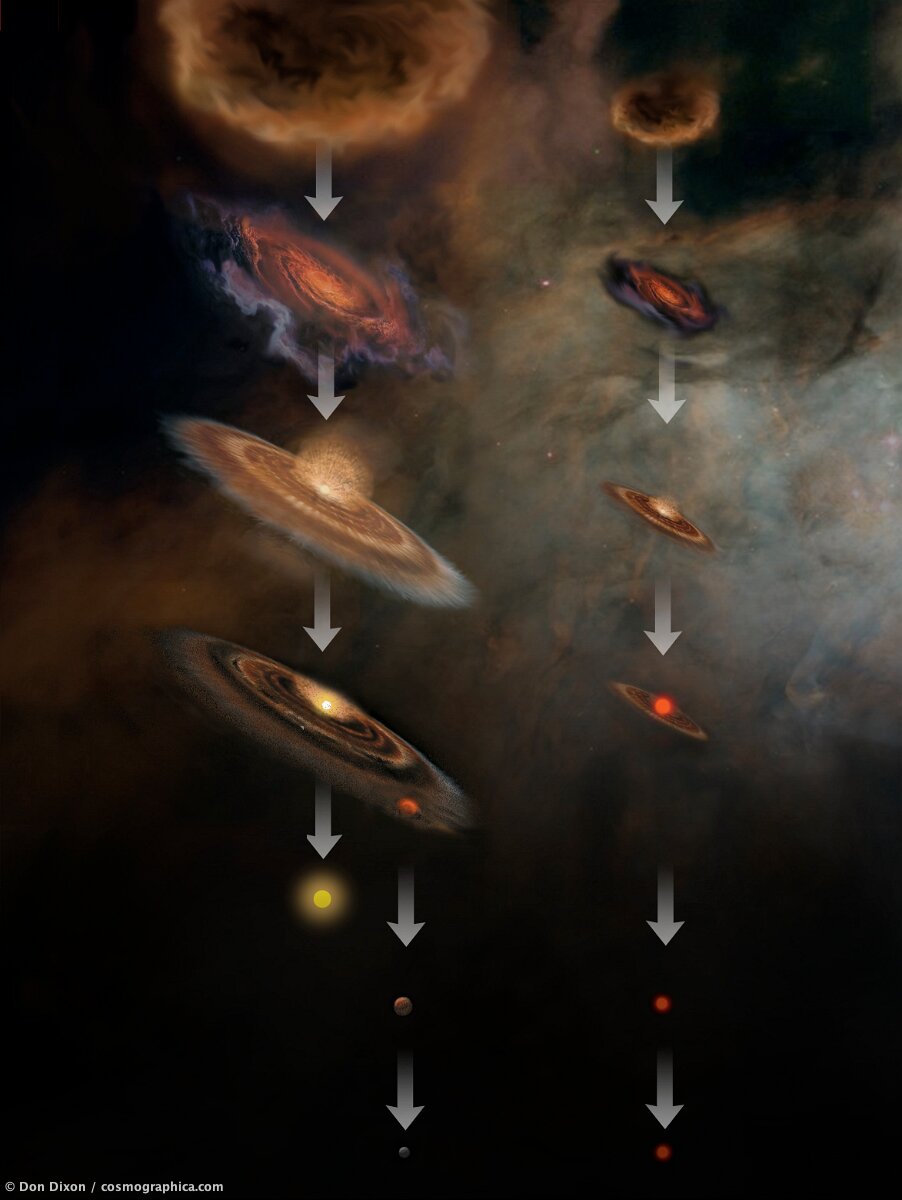
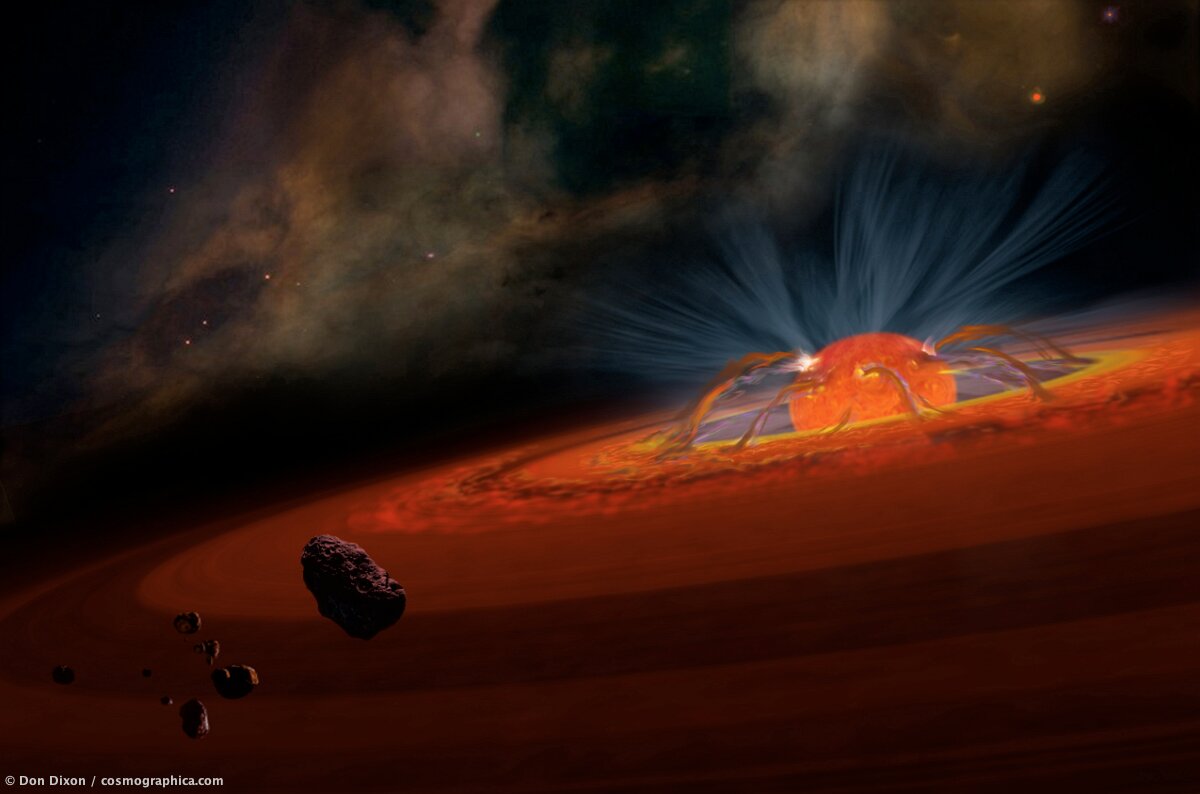
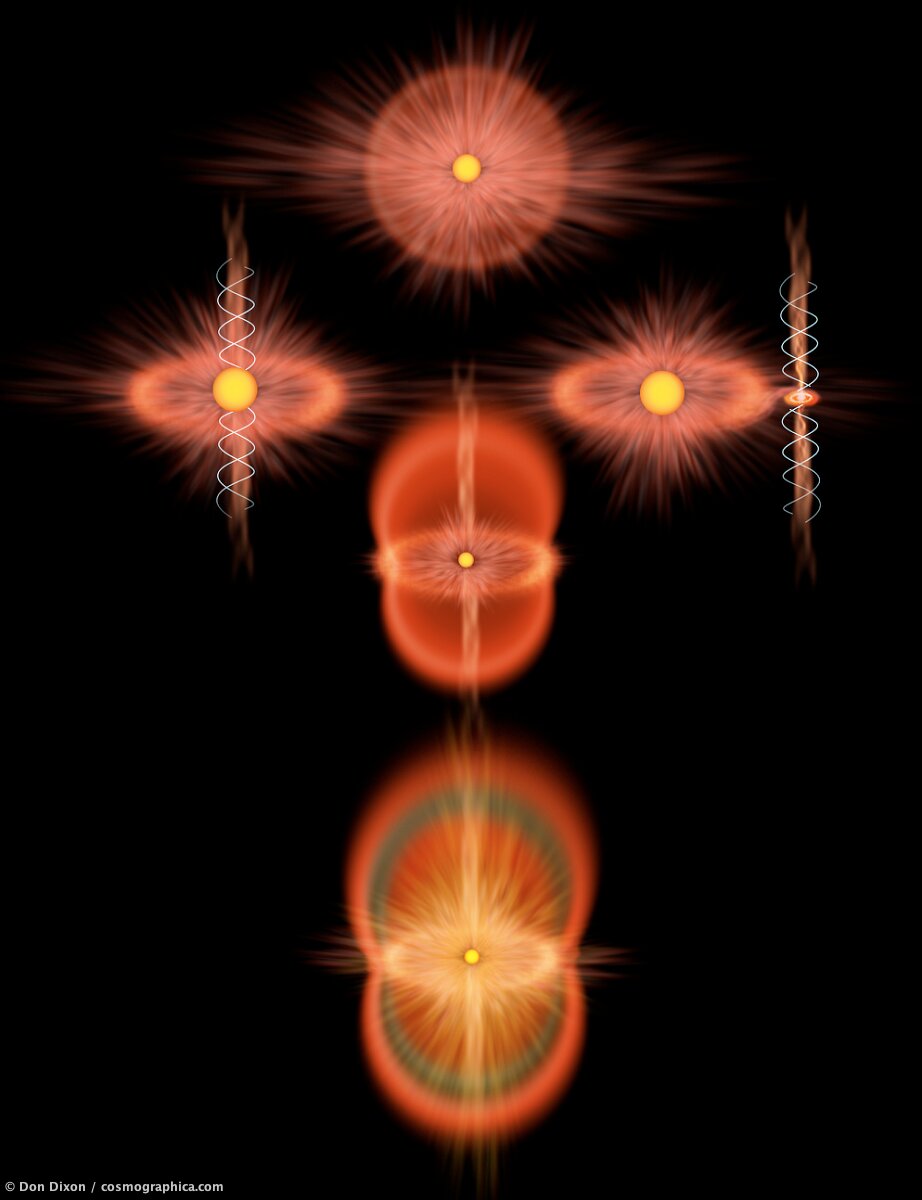
463-brown-dwarf-forming-dixon – A brown dwarf star shines within its accretion disk. Streams of ionized dust and gas are drawn to the forming star by its magnetic field. A detailed astronomical illustration depicting a young protostar undergoing magnetospheric accretion within a dense stellar nursery. The central, turbulent orange protostar is surrounded by a massive, glowing circumstellar disk of dust and gas, with small planetesimal fragments orbiting in the dark foreground. Powerful magnetic field lines pull material out of the inner disk, funneling it onto the stellar surface in bright, energetic impact streams, while high-velocity blue gas jets erupt outward along the rotational poles into a backdrop of cosmic nebulae. Digital illustration for Scientific American © 2007 Don Dixon / cosmographica.com
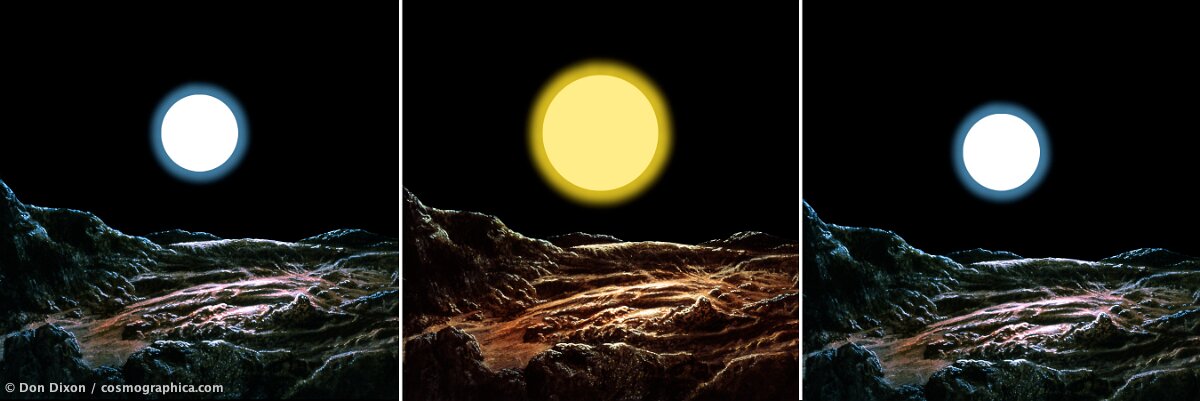
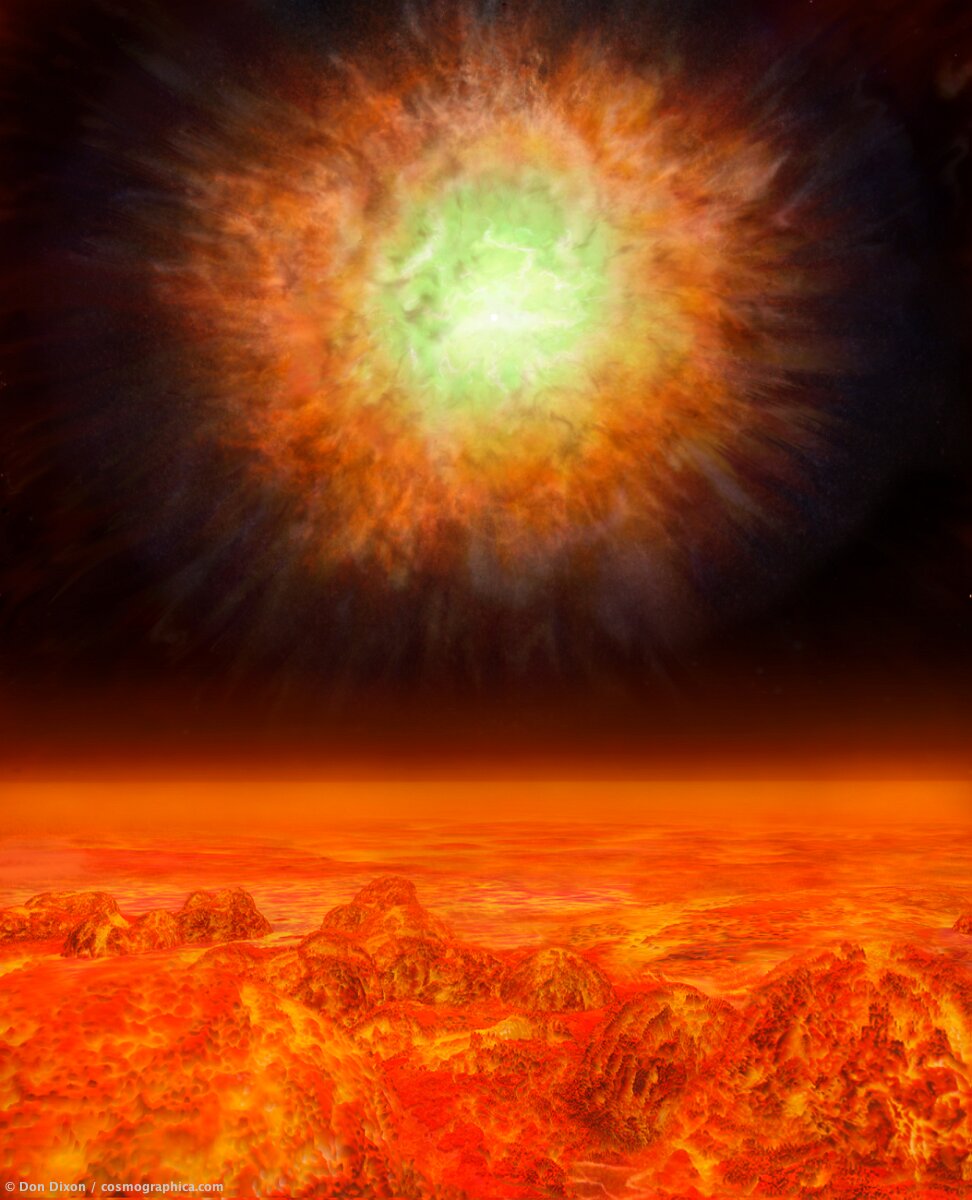
Cepheid Variable Cycle
458-cepheid-variable-cycle-dixon – A Cepheid variable star pulses in a regular period that is directly related to its intrinsic brightness, allowing astronomers to use such stars as "standard candles" to measure distances to other galaxies. A three-panel sequential astronomical illustration demonstrating the dramatic pulsation cycle of a Cepheid variable star as observed from the surface of a barren, airless rocky planet or moon. The panels depict a time-lapse sequence tracking the simultaneous changes in the star's physical size, color temperature, and luminosity, along with the corresponding illumination cast onto the craggy landscape below.
Left Panel: The star is at its minimum size but highest temperature, appearing as a compact, intense white-blue sphere that casts sharp, cool, violet-tinted highlights onto the rocky ridges.
Middle Panel: The star expands into its largest and coolest state, swelling into a massive golden-yellow supergiant that floods the entire planetary landscape with a warm, amber-orange glow.
Right Panel: The star contracts back to its compressed, highly energetic white-blue state, returning the landscape to its initial coolly lit appearance and completing the periodic cycle.Artwork for cientific American, © 2007 Don Dixon / cosmographica.com
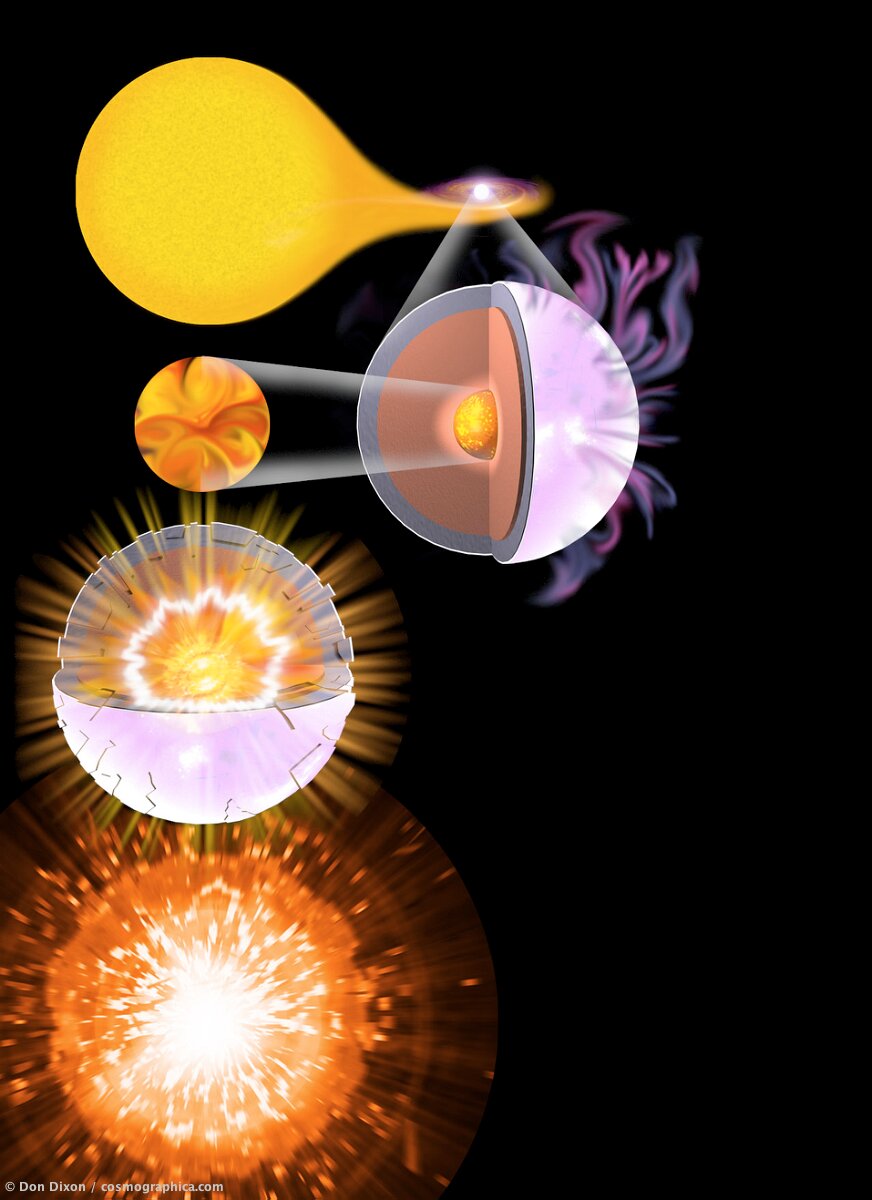
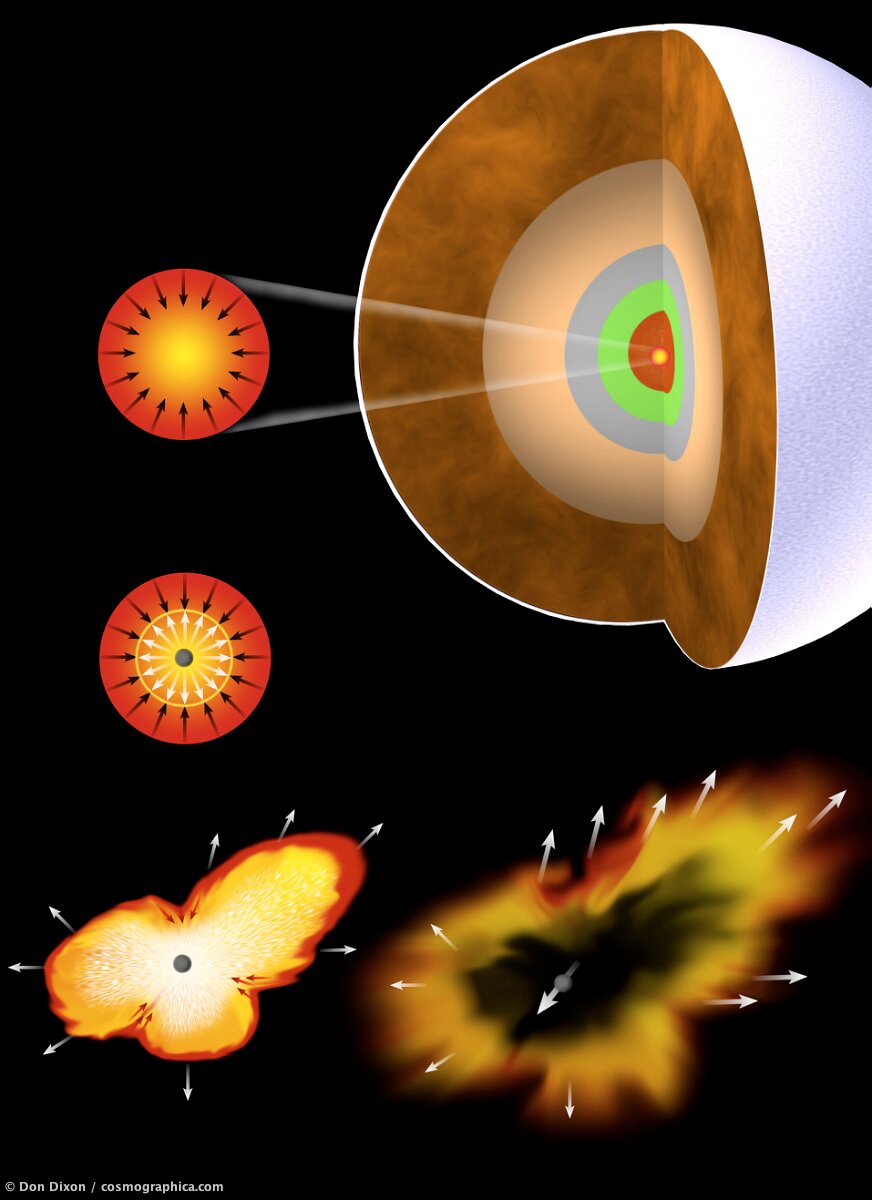
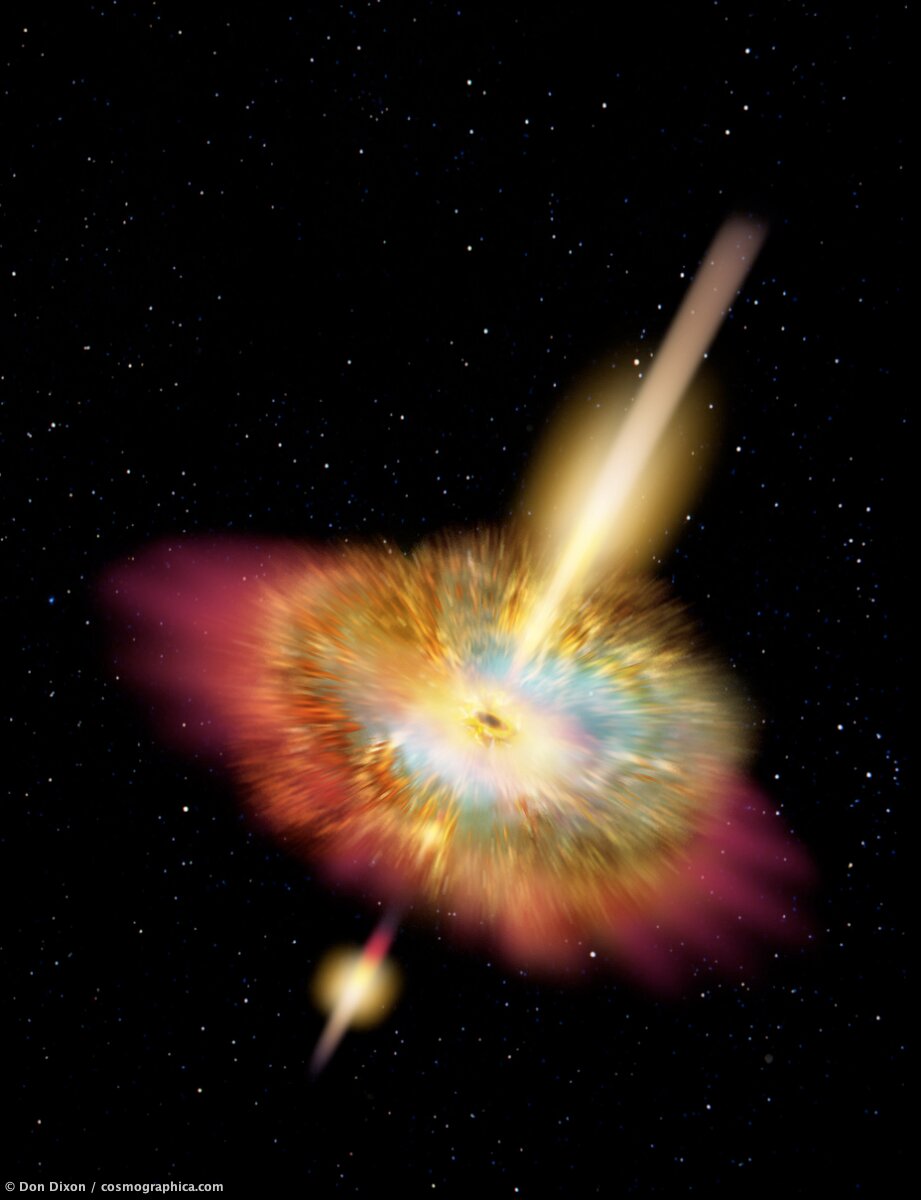
Top Stage: A massive evolved supergiant star is shown in a three-quarter cutaway, detailing its interior concentric shells of advanced nuclear burning (the "onion-skin" model). A callout lines up with the innermost zone, zooming in on the dense iron core where black vectors point inward to represent overwhelming gravitational pressures attempting to trigger core collapse.
Middle Stage: A secondary circular callout details the moment of core collapse. The central core has imploded into an ultradense stellar remnant (neutron star or black hole), while white arrows blast outward against the inward-rushing outer layers, showing the bounce shockwave mechanism.
Bottom Left Stage: The shockwave propagates unevenly through the star's remaining envelope, showing the early development of an asymmetric, butterfly-shaped stellar explosion with white outward-pointing expansion vectors.
Bottom Right Stage: The final phase details the violent, fully developed supernova remnant expanding rapidly into a non-spherical nebula of gas and dust. A prominent central arrow indicates the rapid space-velocity "kick" given to the central compact stellar remnant as it is ejected from the center of the asymmetric blast zone.Artwork © 2007 Don Dixon / cosmographica.com
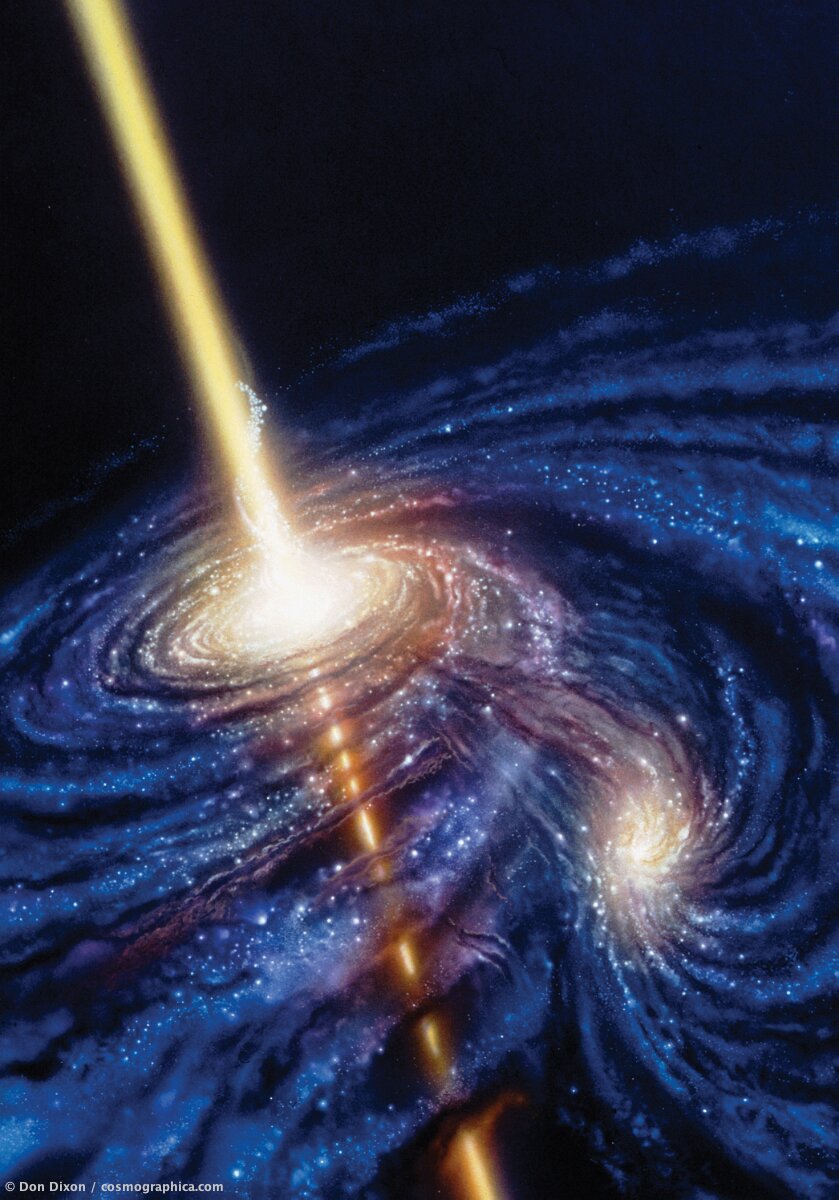
Quantum Foam
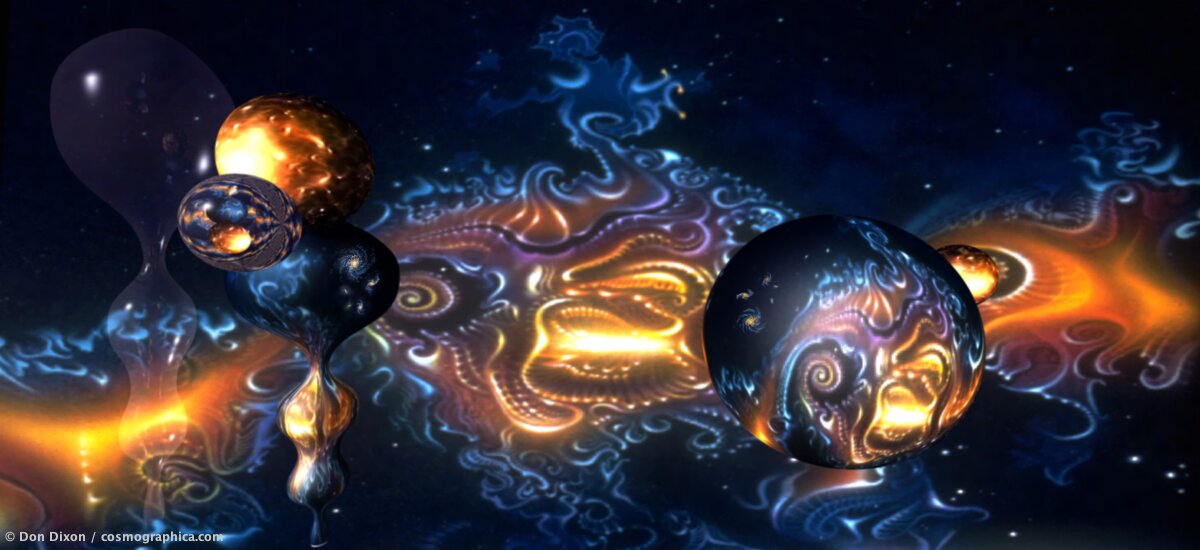
329-quantum-foam-dixon – This theoretical illustration visualizes the concept of quantum foam, the substructure of spacetime at the incredibly minuscule Planck scale where gravitational and quantum mechanical fluctuations warp topology. Spherical and elongated bubble-like geometries represent localized universes, micro-wormholes, or nascent pocket dimensions budding from a highly energetic, turbulent background. The background features complex, self-similar fractal patterns of luminous blues, purples, and golds, illustrating the chaotic, non-smooth nature of spacetime where classical physics breaks down entirely. digital painting by Don Dixon
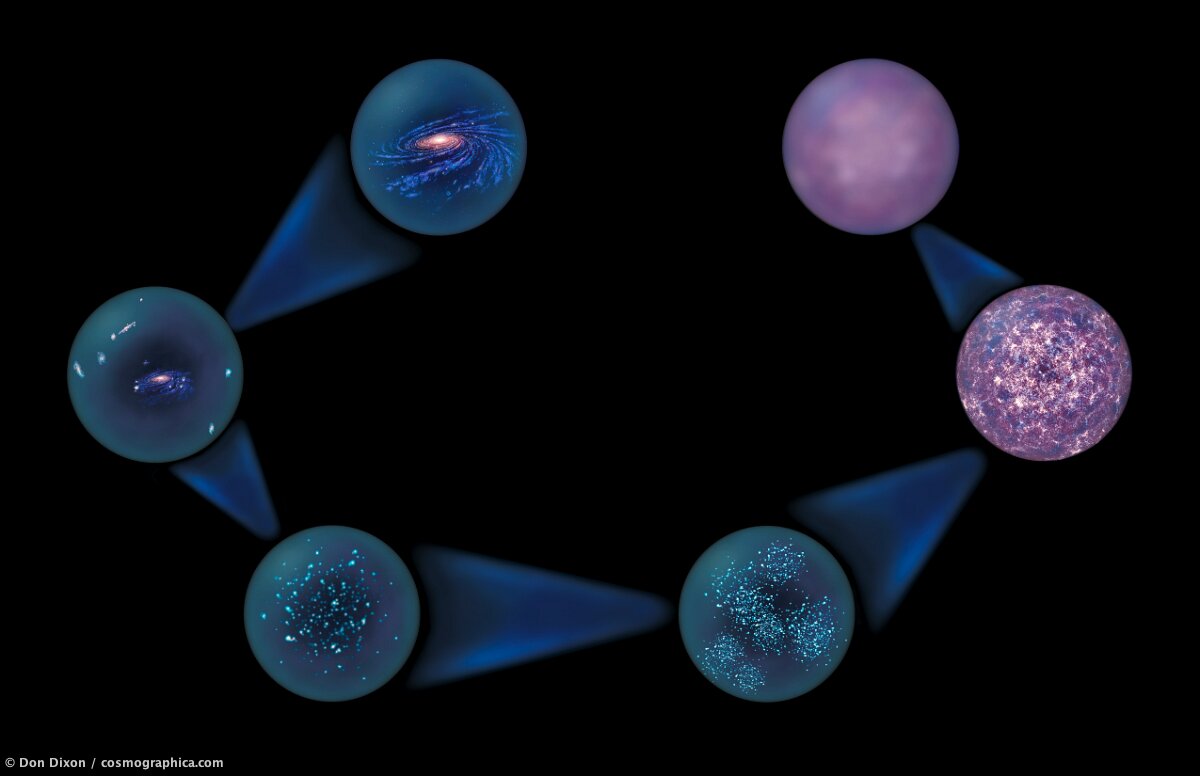
Evolution of Cosmic Structure
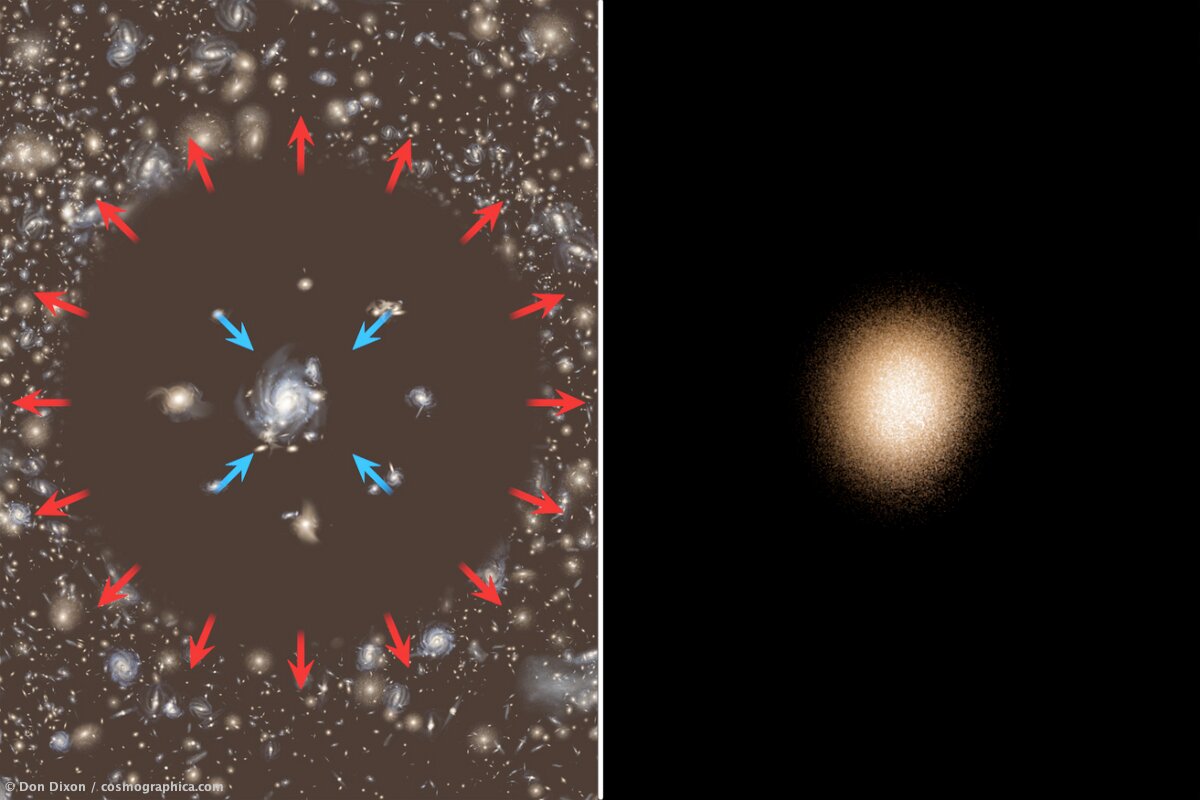
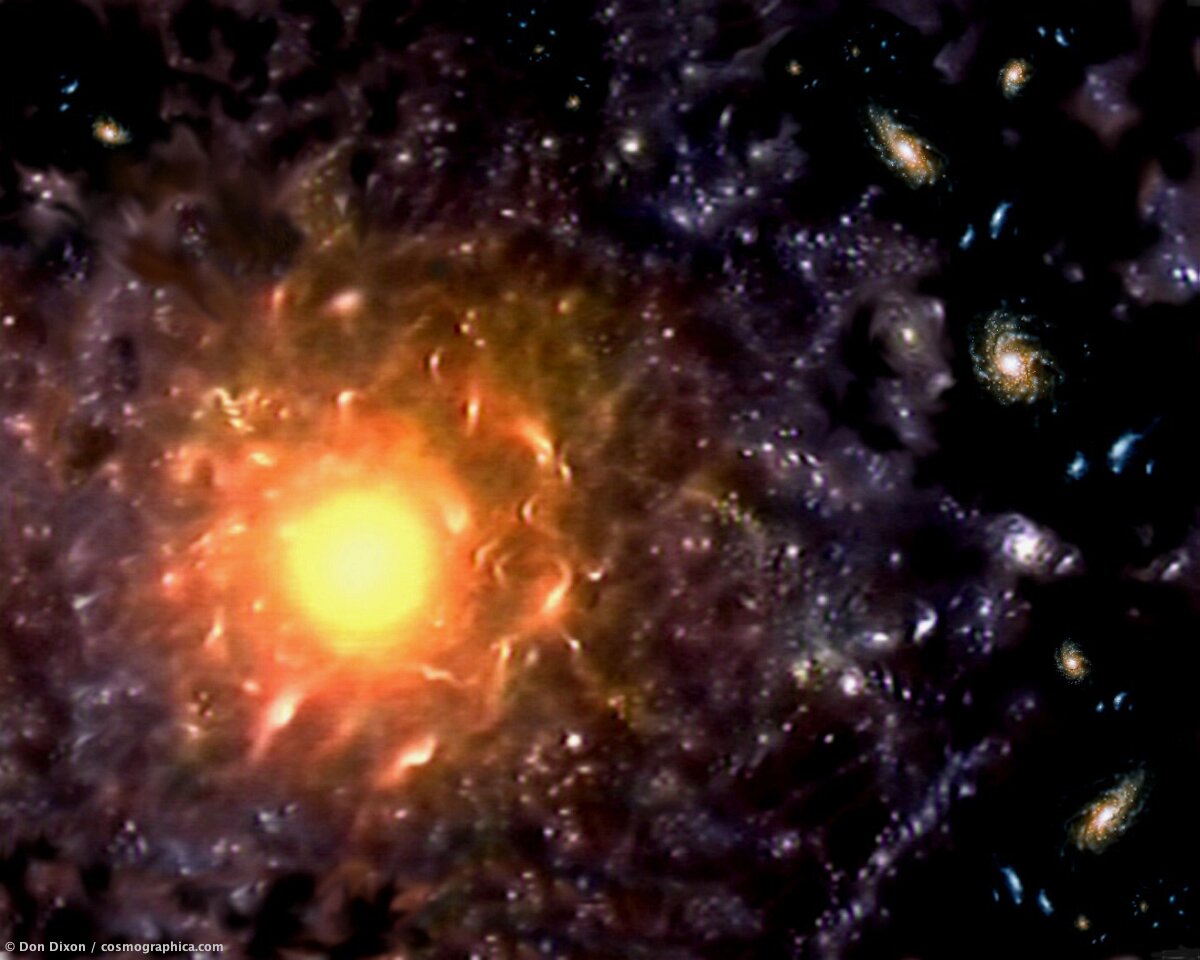
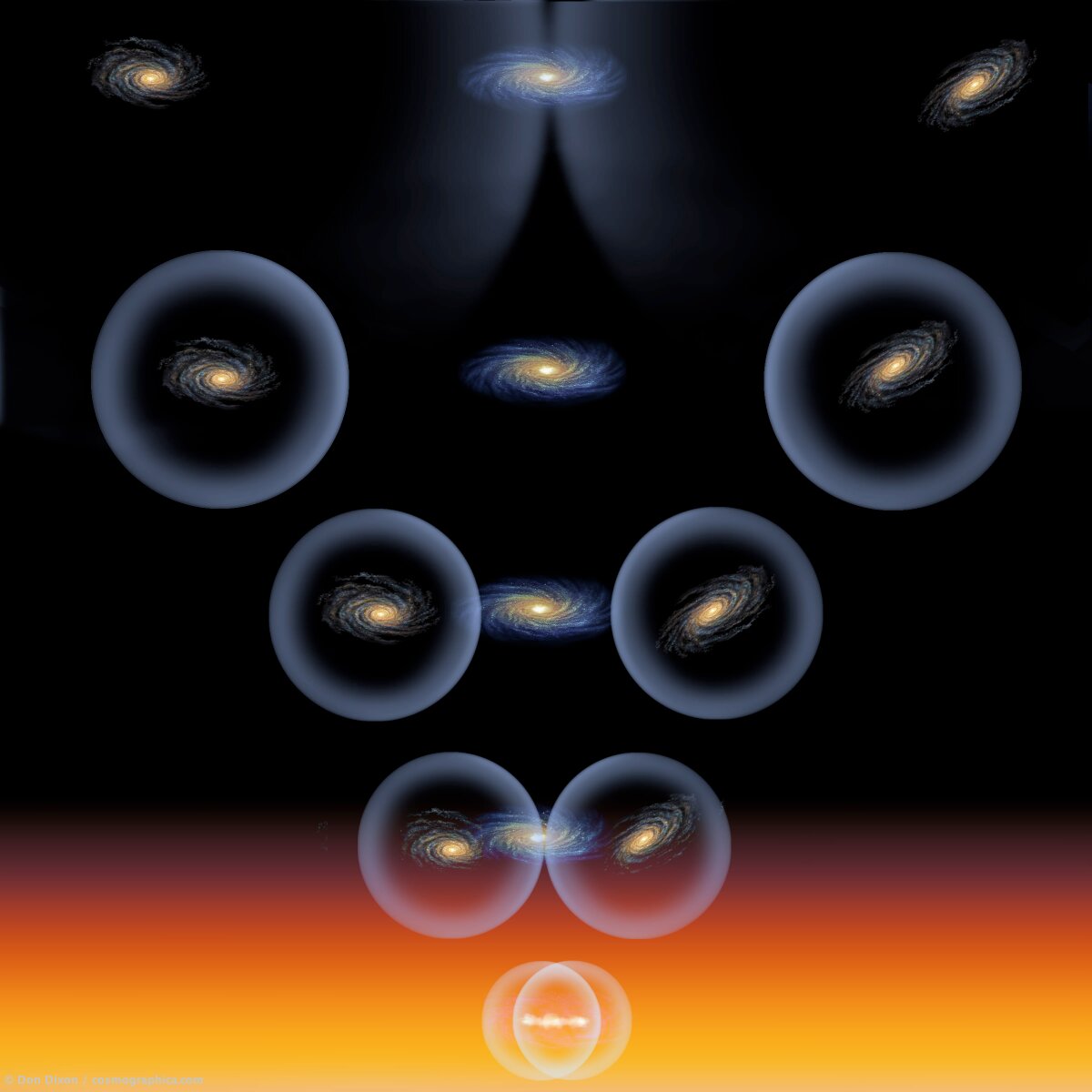
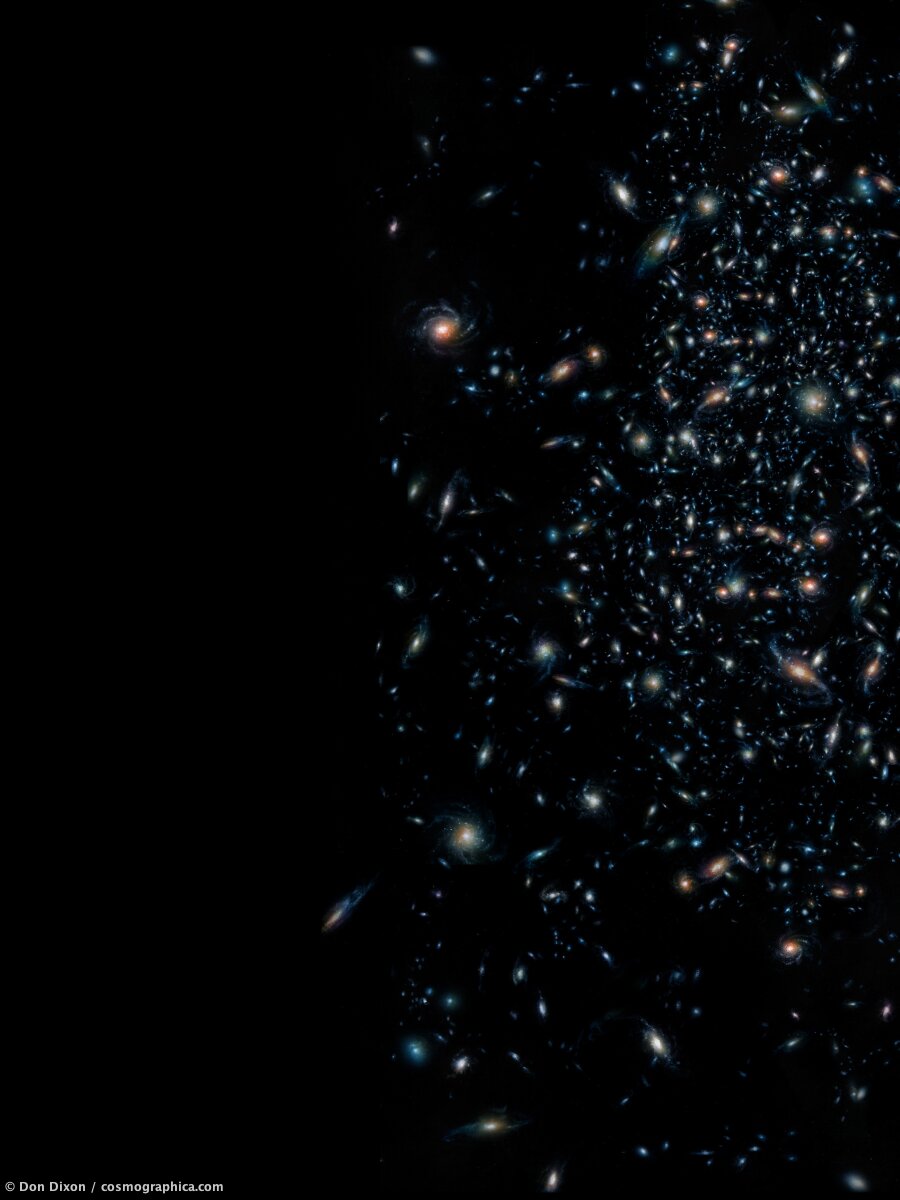
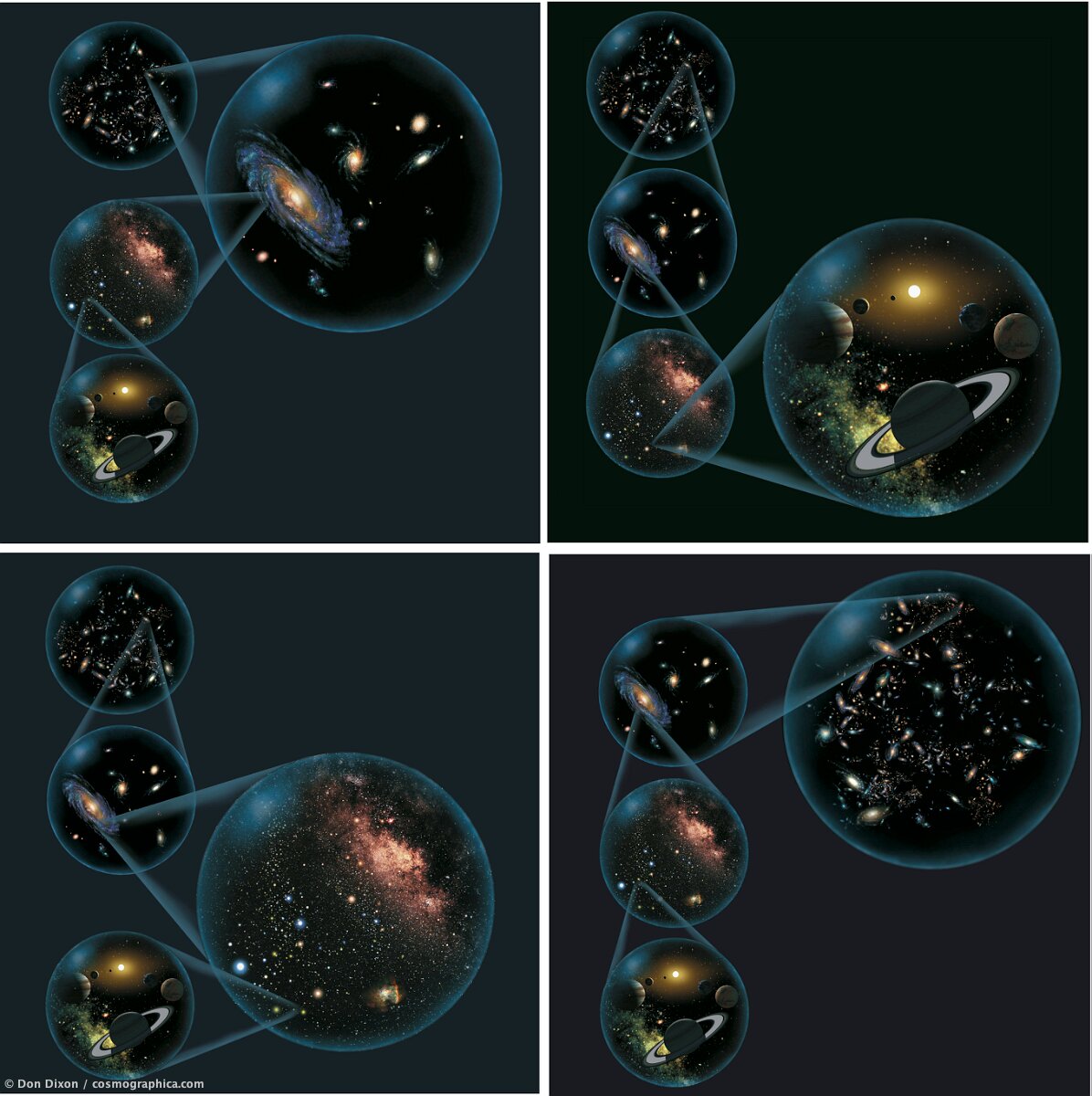
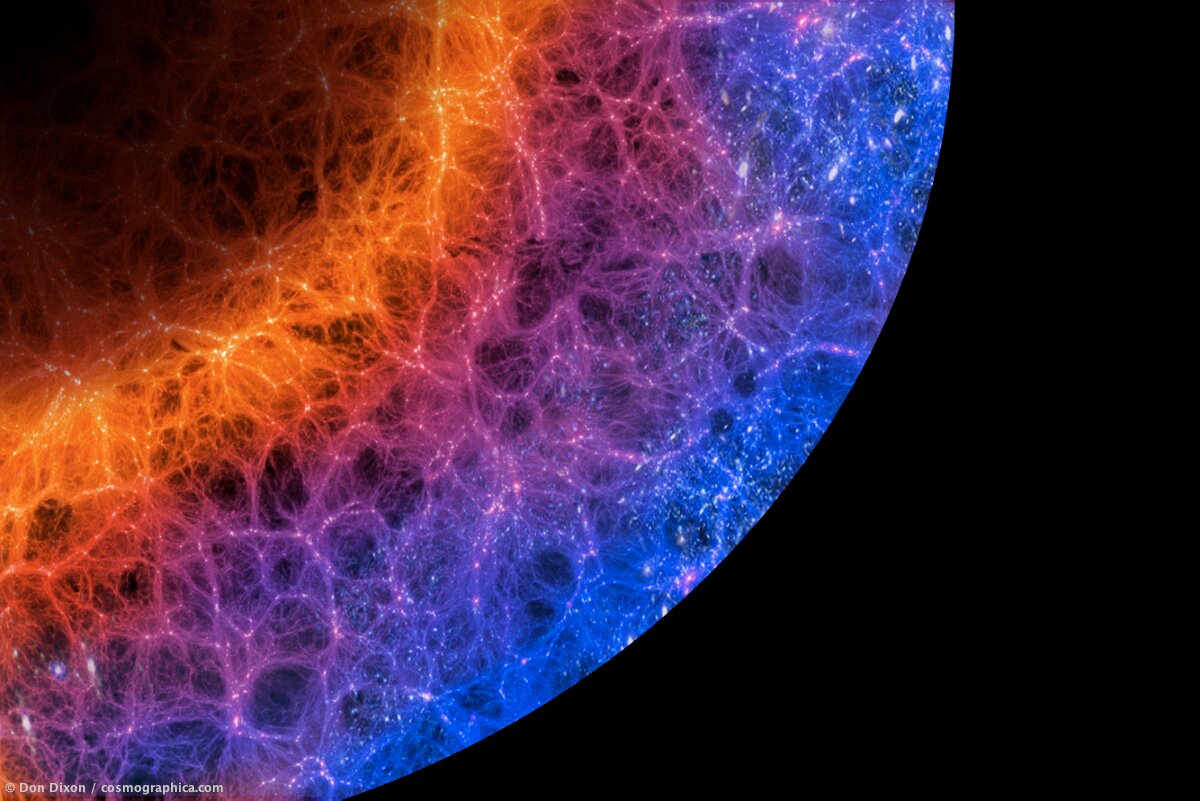
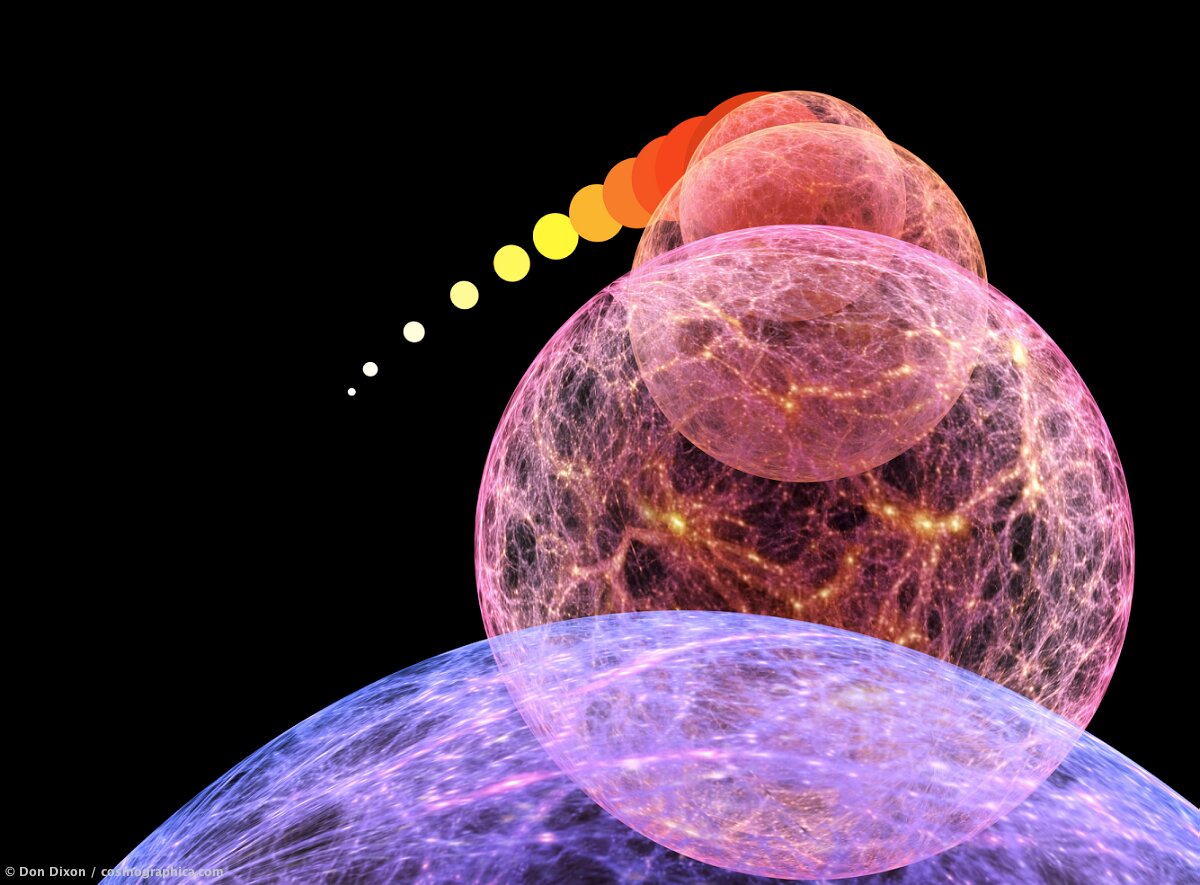
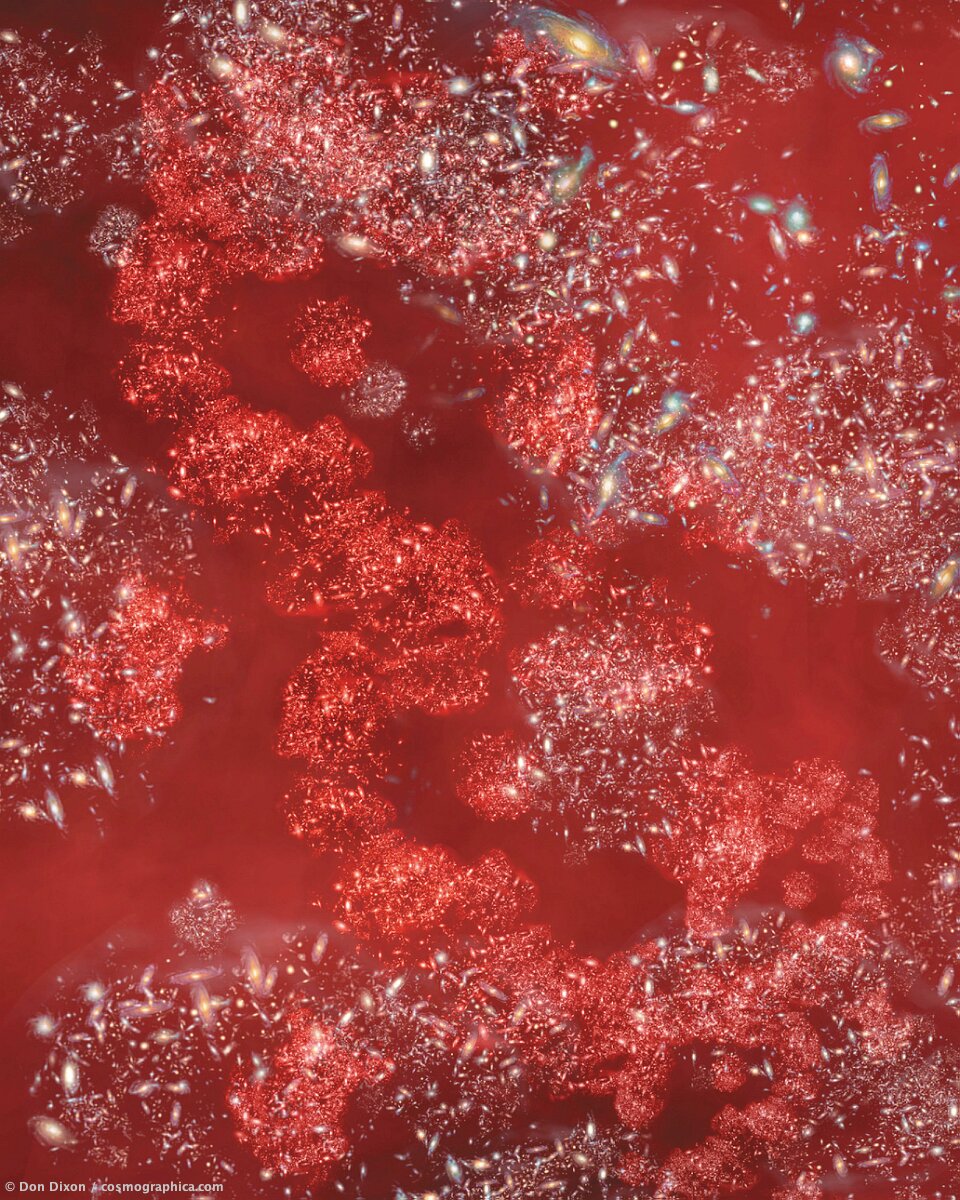
359-cosmic-structure-dixon Large Scale Structure of Universe - This theoretical cosmological diagram illustrates the structural hierarchy and scale of matter distribution in the universe, arranged in a counter-clockwise loop of spherical vignettes connected by expanding blue field cones. The sequence scales upward from an individual, finely detailed blue spiral galaxy at the top-left, moving through a localized group of galaxies, a massive galaxy cluster populated by hundreds of points of light, and a broader supercluster network. The culmination on the right shows the large-scale cosmic web structure of filaments and voids, which eventually smooths out at the maximum scale into a homogeneous, uniform lavender sphere, demonstrating the cosmological principle where the universe becomes uniform on its largest scales. digital painting by Don Dixon for Scientific American
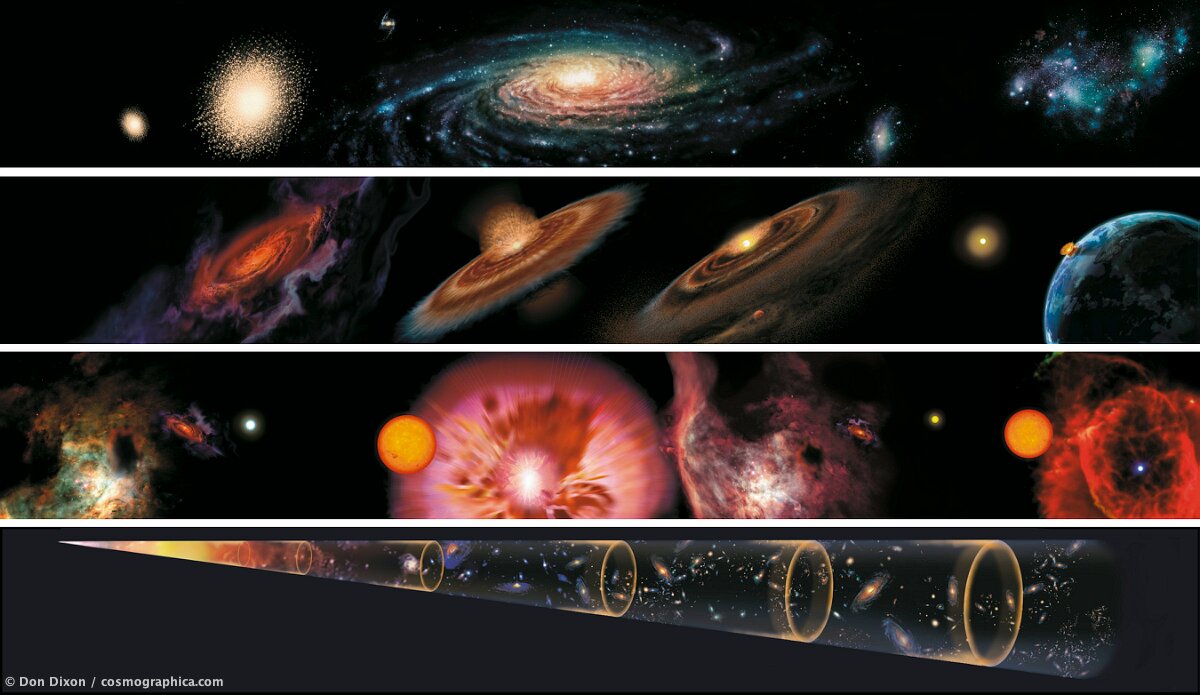
Evolution of Stars Diagram
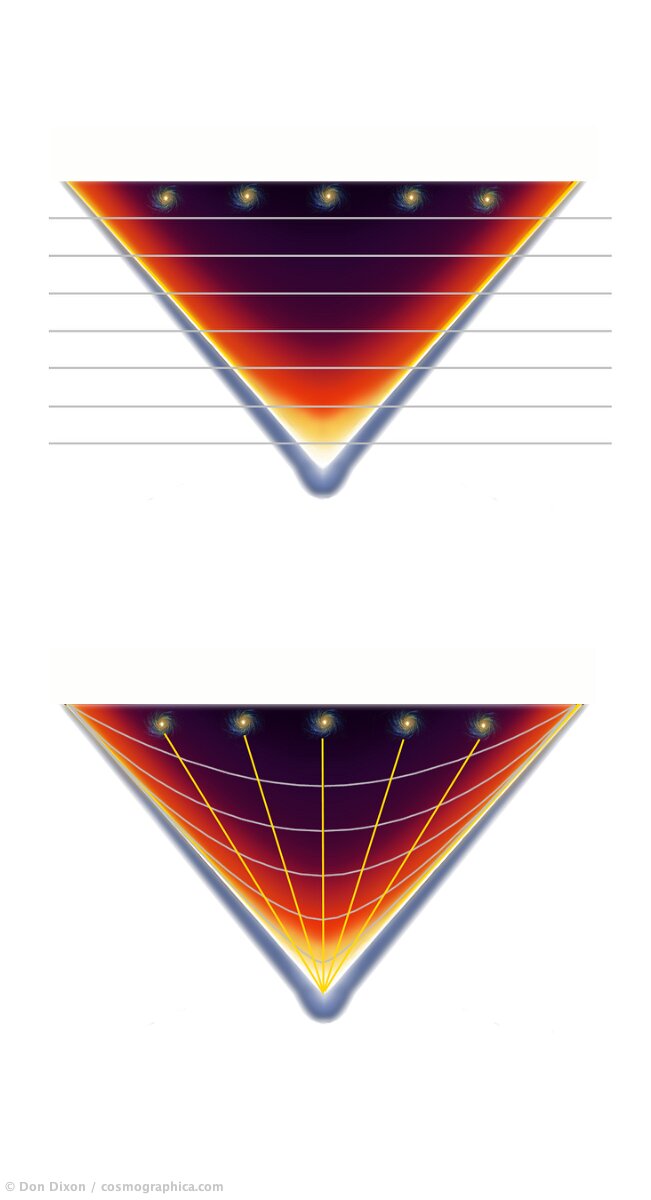
372-evolution-of-stars-dixon – This four-panel astronomical infographic charts stellar and cosmic evolution across distinct chronological scales. The top panel illustrates a macrocosmic scale from point-source stars to fully formed spiral galaxies and diffuse irregular clusters. The second panel details a star-formation timeline from a collapsing molecular cloud and accretion disk to a mature star flanked by a newly formed rocky planet. The third panel visualizes stellar lifecycles and deaths, contrasting low-mass planetary nebula ejection with high-mass supernova explosions. The bottom panel serves as a cosmological timeline, showing the expansion of space from the hyper-dense Big Bang cone out to the modern epoch populated by distributed galaxy structures. painting by Don Dixon for Smithsonian Institution, © Don Dixon



Constellation Orion in 3D
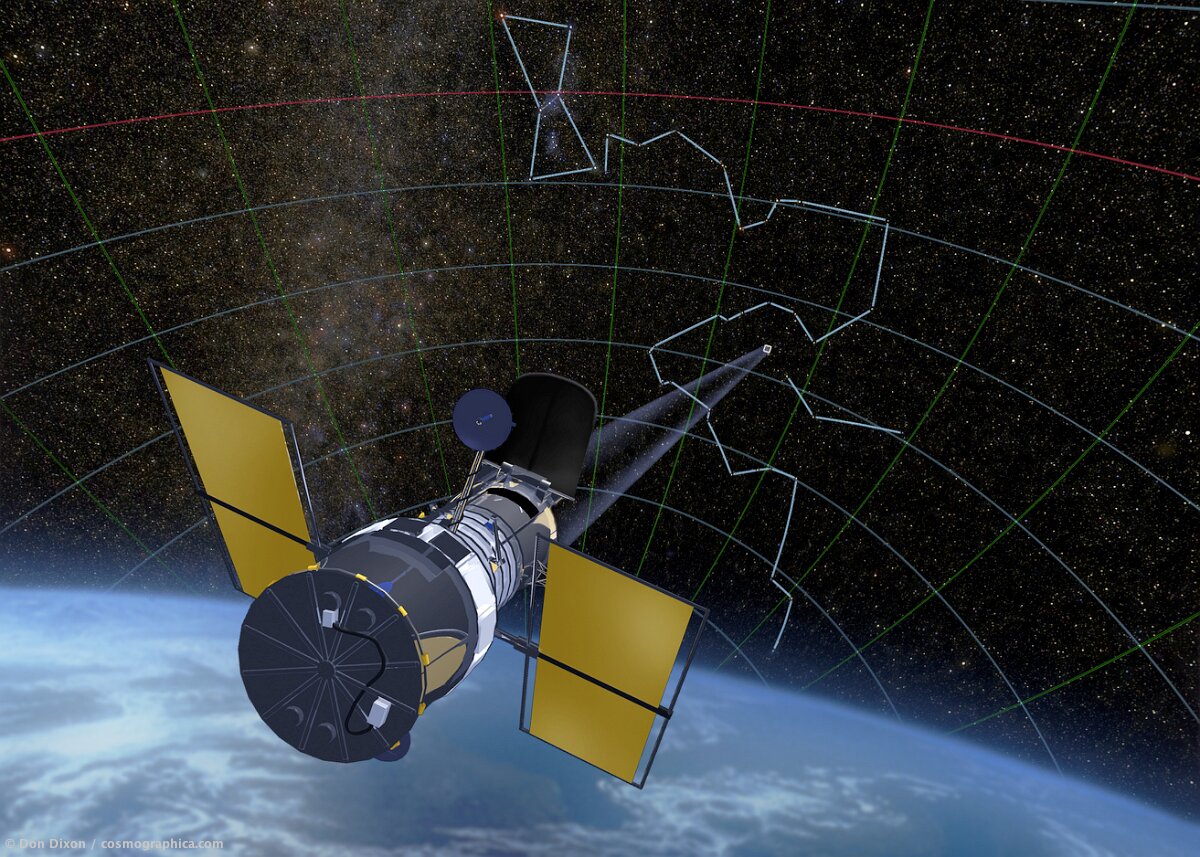
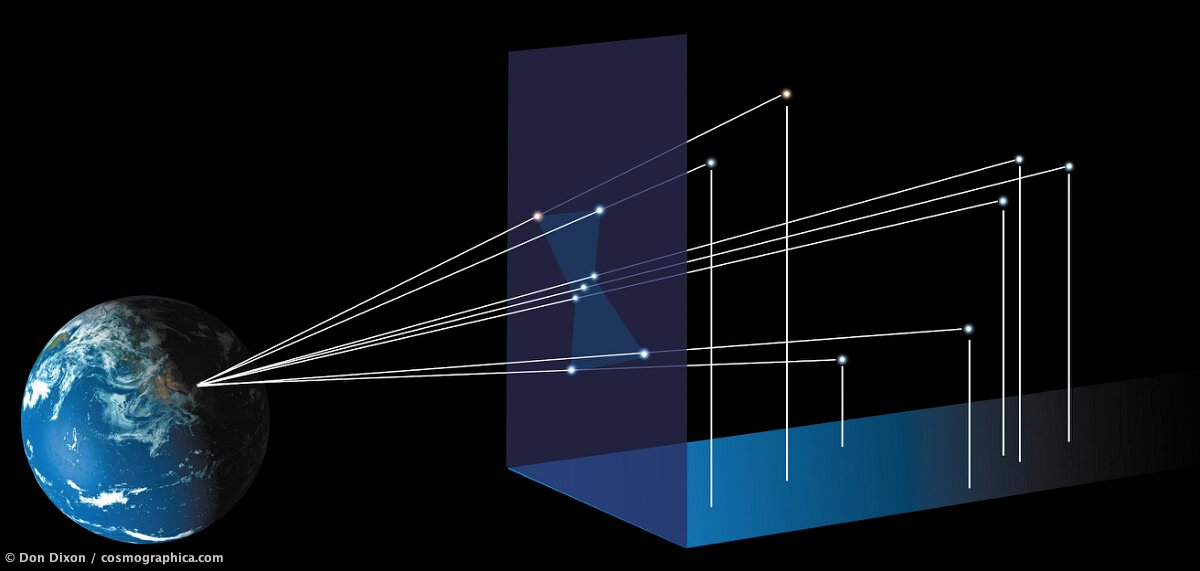
409-orion-constellation-3d-dixon – The stars delineating the constellation Orion are dispersed across nearly 2,000 light years in this 3D representation. A technical infographic visualizes the true three-dimensional spatial distribution of stars within the Orion constellation relative to Earth. White sightlines project from a realistic Earth globe on the left, passing through a translucent blue vertical pane that displays the familiar, flat constellation pattern. Beyond this 2D projection screen, the individual stars are extended into true deep space at varying physical distances, suspended above a blue horizontal scale plane by vertical guide lines. Digital, 2003. © by Don Dixon.
Dark Matter Halo
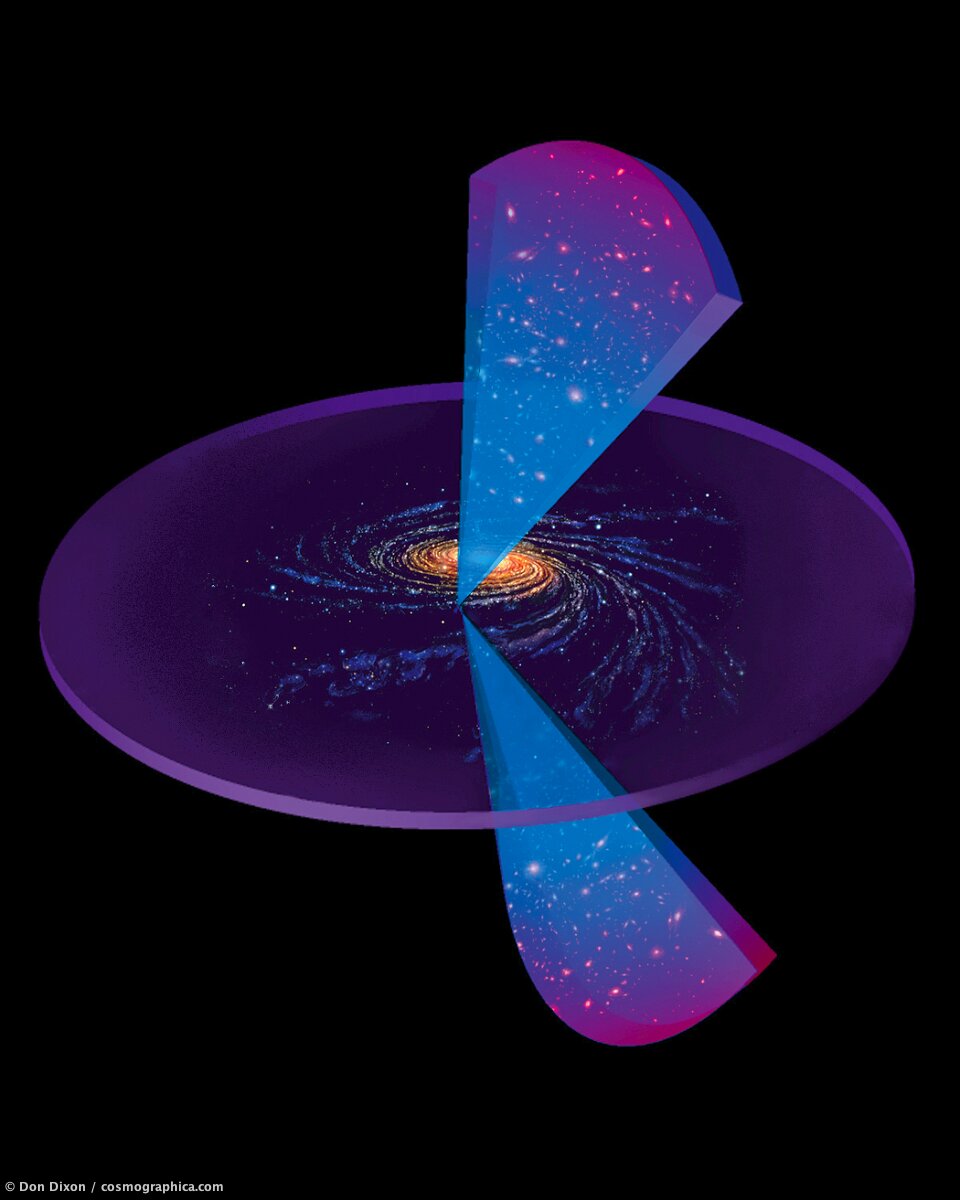
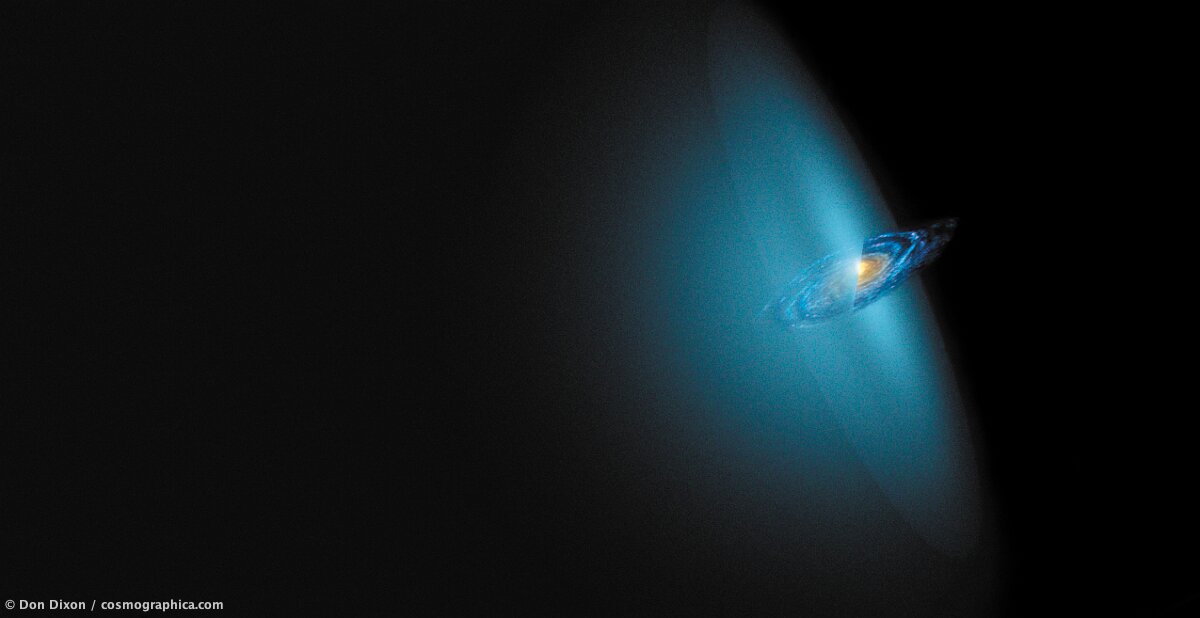
401-dark-matter-halo-dixon –This diagram created for the March, 2003 issue of Scientific American suggests the immense halo of mysterious dark matter that many astrophysicists believe surrounds our galaxy. The visible stars and gases of the Milky Way contribute less than ten percent of its total mass. A conceptual wedge cutaway from the massive, glowing blue and translucent white spherical structure exposes the interior layout, showing how the invisible mass distribution extends far beyond the visible galactic disk. The diffuse halo reaches into the surrounding deep space void, providing the gravitational scaffolding necessary to hold the spinning galactic structure together.
Universe Time Line
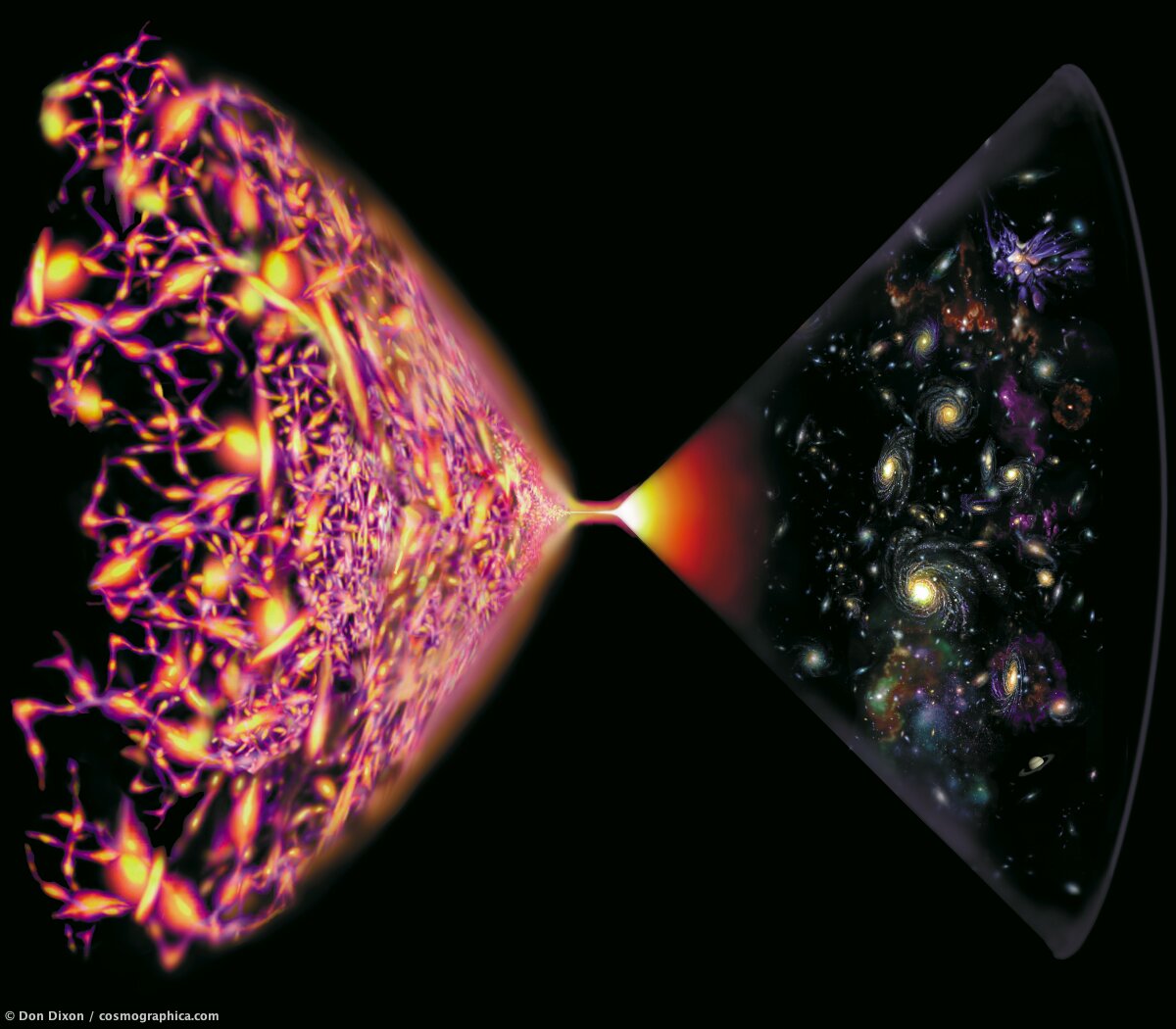
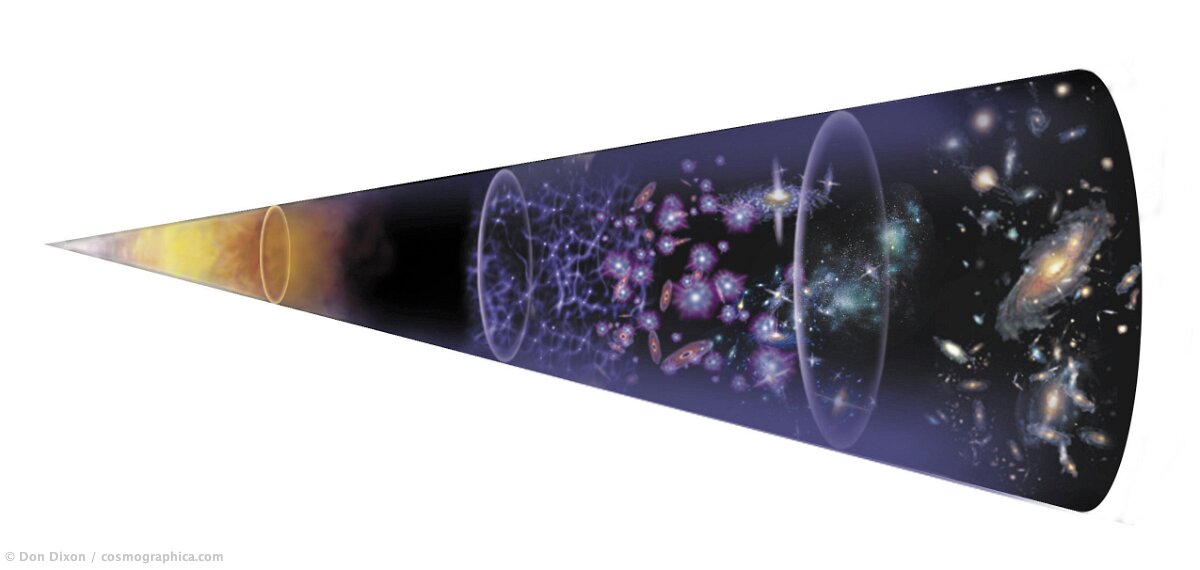
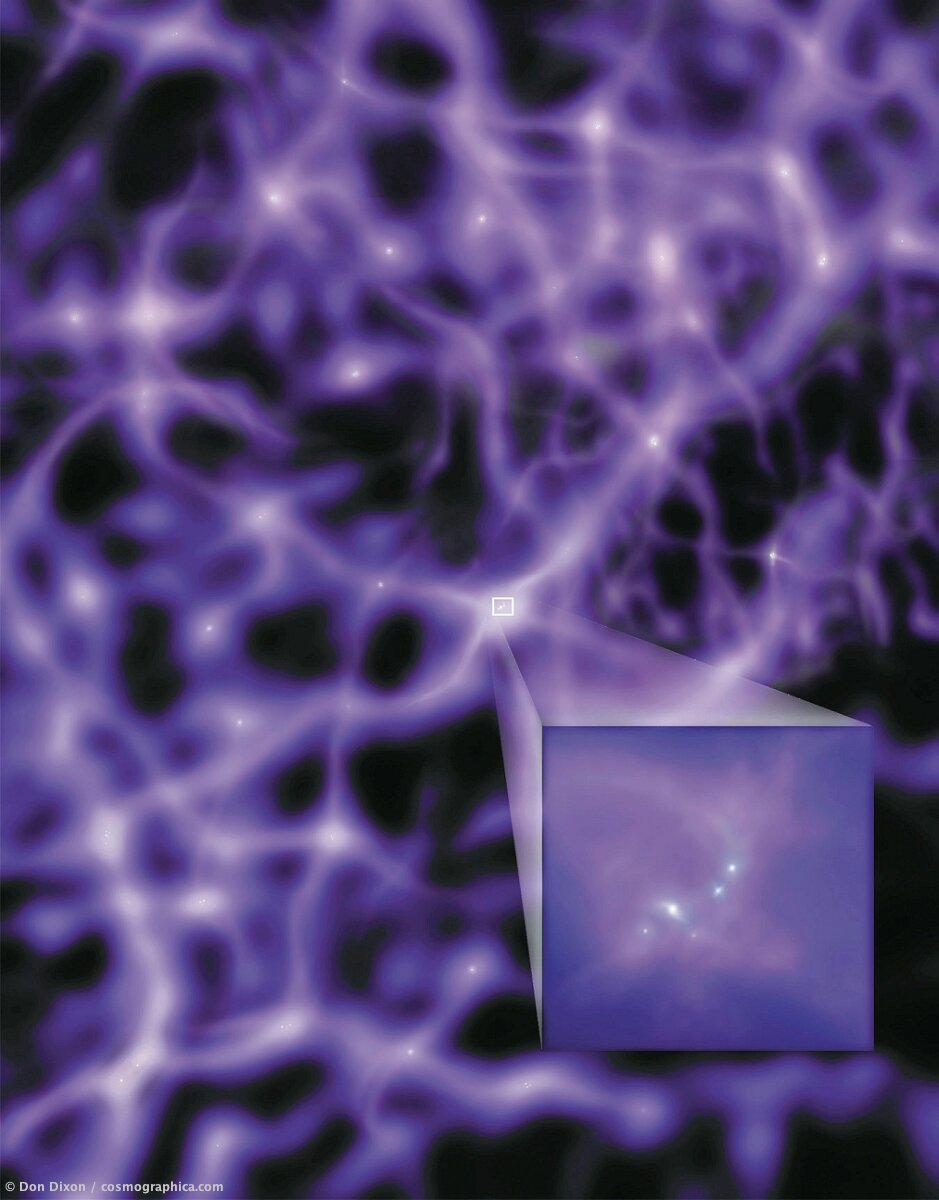
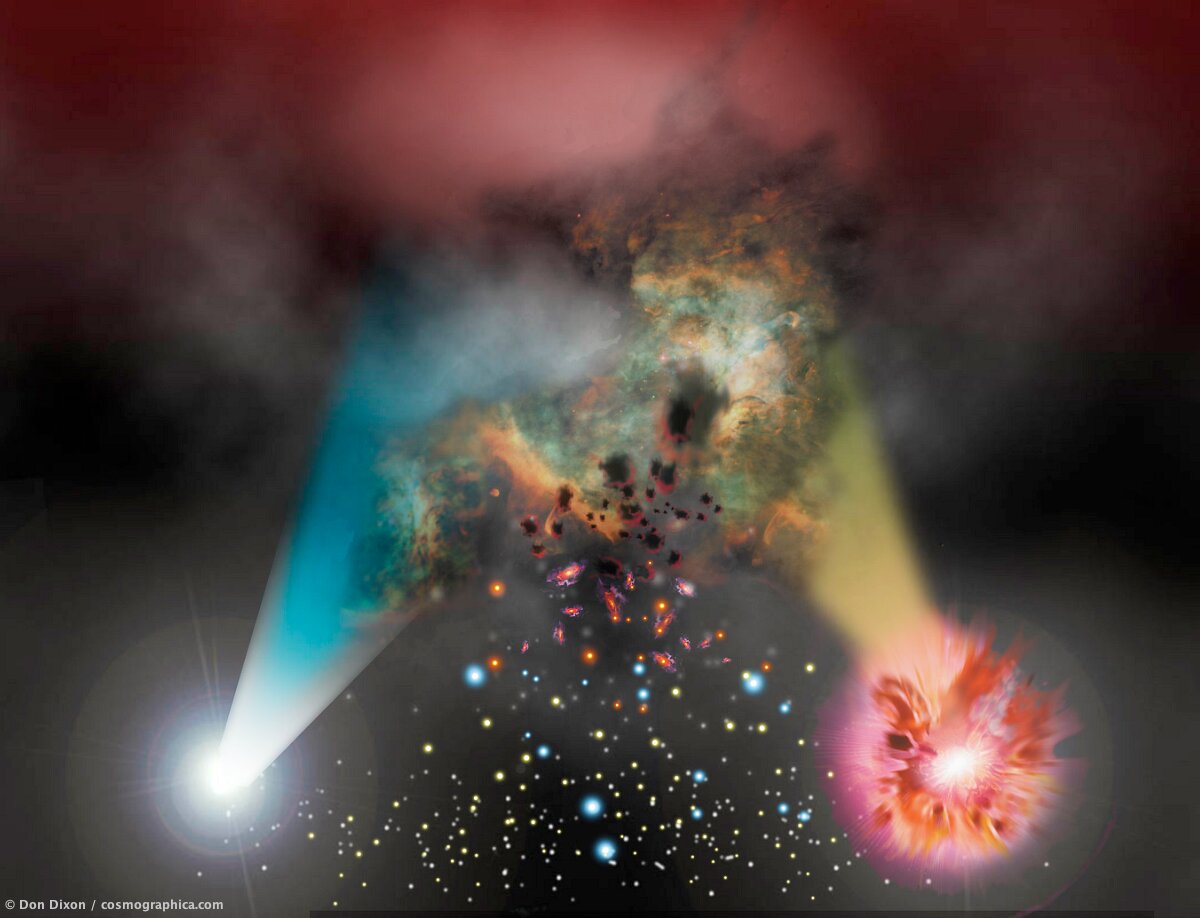
389-universe-time-line-dixon –History of the universe in four stages: the Big Bang is marked by the left vertex, followed by a million-year dark age until the first stars form at the intersection of huge filaments of primordial hydrogen. A period of intense star formation and violent explosions lays the foundation for the universe we see today. - painting by Don Dixon for Scientific American
The Galactic Atmosphere
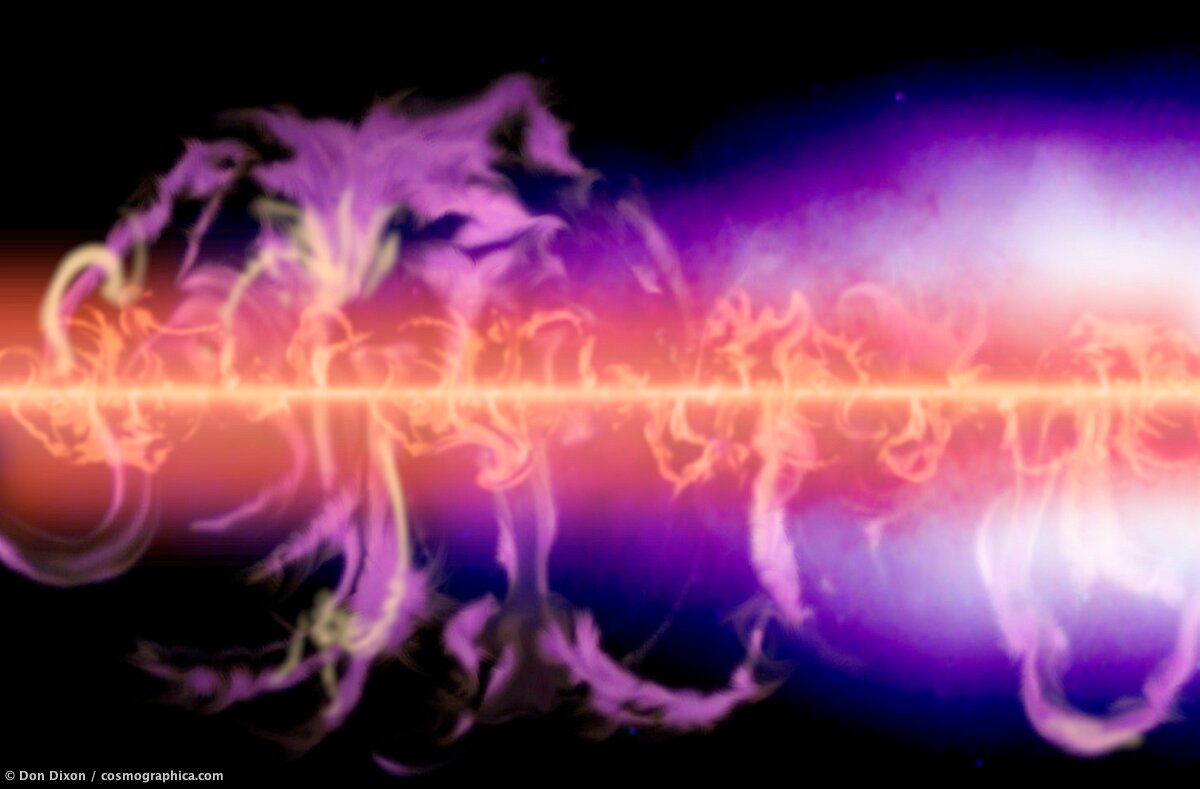
385-galactic-atmosphere-dixon – Even the galaxy has a kind of weather, in which fountains of tenuous gas arch high above the galactic plain through vents blasted by supernova explosions. A scientific visualization depicts the high-energy, turbulent gas dynamics within a galactic atmosphere or circumgalactic medium. An intense, linear orange-red horizon of hot plasma bisects the composition, venting loops and tendrils of cool purple and magenta gas into the surrounding void. On the right, a brilliant white energetic flare ionizes a broad swath of the interstellar medium, creating a dense, glowing purple cloud structure. digital painting for Scientific American, © Don Dixon
Milky Way
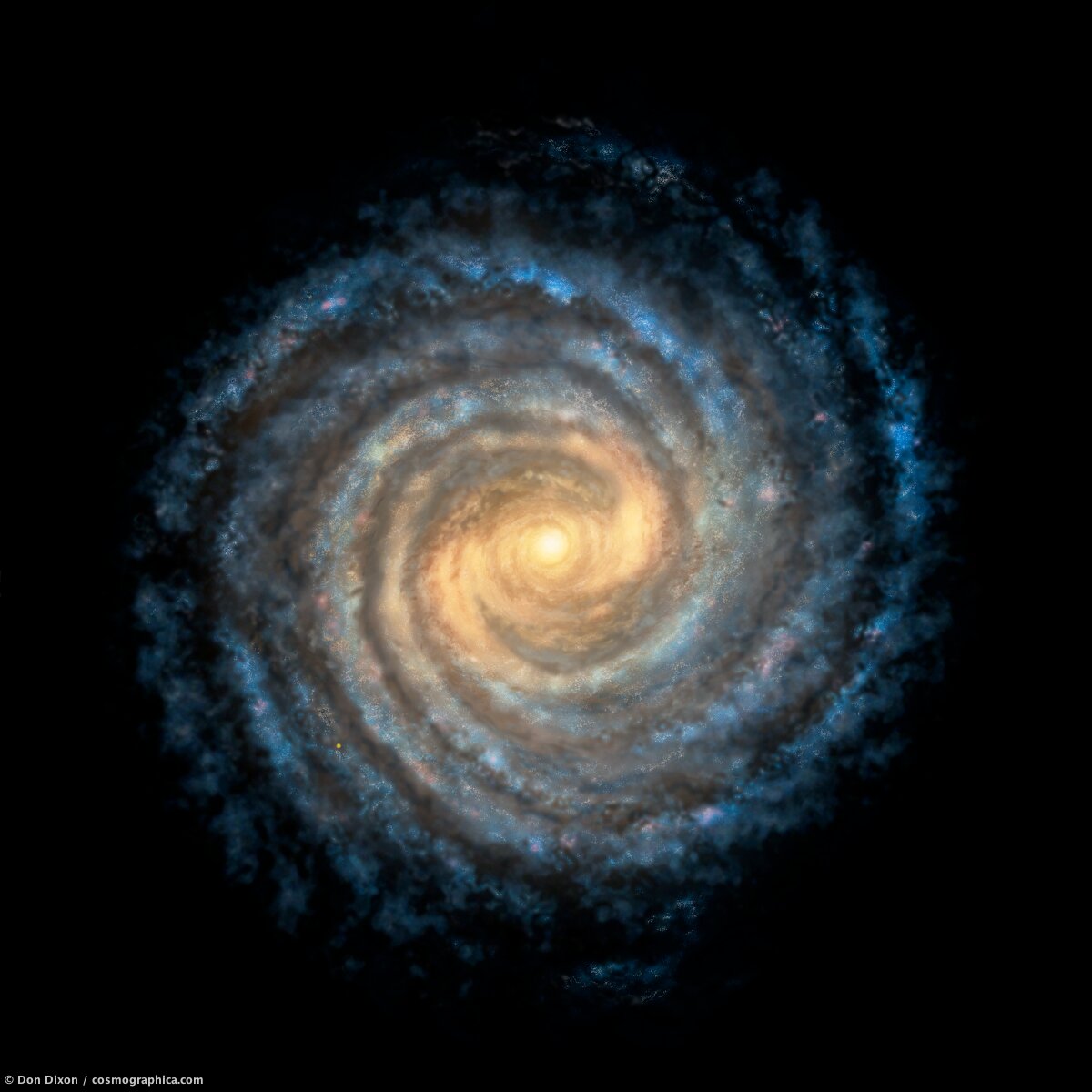
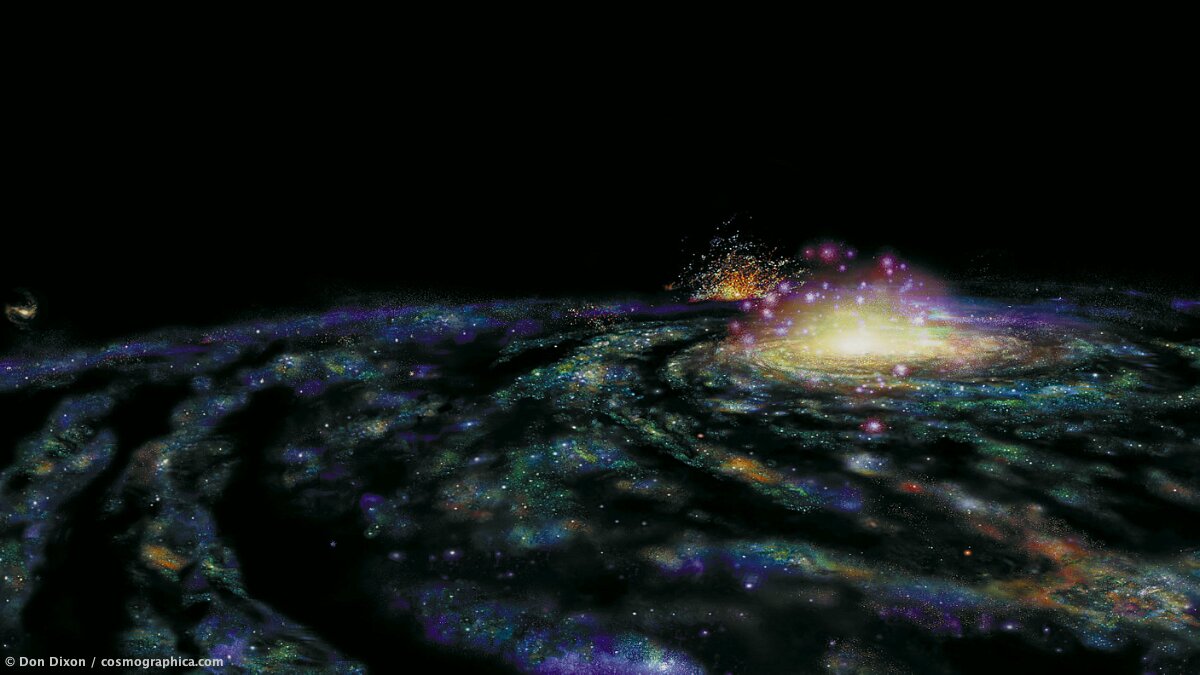
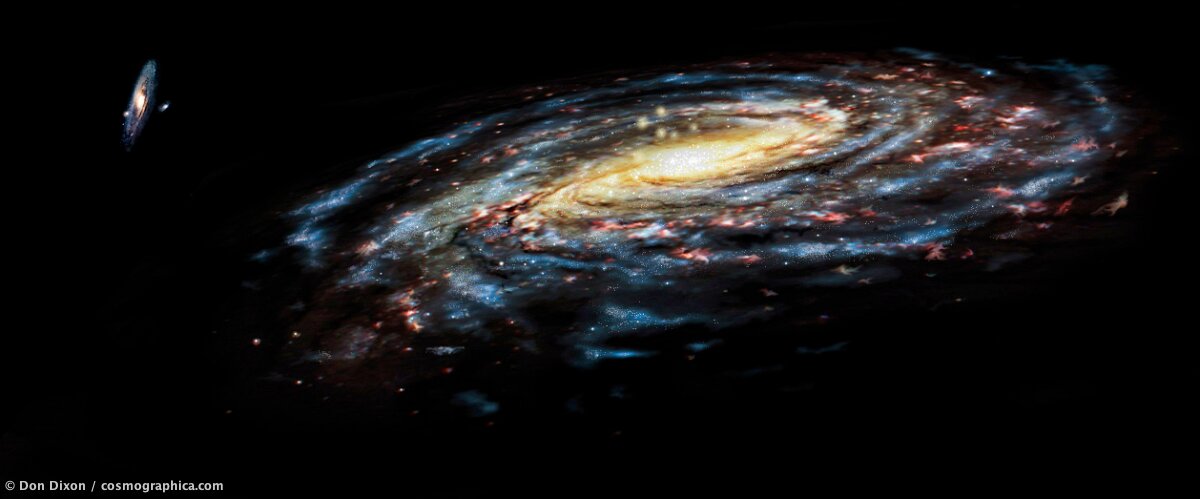
377-seti-galaxy-dixon –The Milky Way Galaxy - A grand, sweeping spiral galaxy tilts dynamically across a black cosmic void, its brilliant yellow-white core surrounded by tightly wound spiral arms. The structure is heavily detailed with mottled blue star-forming regions, pink emission nebulae, and complex lanes of dark interstellar dust cutting through the galactic plane. In the deep background to the upper left, the Andromeda galaxy accompanied by a tiny satellite galaxy drifts in isolation. digital painting by Don Dixon for Scientific American
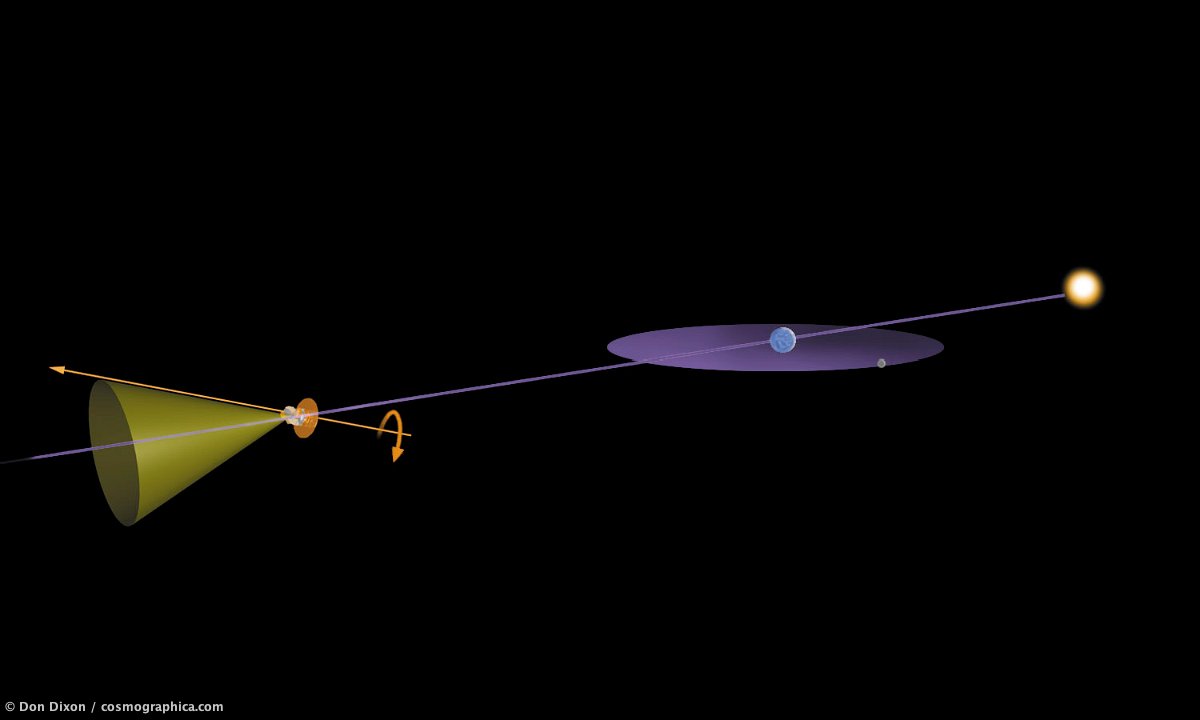
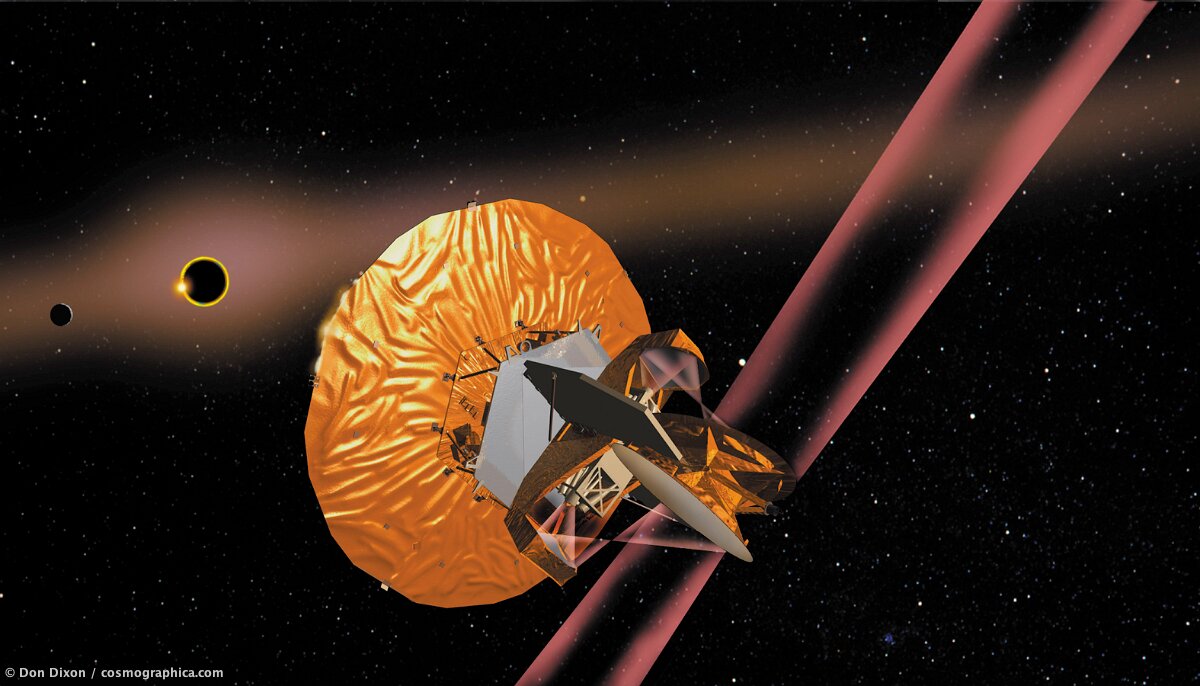
375-microwave-probe-dixon – The Microwave Anisotropy Probe (MAP) spacecraft floats in deep space, deploying its back-to-back primary reflectors to measure temperature fluctuations in the cosmic microwave background. A large, circular golden thermal shield protects the sensitive instruments from solar radiation, keeping them oriented away from the distant, eclipsed Sun and Earth visible on the left. Dual translucent pink scan paths extend from the telescope's optics into the background starfield, slicing across a diffuse band of zodiacal light. digital painting by Don Dixon for Scientific American