478-Hadean-Earth
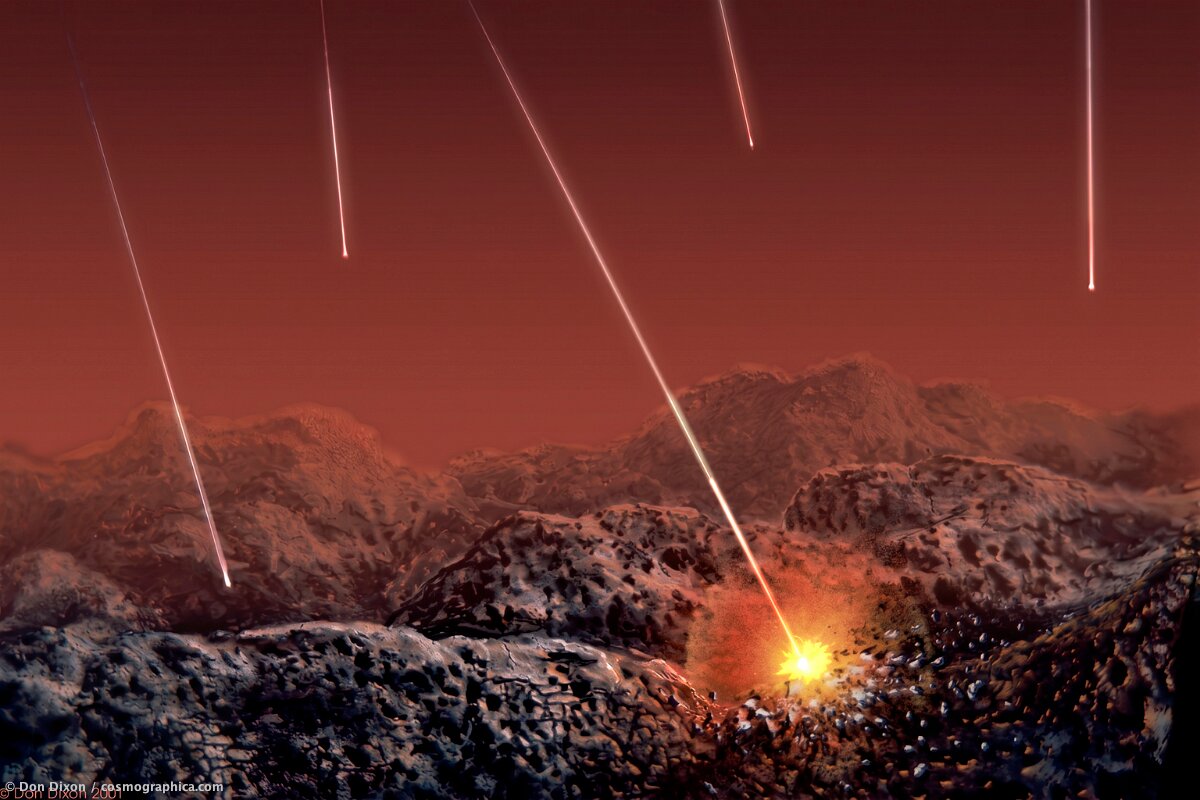
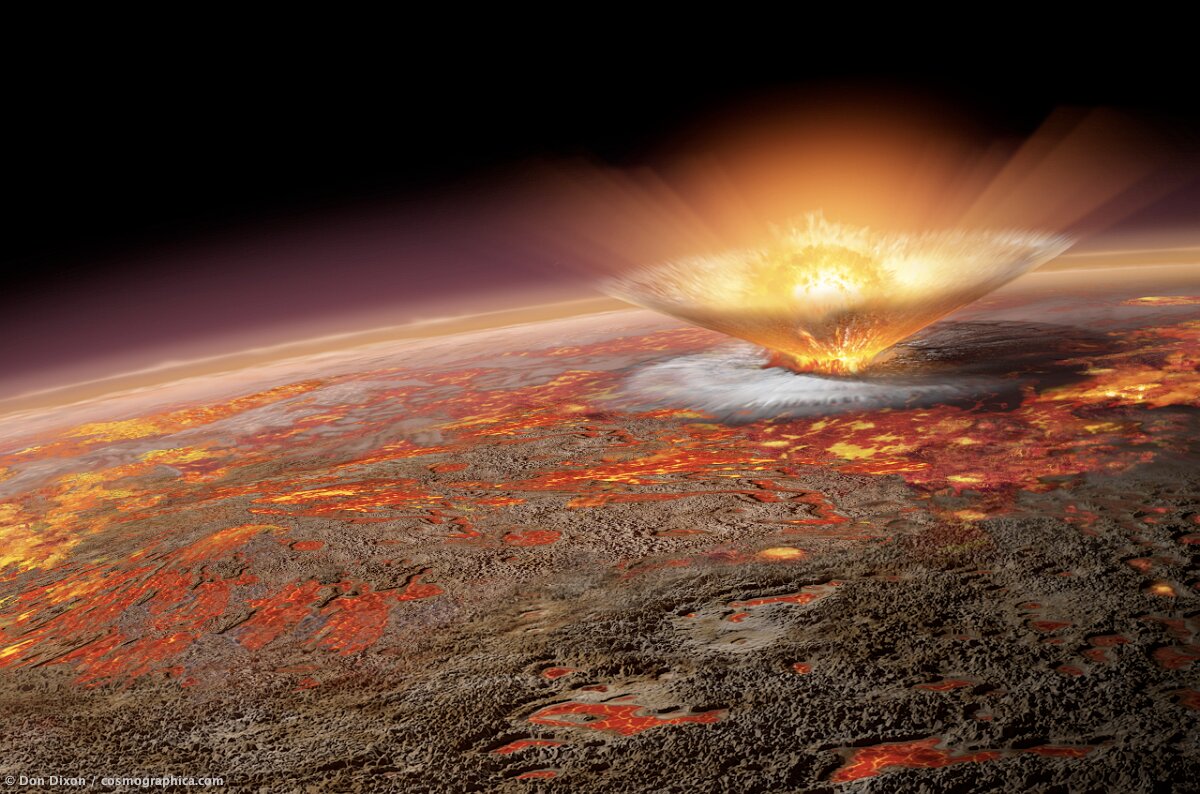
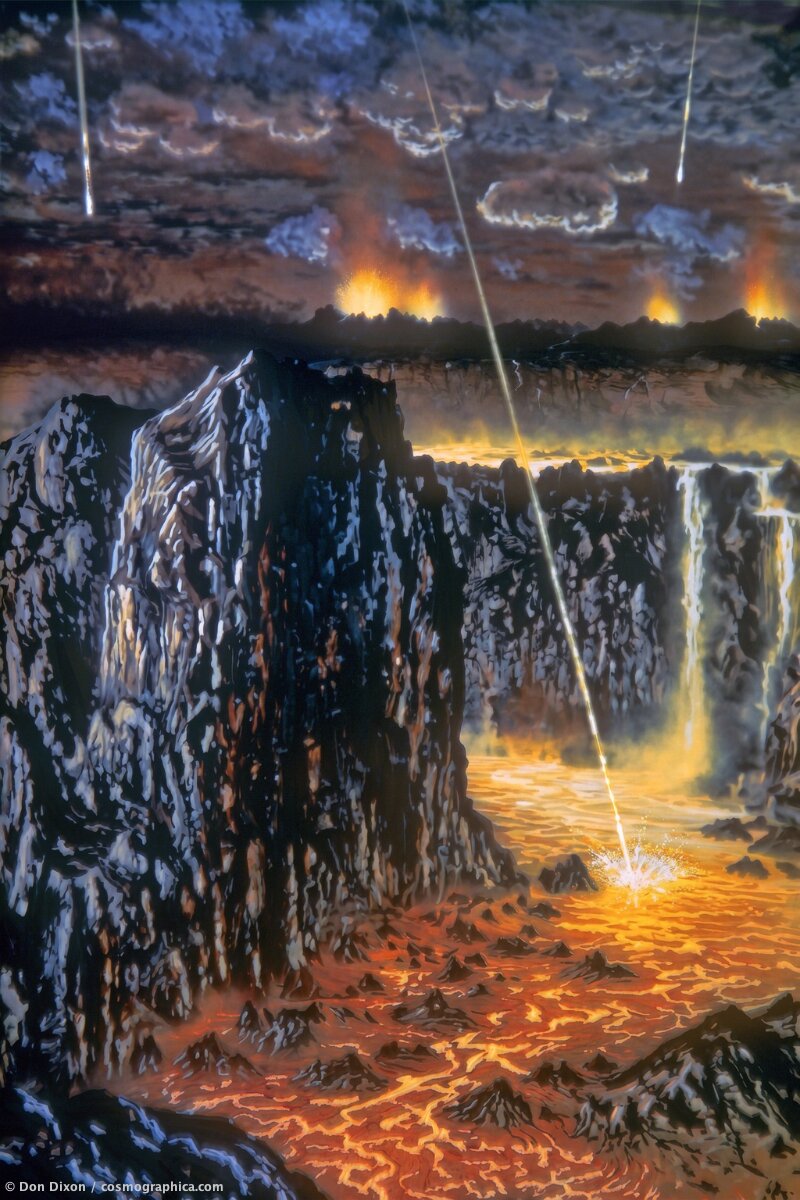
478-hadean-earth-dixon –A violent, high-energy planetesimal impact breaches the thin, primordial crust of the Hadean Earth. The colossal kinetic collision triggers a massive, blinding conical eruption of superheated plasma, molten ejecta, and shockwaves that pierce the dense, glowing atmospheric haze. Below the impact site, a vast, hellish expanse of fractured volcanic rock is interlaced with extensive, bright orange river networks and lakes of churning, liquid lava under a darkening sky. © 2010 Don Dixon/cosmographica.com
475-end-of-cosmology
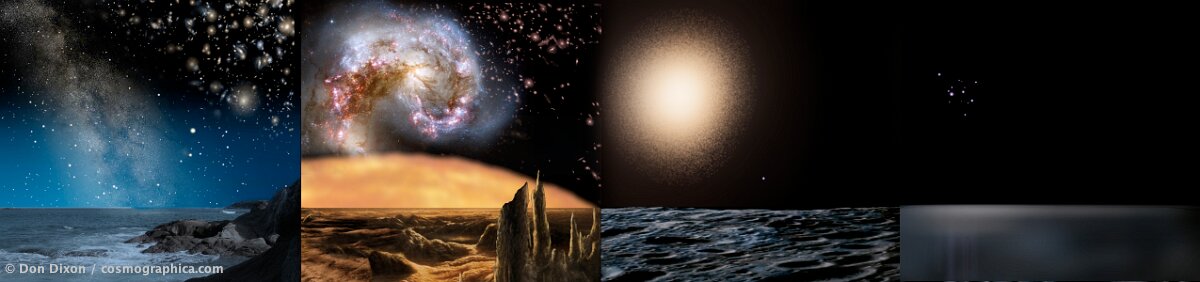
475-end-of-cosmology-dixon – A panoramic, four-panel chronological progression visualizes the ultimate structural evolution and decay of the universe over trillions of years. The first panel shows a vibrant ocean shoreline under a brilliant night sky dense with galactic stars. The second panel transitions to a desiccated, craggy alien landscape beneath a massive colliding galactic system rich with dust lanes. The third panel depicts an undulating, dark liquid expanse under a single, fading elliptical galaxy of aging stars. In the final panel the last stars wink out and the frozen cinder that is earth's surface is blasted smooth by a trillion years of micrometeorite bombardments. Only a few stars relieve the eternal night. created for Scientific American.
457-moon-capture-theory-diagram
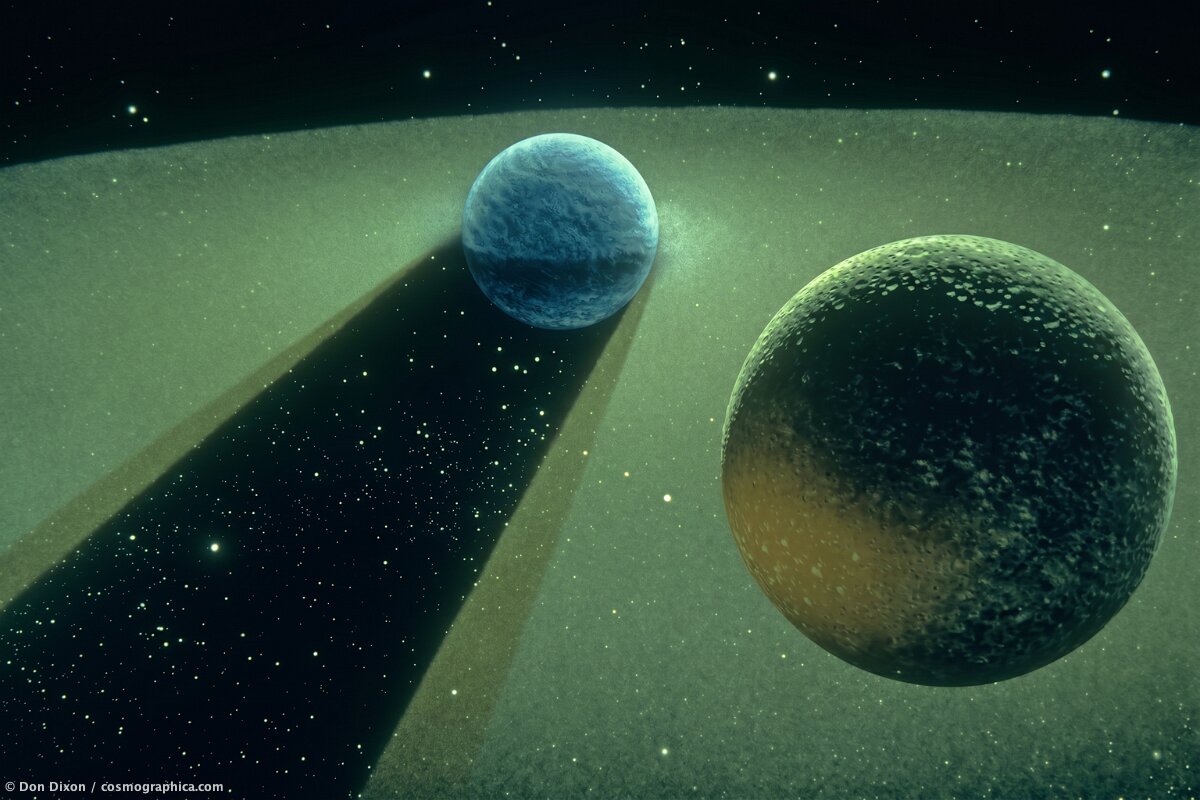
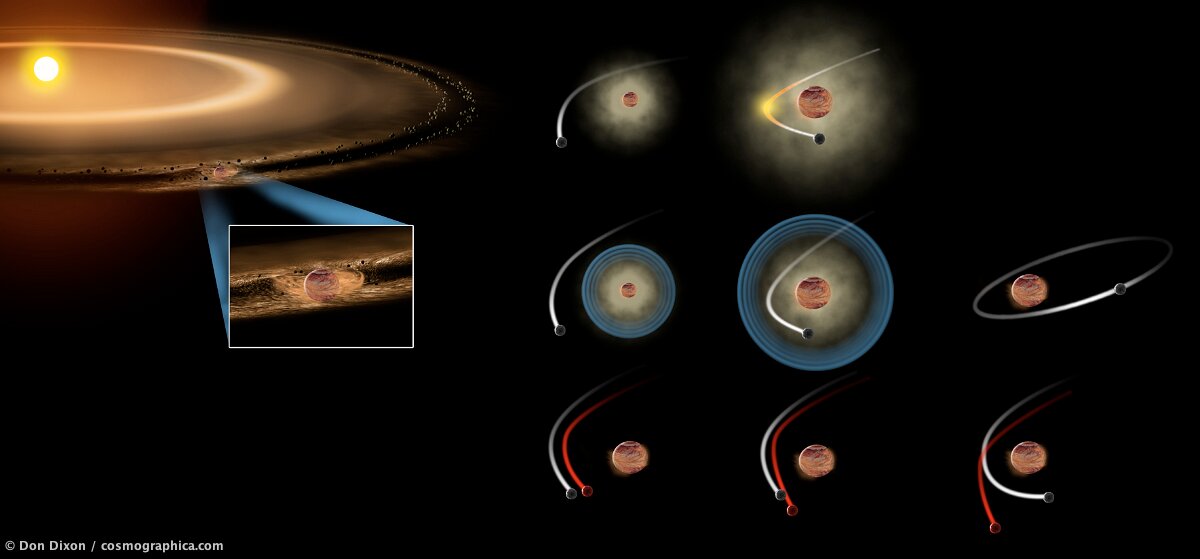
457-moon-capture-theory-diagram-dixon –Infographic shows processes for planet to aquire a satellite. A developing planet's halo of gas expands to capture a passing body (top). Its gravitational sphere of influence expands as well (middle). Interactions between passing asteroids may cause one to fall into orbit (bottom). Artwork for Scientific American, © 2007 Don Dixon / cosmographica.com
442-Cool-Early-Earth
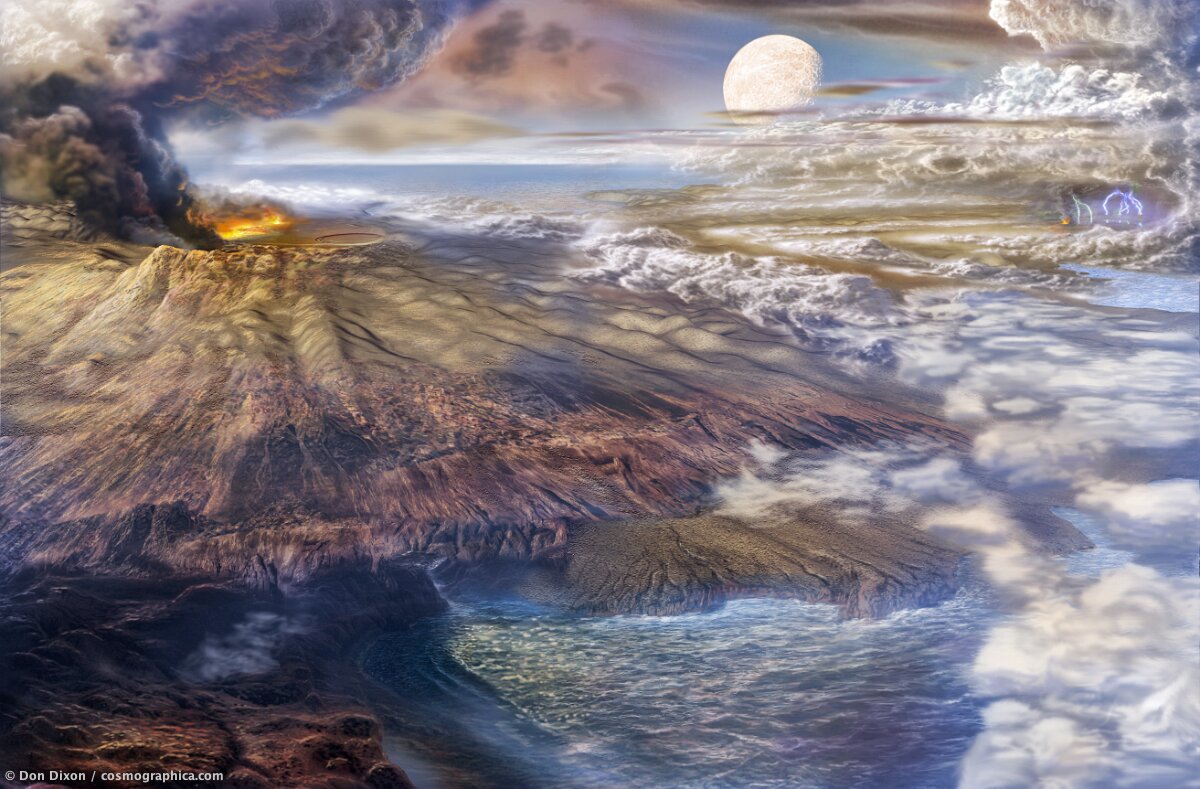
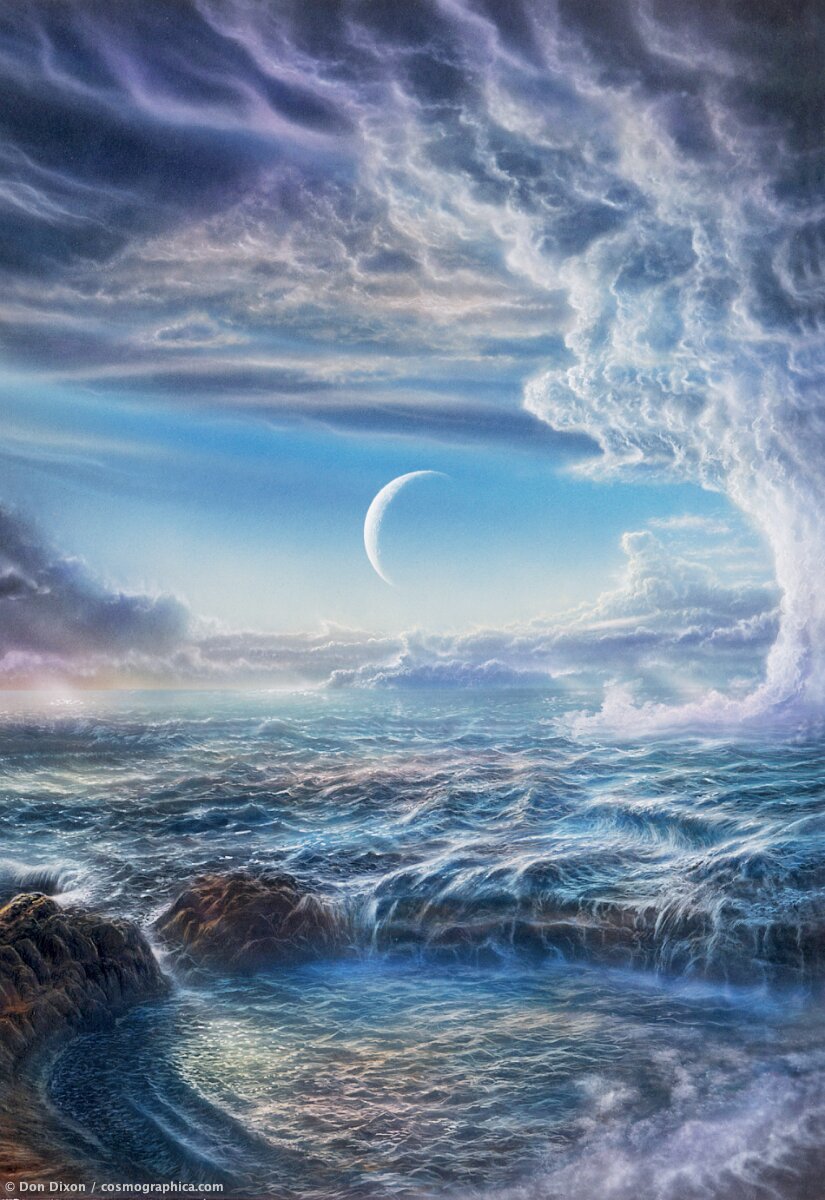
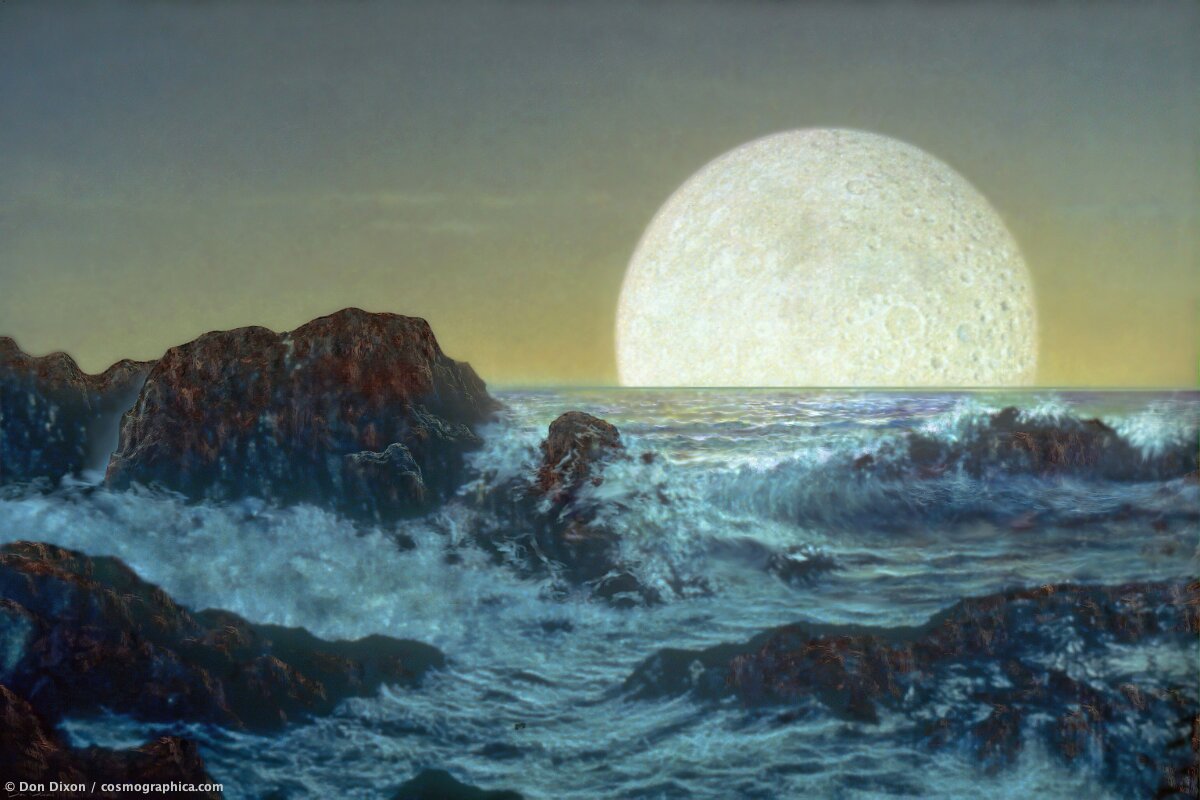
442-cool-early-earth-dixon –A panoramic aerial vista illustrates the "Cool Early Earth" hypothesis, capturing the transition from a molten world to a planet with liquid water. On the left, a massive active volcanic complex spews thick, dark ash columns and glowing lava flows down rugged slopes toward a primordial shoreline. To the right, a vast, white blanket of low-lying clouds and turbulent weather fronts breaks to reveal an expansive, early blue ocean under a massive, detailed moon hanging close in the sky, while distant lightning strikes illuminate the atmospheric haze. ; digital, 2006, for Scientific American
423-Methane-Earth-Pan
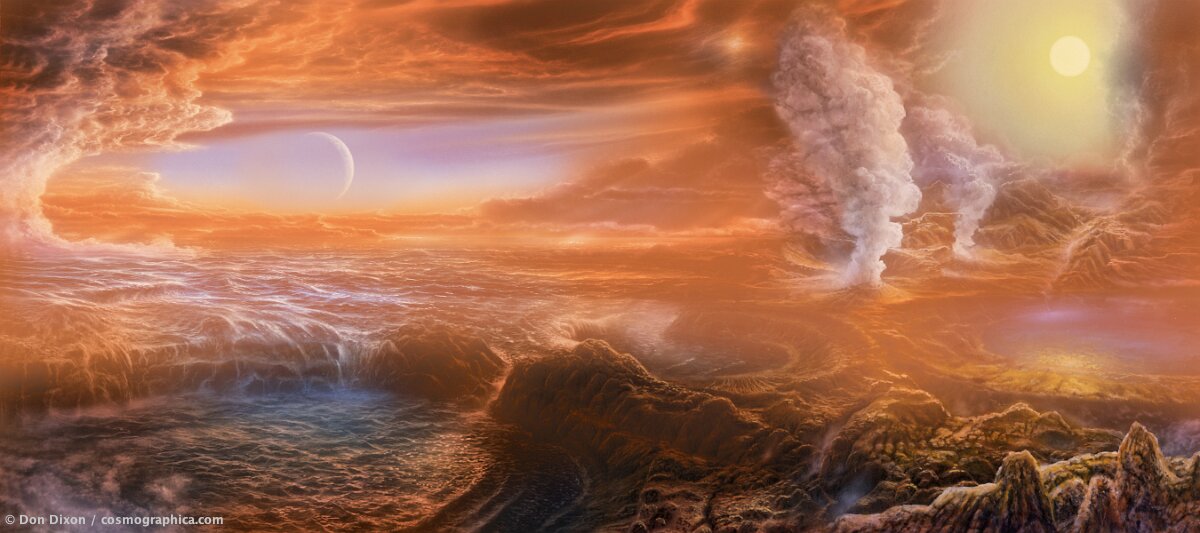
423-methane-earth-pan-dixon - A sweeping, cinematic panorama visualizes the ancient, hydrocarbon-rich atmosphere of Archean Earth under an amber sky. To the left, a turbulent primordial sea beats against dark, submerged volcanic rocks under a thick bank of orange clouds, where a giant crescent Moon hangs low on the horizon. To the right, the rugged, barren coastline gives way to active volcanic vents or geysers blasting towering plumes of steam and gas into the air, all illuminated by a pale, muted Sun filtering through a dense methane haze. Hybrid painting, 2004, for Scientific American. © by Don Dixon.
422-Methane-Earth-01
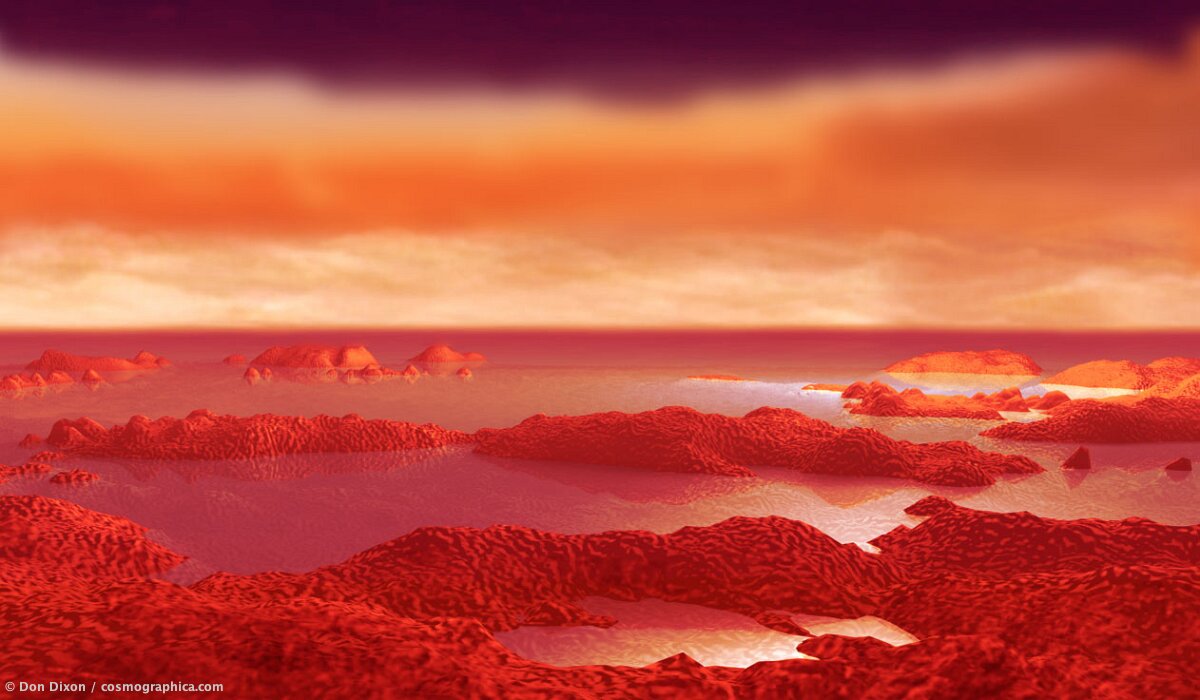
422-methane-earth-01-dixon – Earth's original atmosphere may have been rich in methane gas, which formed an orange, smoglike haze. Digital painting for Scientific American, 2004. © 2005 by Don Dixon.
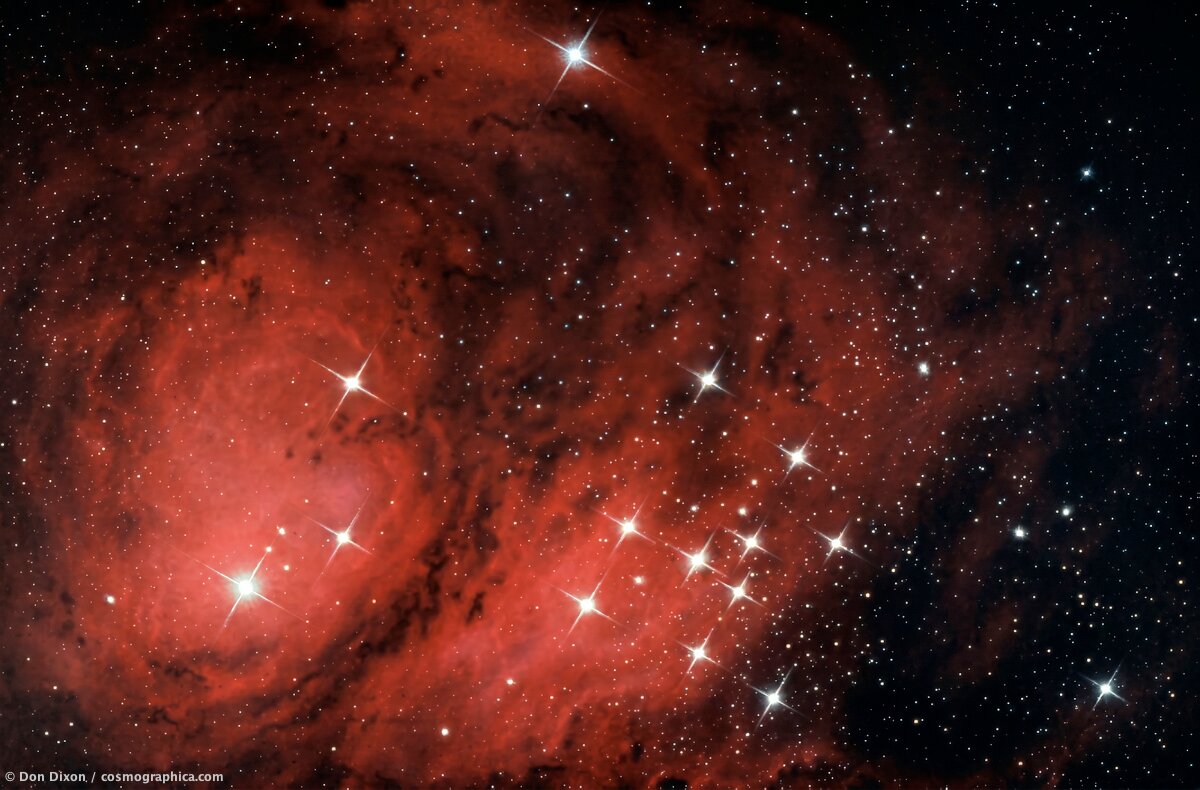
061-primordial-clouds-dixon – A wide telescopic view displays a massive emission nebula acting as a stellar nursery deep in interstellar space. Luminous pockets of ionized hydrogen gas glow with a deep crimson and reddish hue, energized by the intense ultraviolet radiation of embedded, freshly formed young stars. Bright blue-white stellar clusters puncture the dense gas formations, casting stark points of light across the complex, filamentary clouds of cosmic dust. acrylic and gouache on illustration board, 1976. © Don Dixon
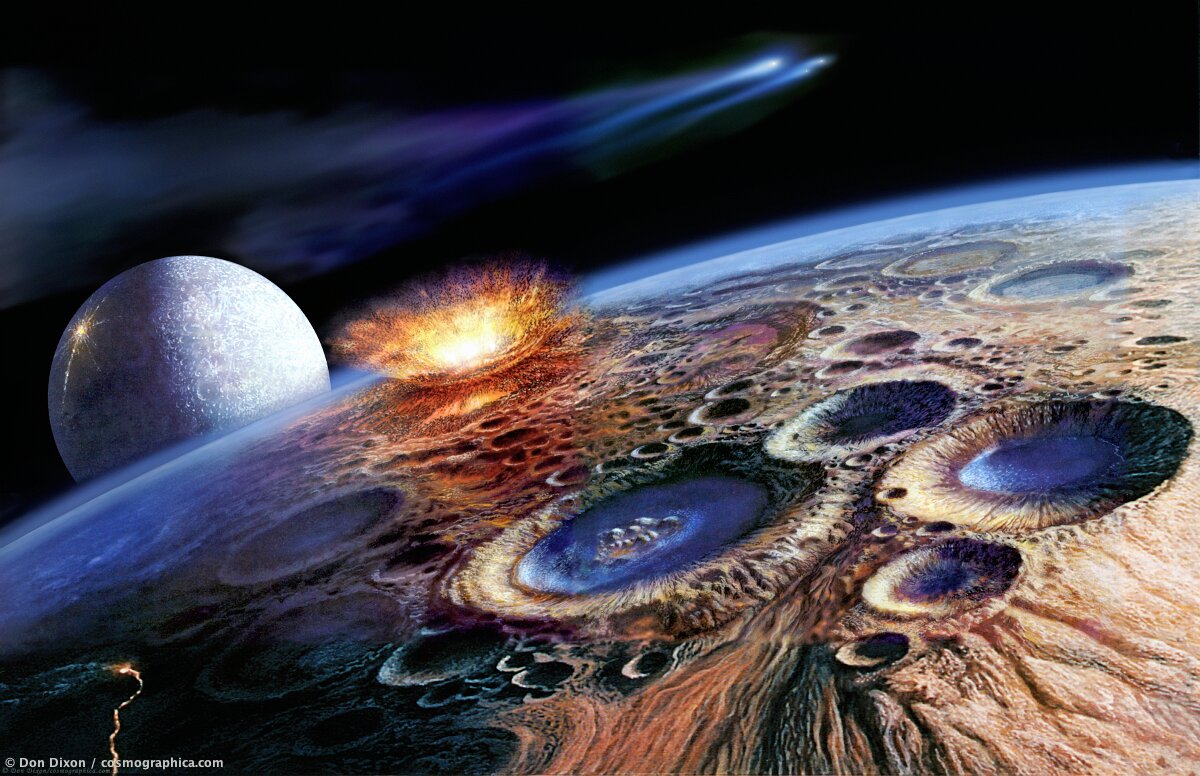
356-primitive-earth-dixon – An orbital perspective of the early Earth during the Late Heavy Bombardment reveals a highly scarred surface dominated by deep, water-filled impact craters. A massive asteroid impact breaches the planet's crust in the mid-ground, sending a brilliant, incandescent plume of ejecta and vaporized rock into space. In the background, a heavily cratered, close-orbiting Moon hangs near a bright comet, emphasizing the chaotic cosmic environment of the early solar system. Featured in Scientific American. copyright Don Dixon / cosmographica.com
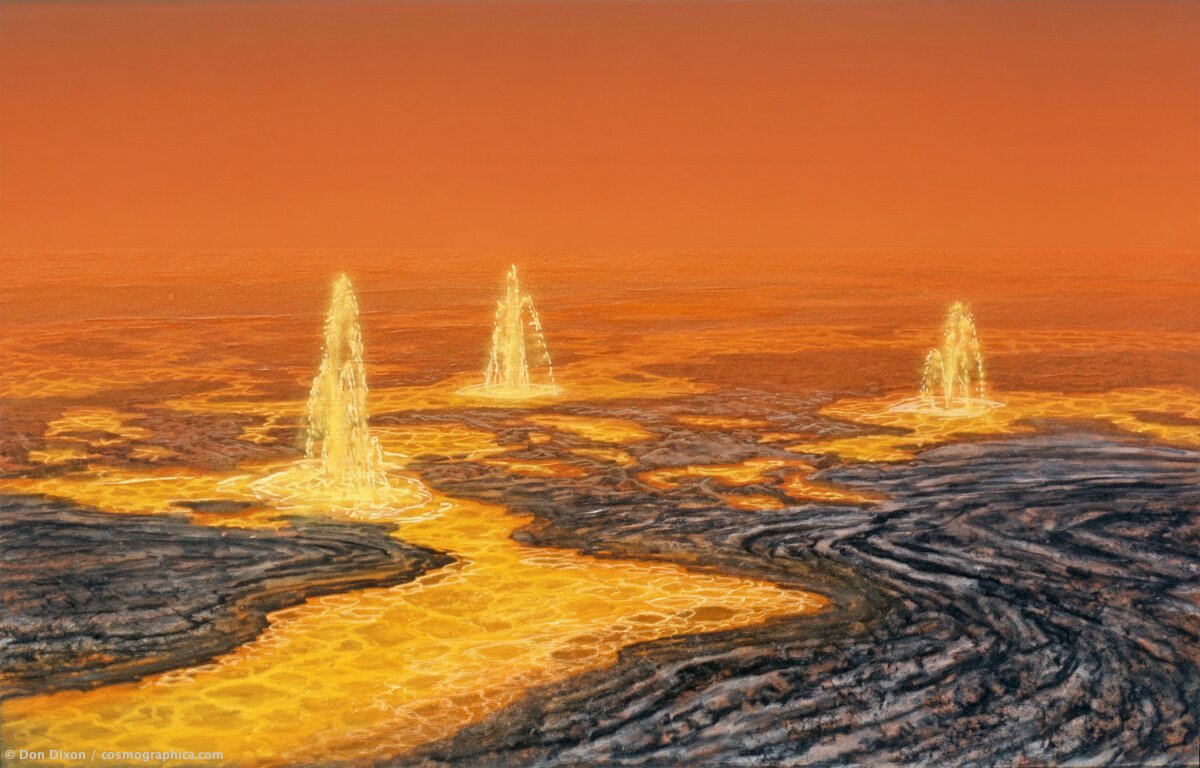
Fire Fountains
099-fire-fountains-dixon – A bleak volcanic plain under a dense, monochromatic orange sky features active lava fountains erupting along a subterranean fissure network. High-energy geysers of incandescent, molten rock spray upward, feeding a river of bright yellow-orange lava that winds through a dark, crustal field of cooled pahoehoe basalt. The uniform, haze-choked atmosphere of the young Earth was dominated by heavy outgassing with an dense greenhouse effect.; acrylic and gouache on illustration board, approximately 10x7 inches, 1975; © Don DIxon
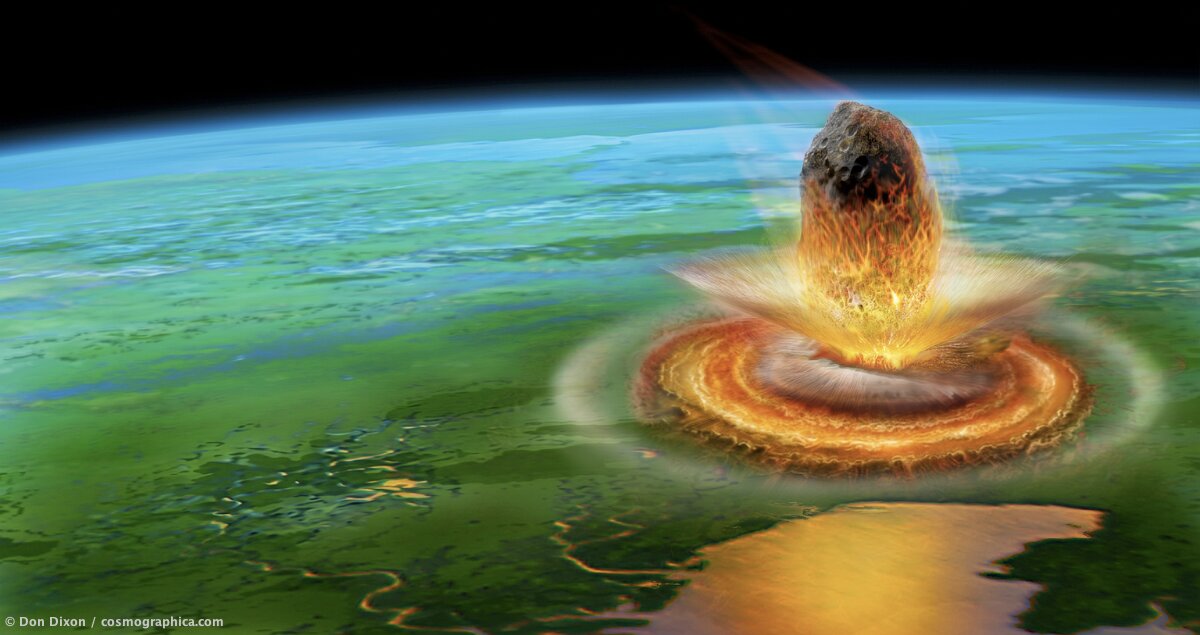
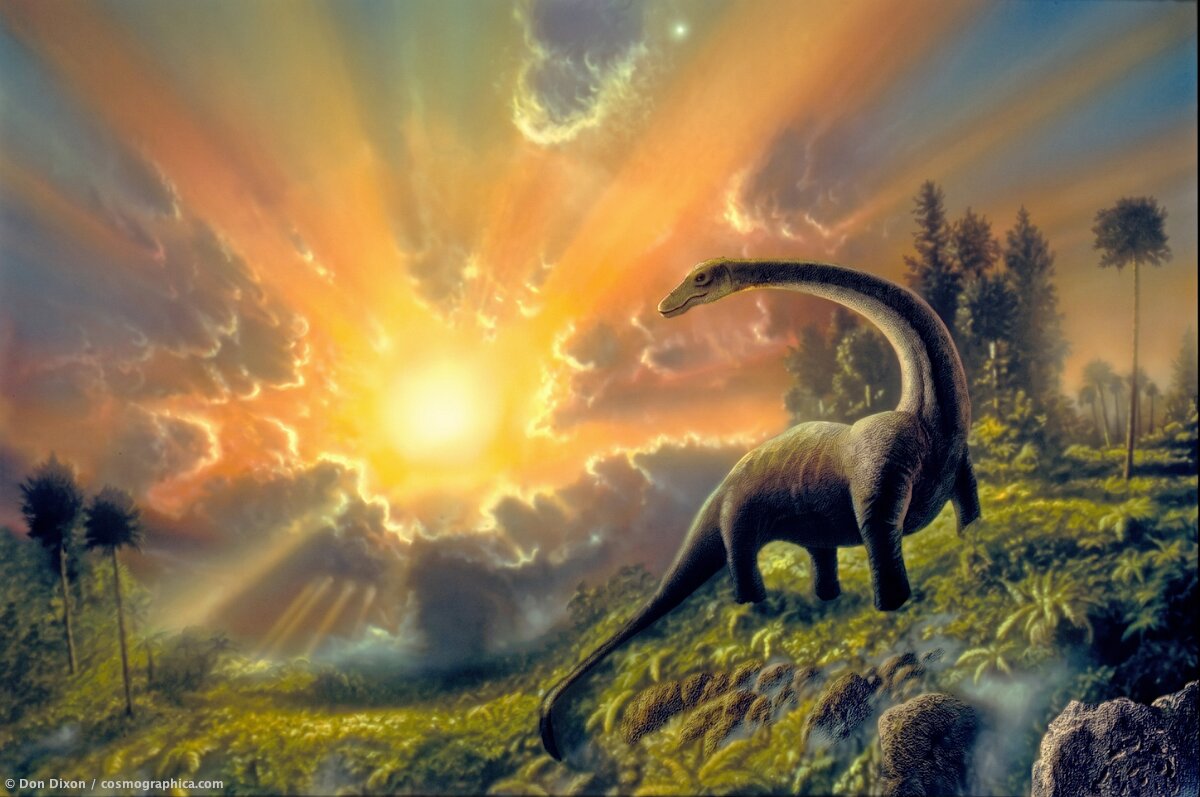
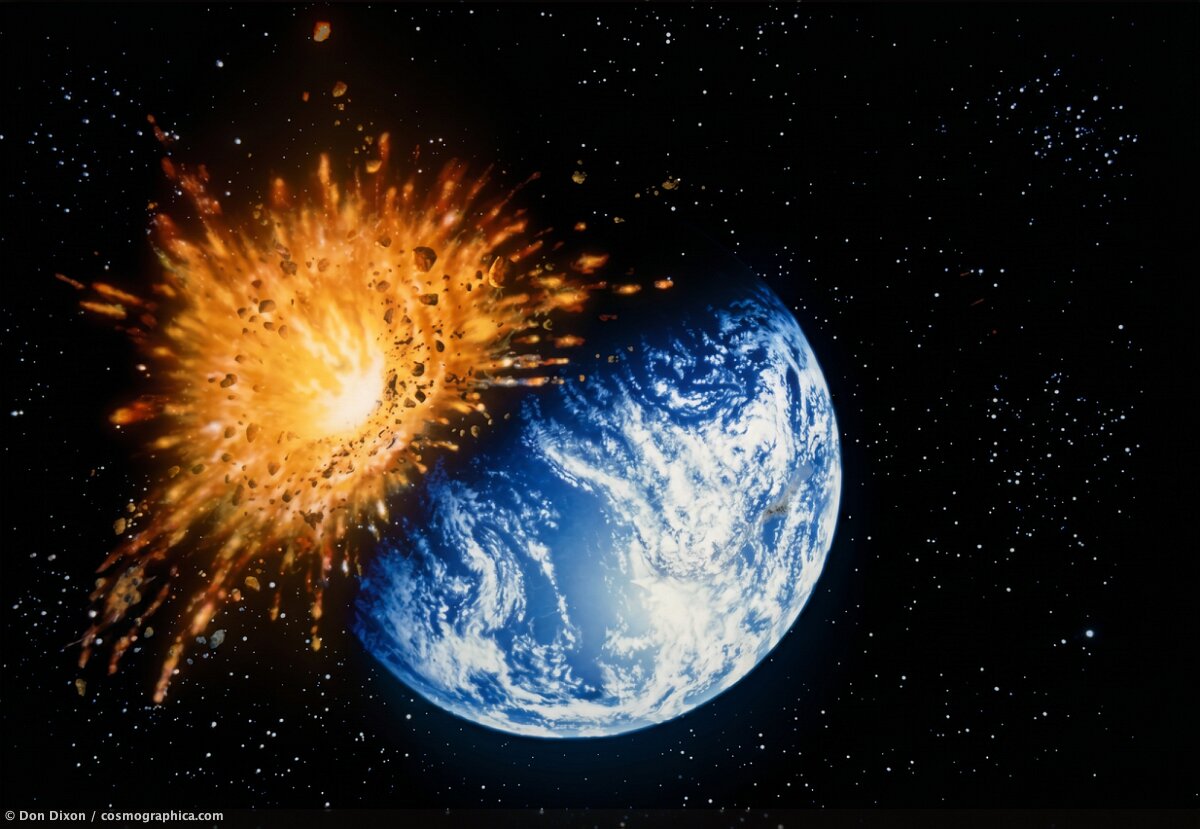
400-yucatan-impact-dixon – An asteroid 5-10 miles across impacts in the Yucatan to end the age of dinosaurs 65 million years ago. A fine layer of clay, rich in the element iridium -- more concentrated in meteorites than in terrestrial rocks -- marks the geological boundary between the Cretaceous and Tertiary eras. This clay layer is believed to have precipitated out of a planet-blanketing cloud of dust that was ejected into the atmosphere by the impact and subsequent fires. The dust darkened and cooled the earth so much that many species became extinct.
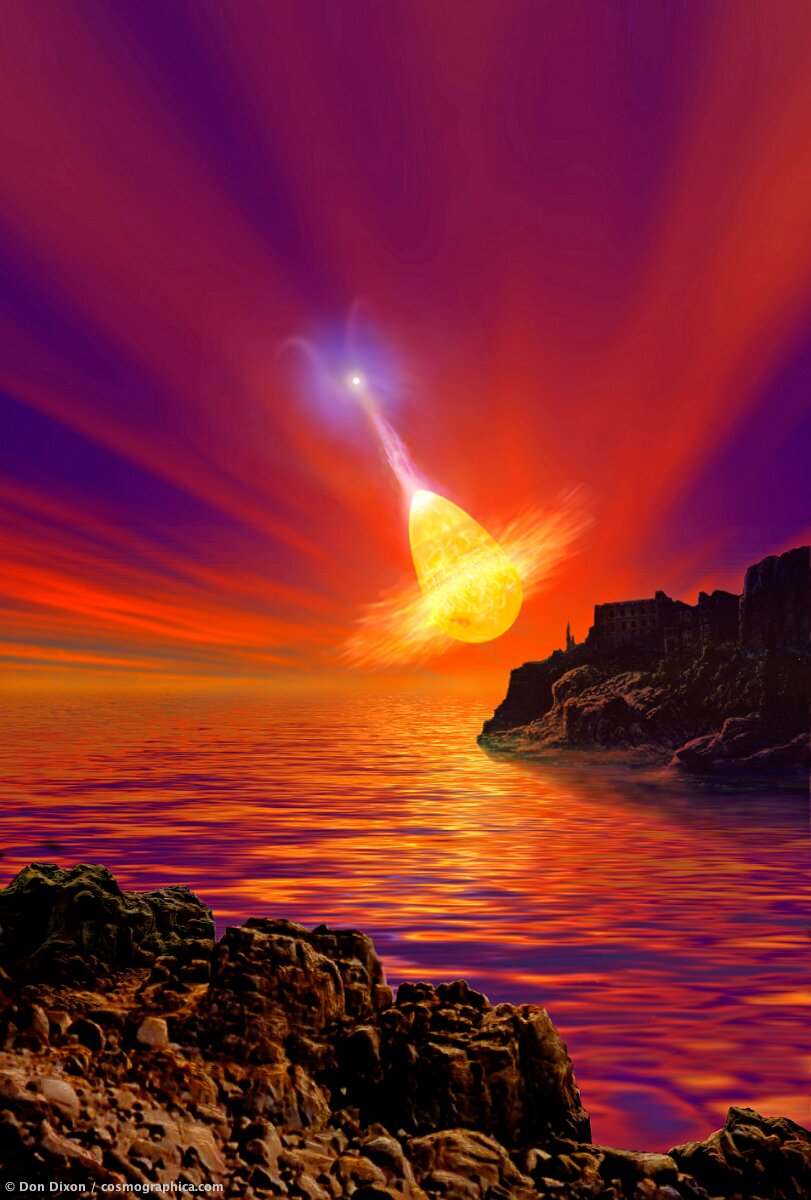
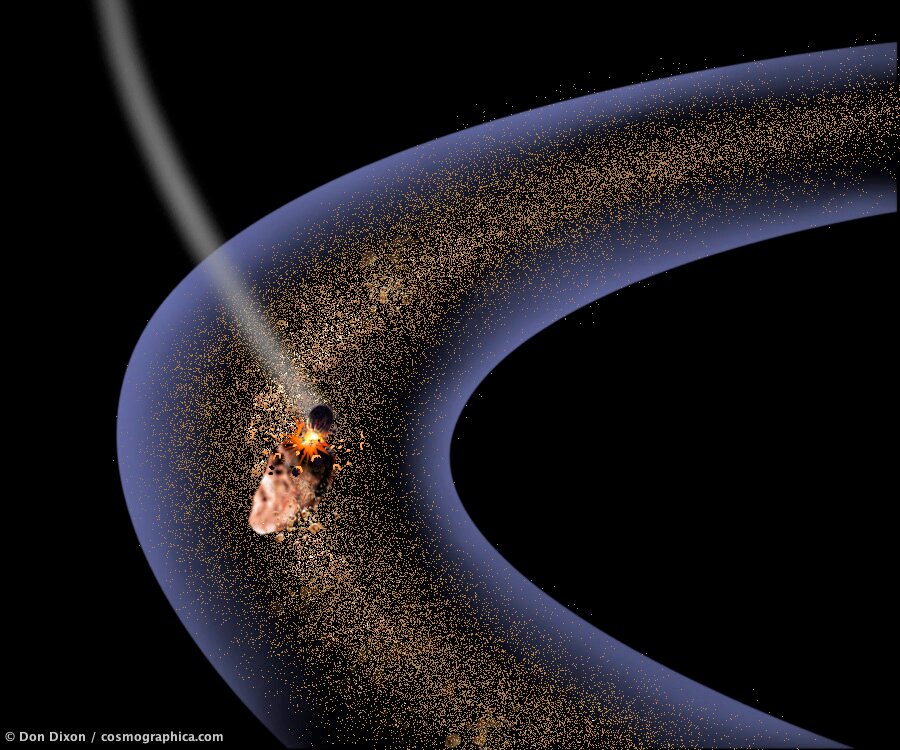
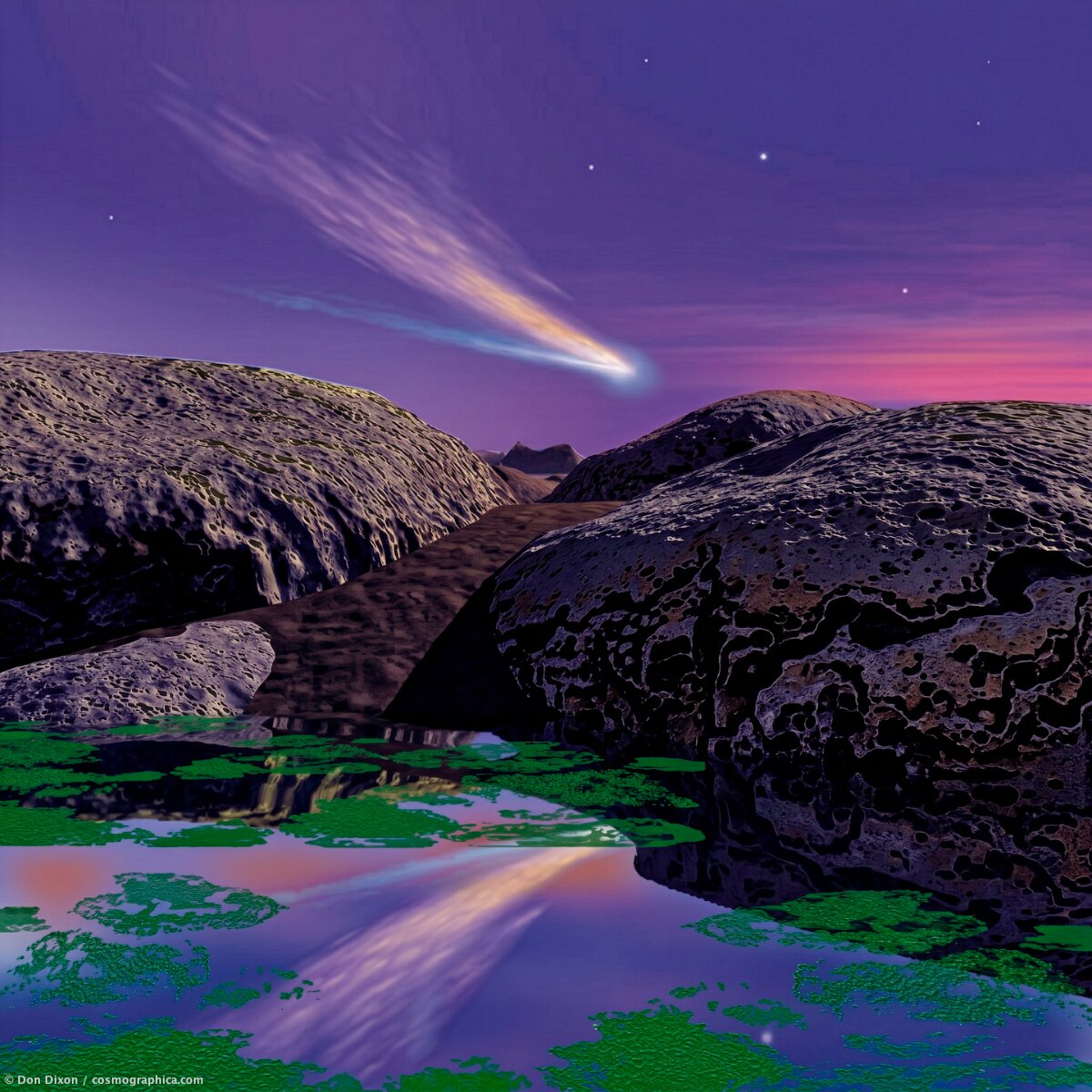
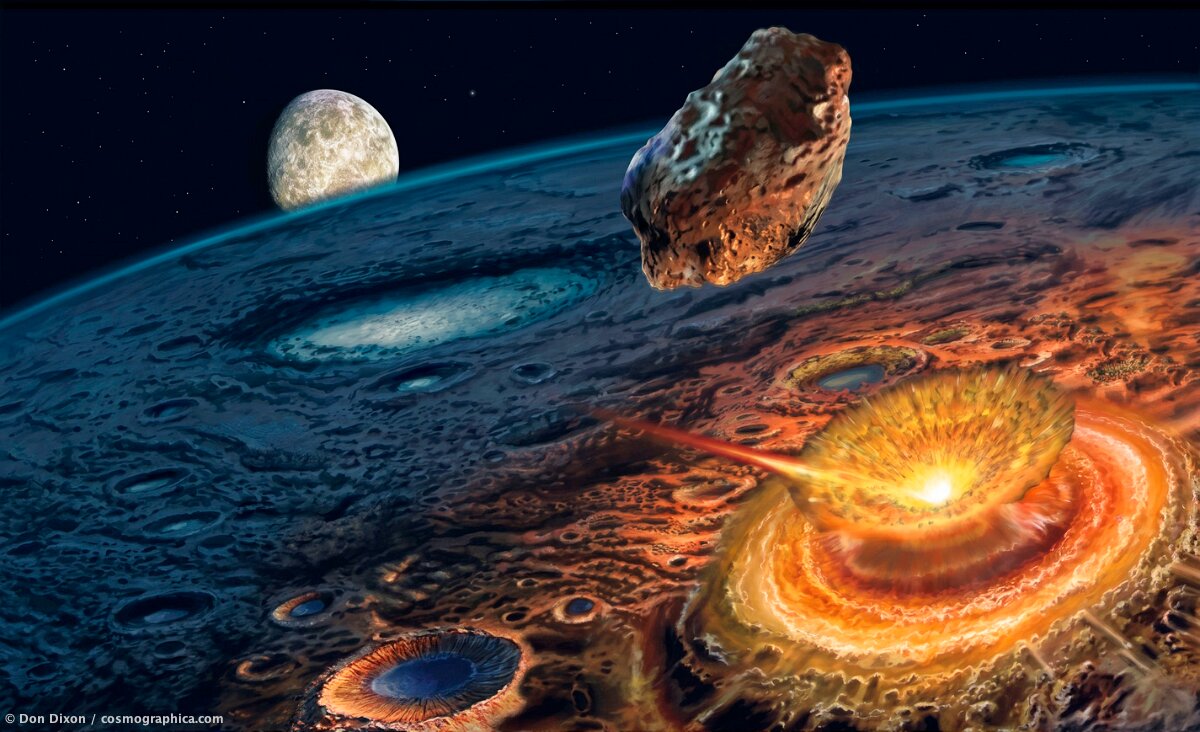
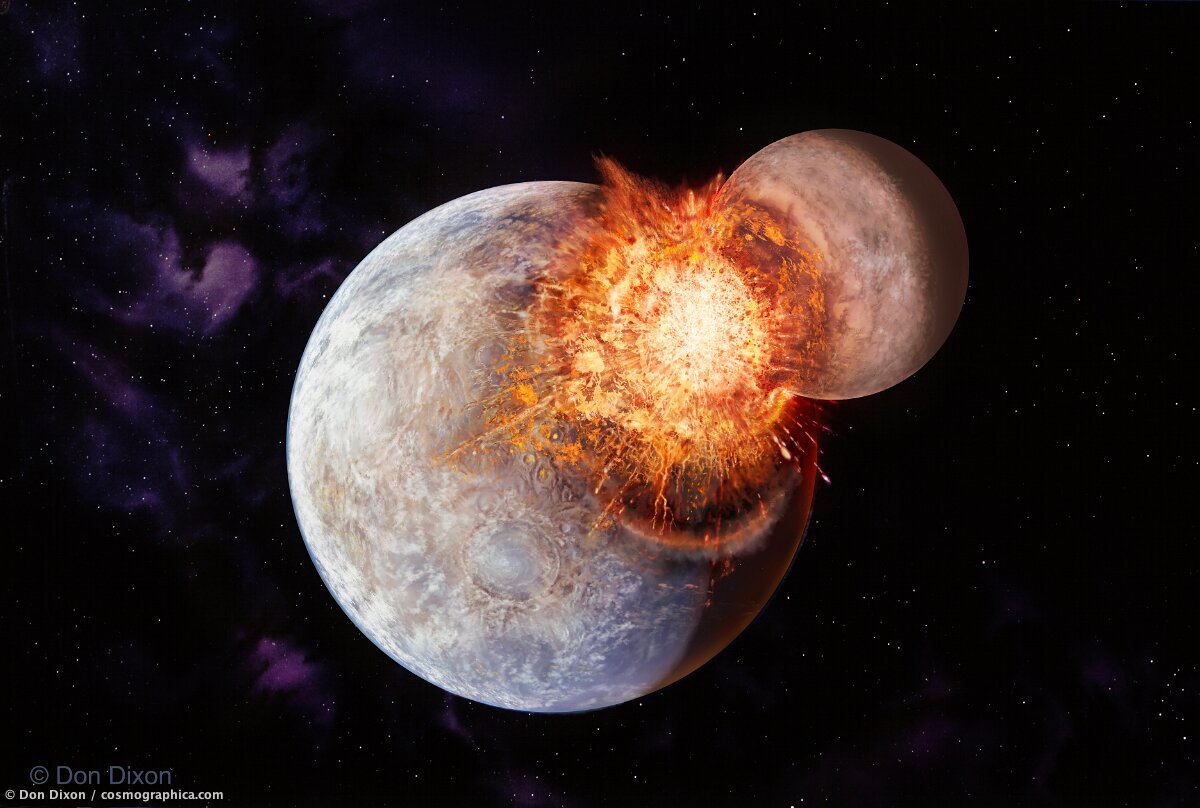
378-ancient-impact-dixon – This dramatic space art illustration depicts the Late Heavy Bombardment era on a young, evolving early Earth. A massive, heavily cratered asteroid tumbles in the foreground, while below it, a catastrophic cosmic impact tears into the planet's scarred crust, unleashing a brilliant explosion of molten rock, blinding light, and expanding shockwaves. A large, heavily cratered Moon hangs over the curved, atmospheric blue horizon in the deep blackness of space. - painting by Don Dixon for Geo Magazine
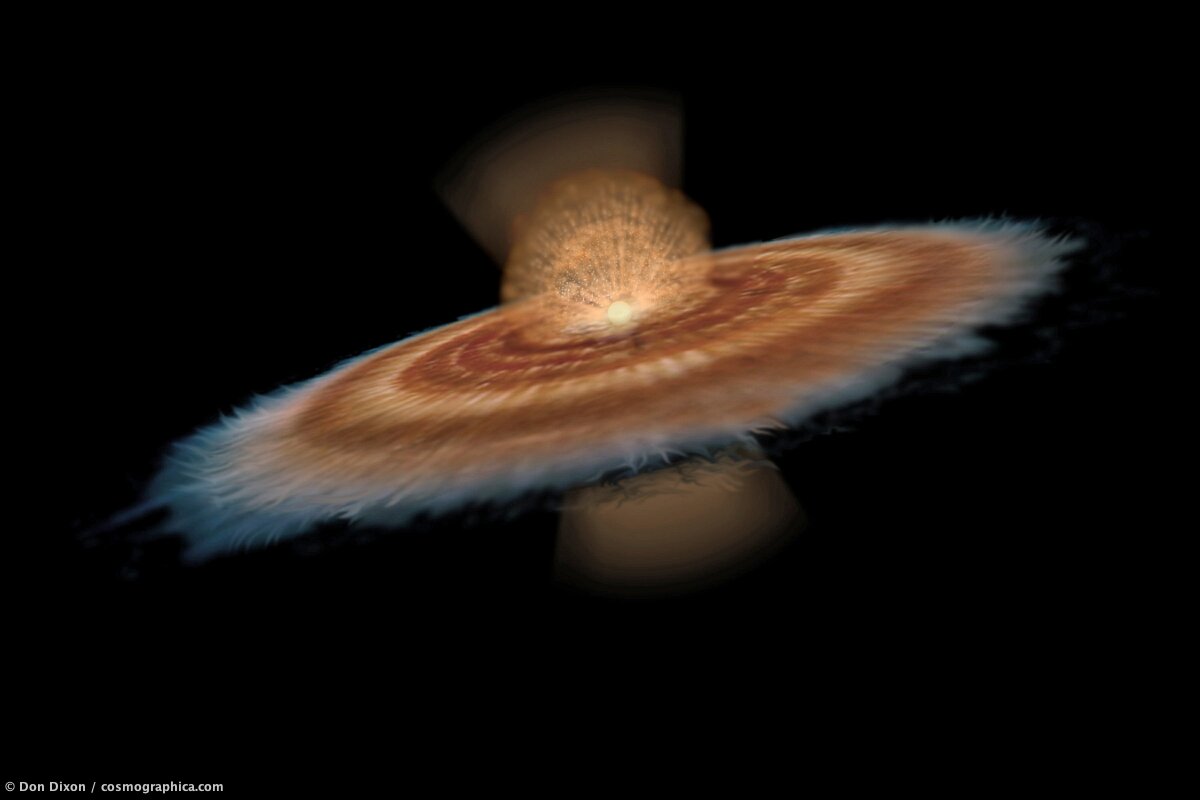
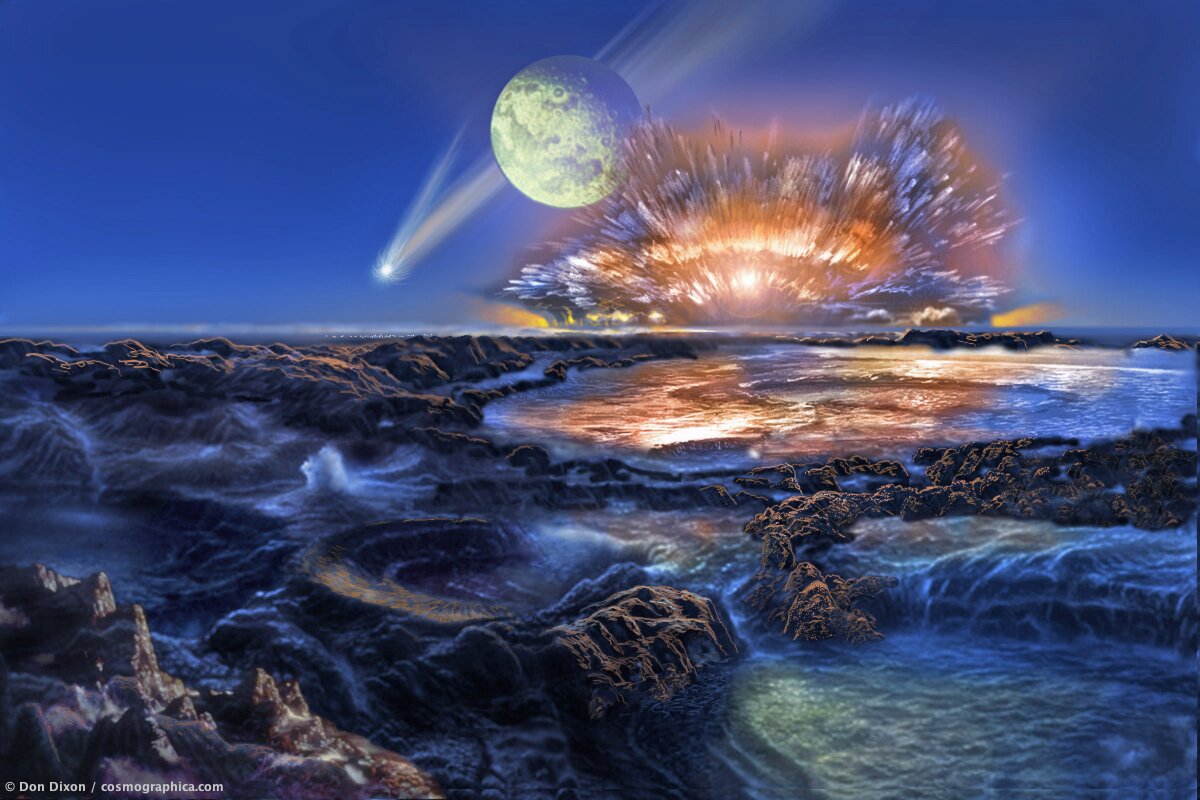
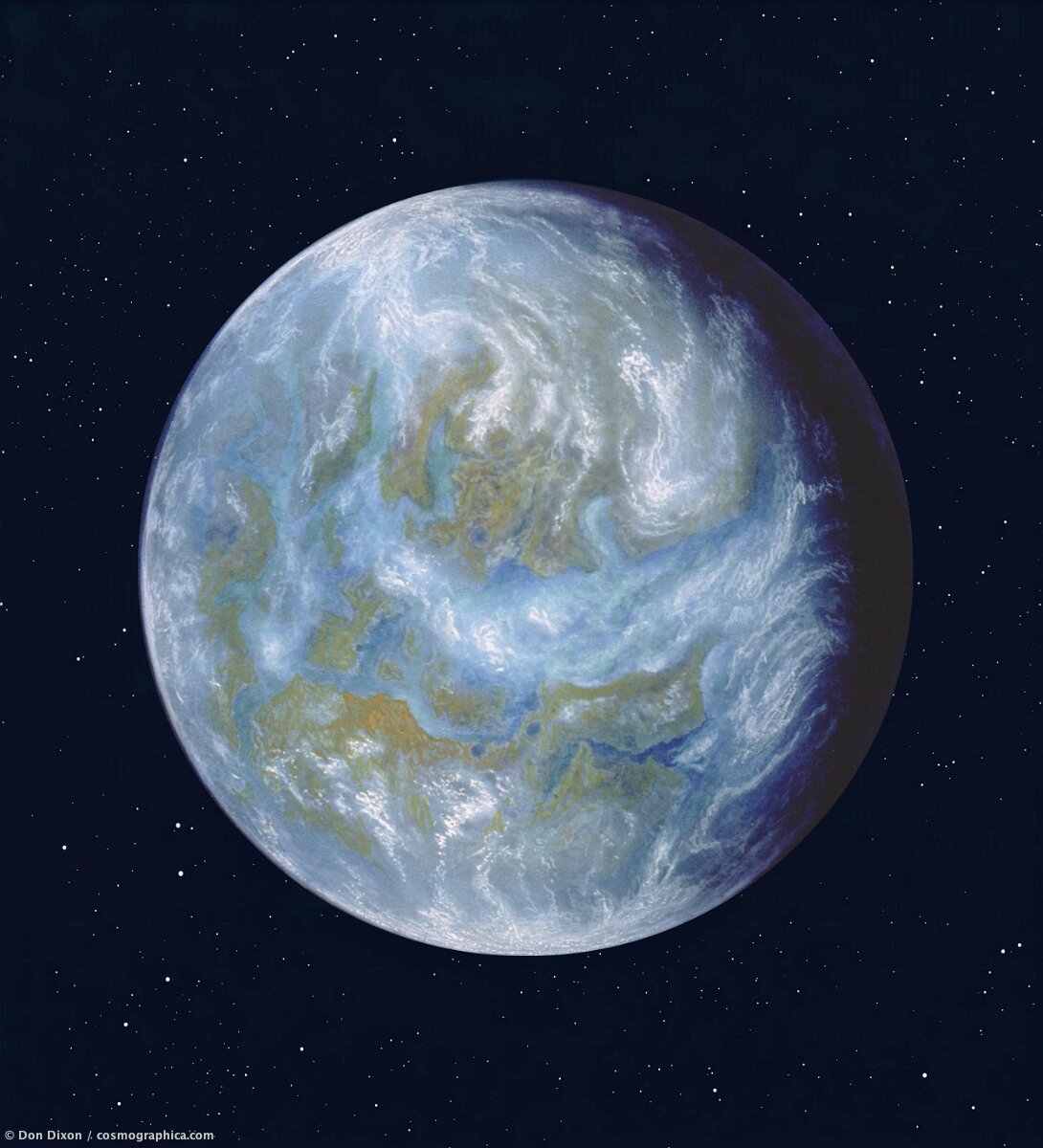
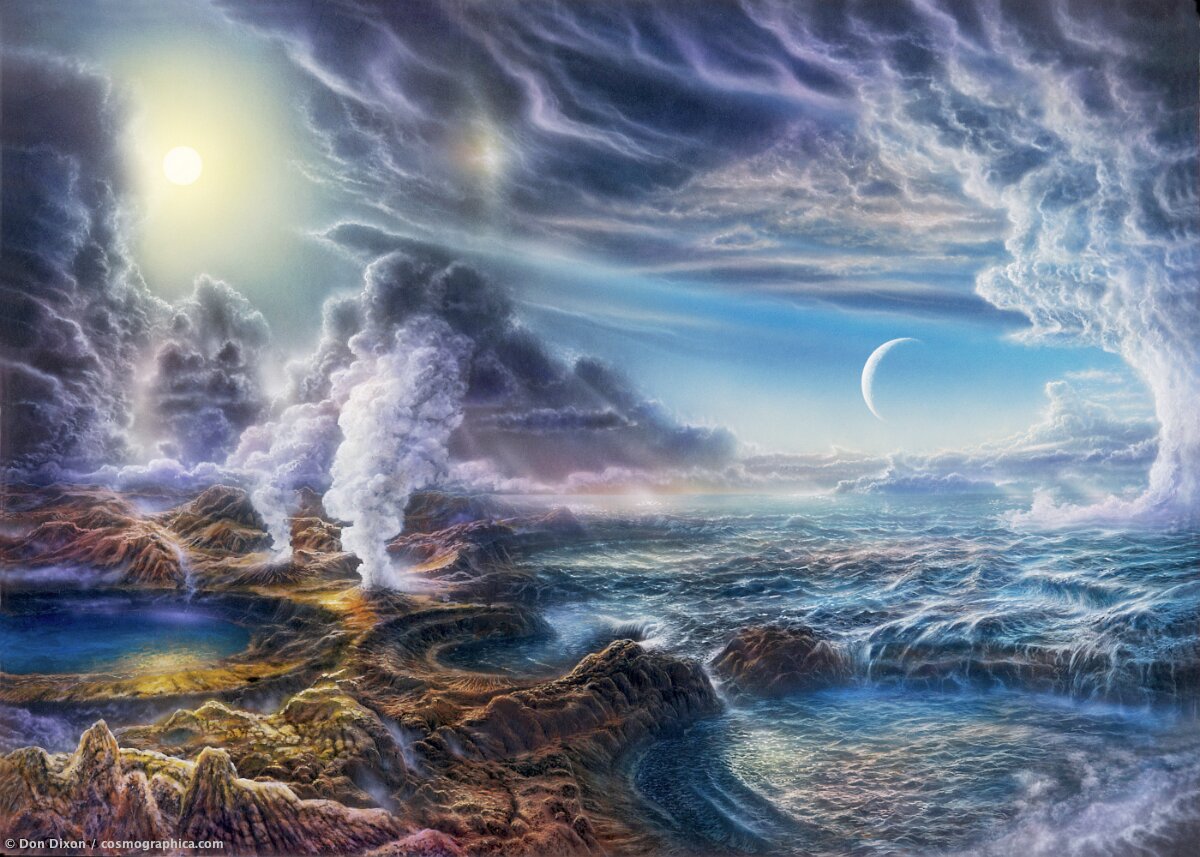
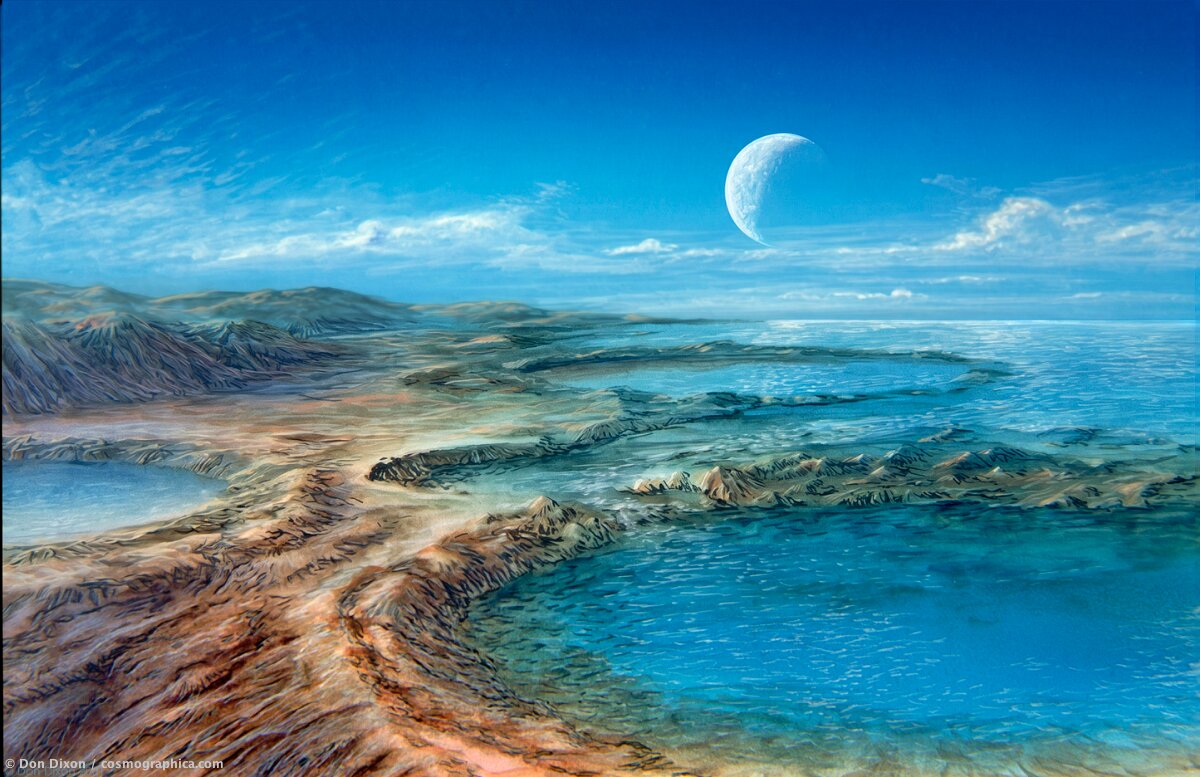
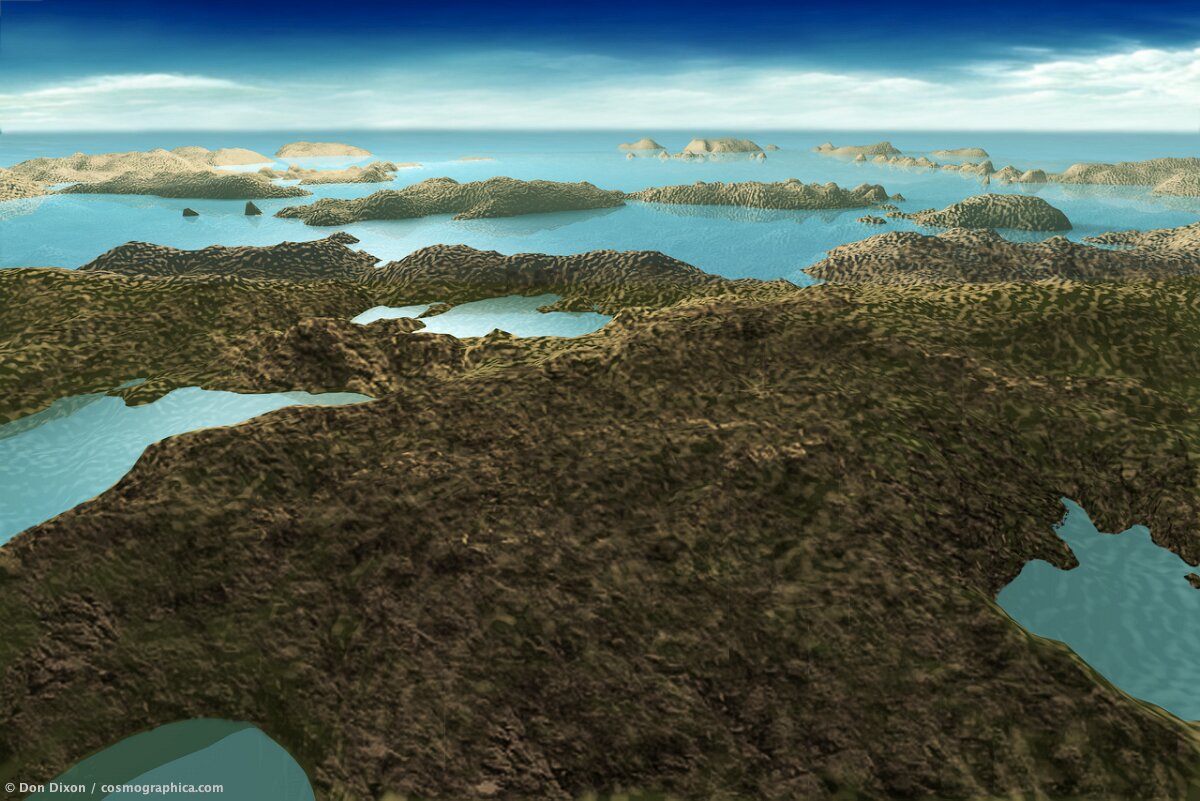
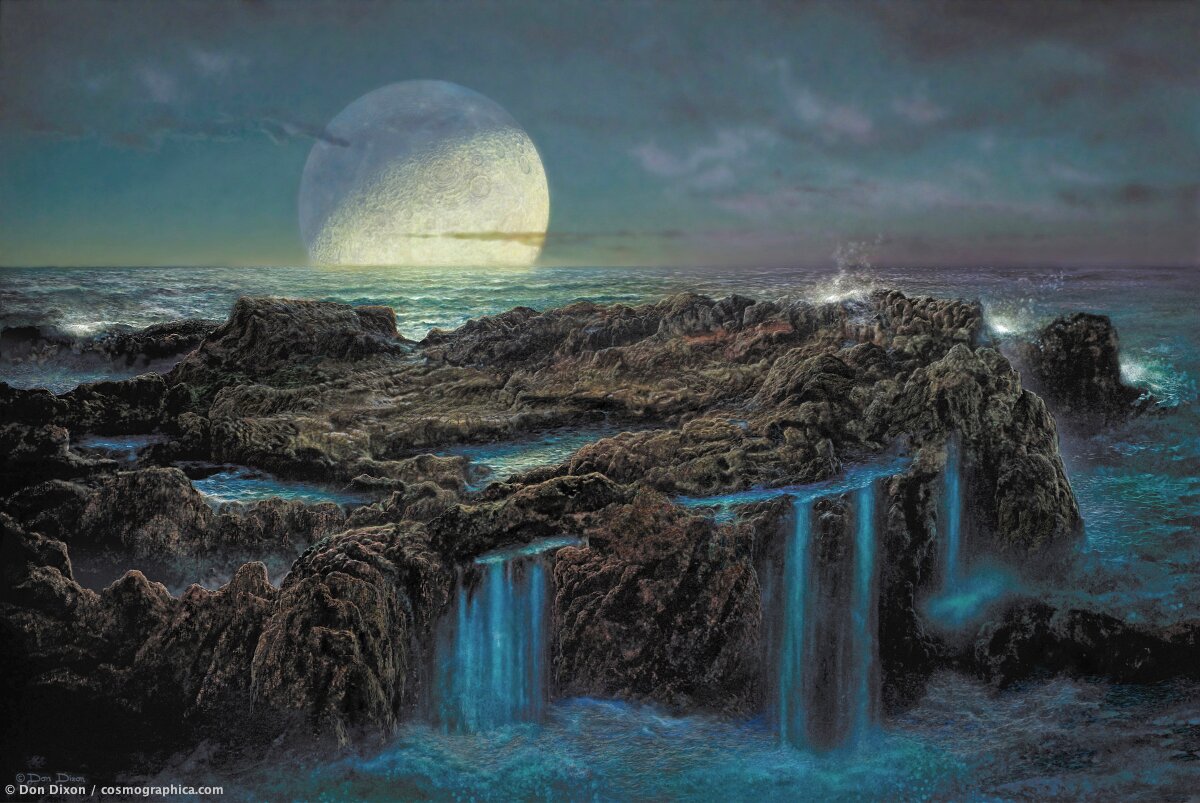
274-first-seas-dixon – This serene astronomical landscape depicts a stabilizing early Earth as its global temperature drops enough to allow liquid water to pool permanently. Wide, clear blue seas flood ancient volcanic impact basins along a barren, undulating brown shoreline under a calm, lightly clouded blue sky. A large crescent Moon hangs low over the ocean horizon, illustrating the proximity of the lunar orbit during this early planetary epoch. acrylic, gouache, and colored pencil
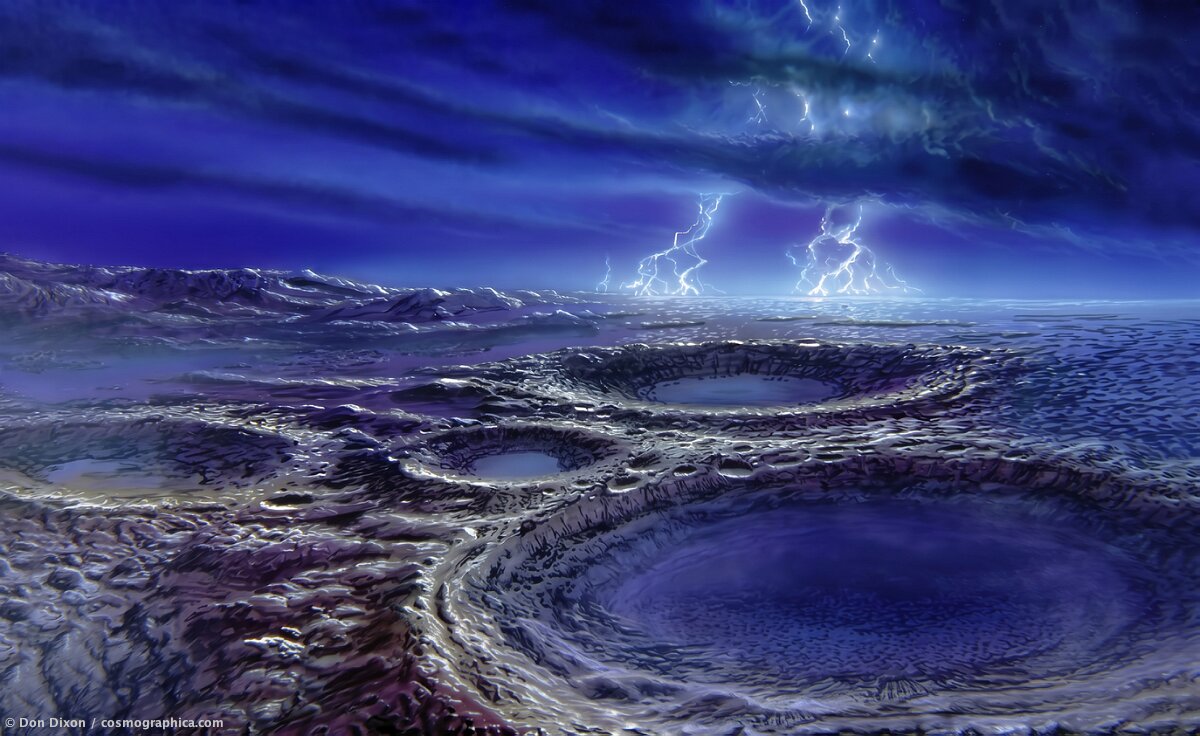
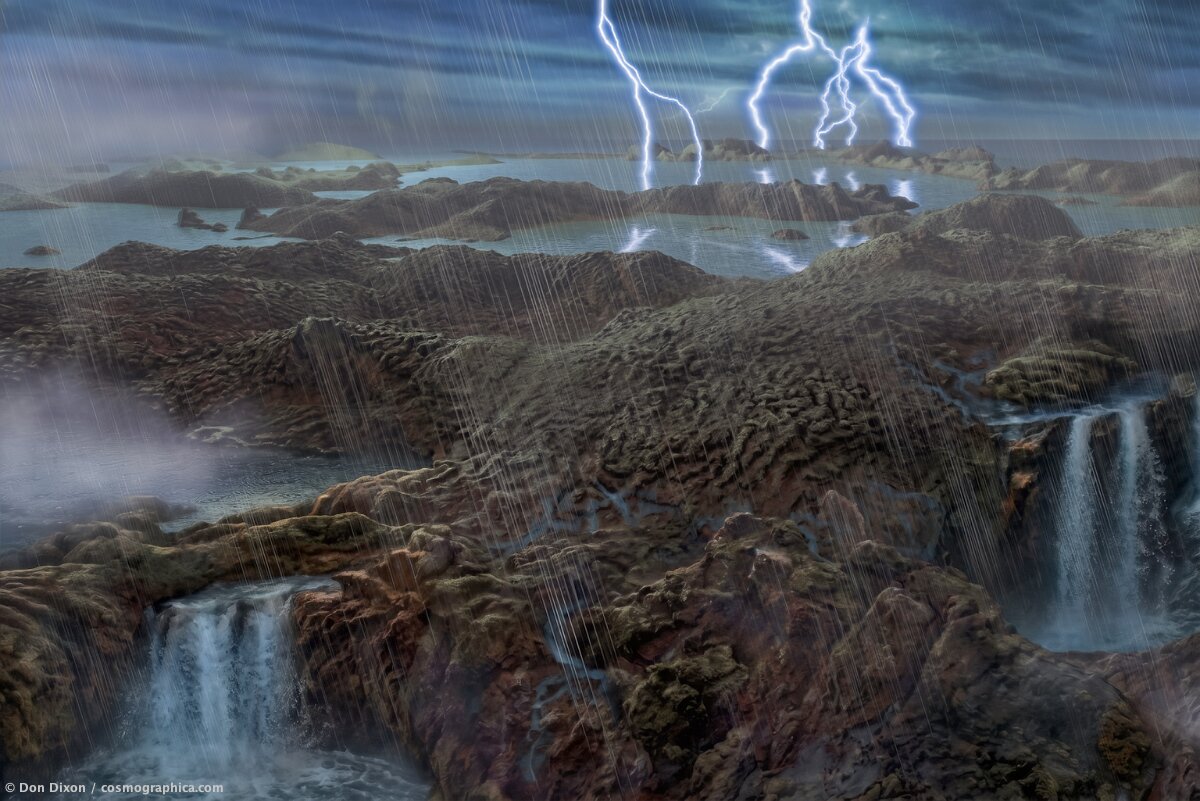
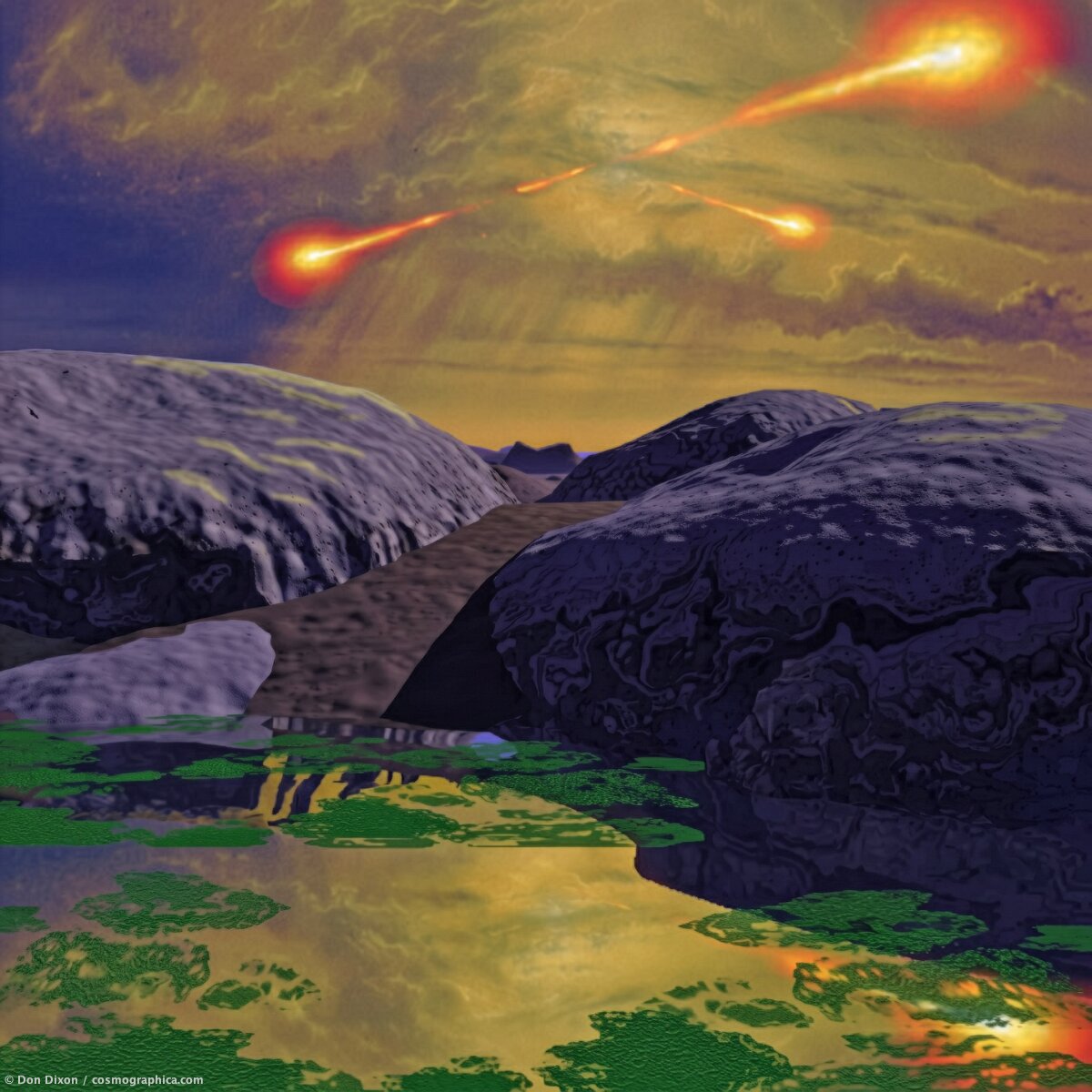
273-first-rain-dixon – This striking astronomical landscape depicts a pivotal atmospheric transition on the early Earth, capturing the planet's first major precipitation events. Intense lightning strikes pierce a dark, heavy storm cloud layer, illuminating a barren, rugged terrain dominated by prominent impact craters. Torrents of primordial rain begin to accumulate in the deep basins, initiating the formation of the planet's first stable bodies of liquid water and early oceans. for Newsweek Japan, 1988, acrylic, gouache, and colored pencil
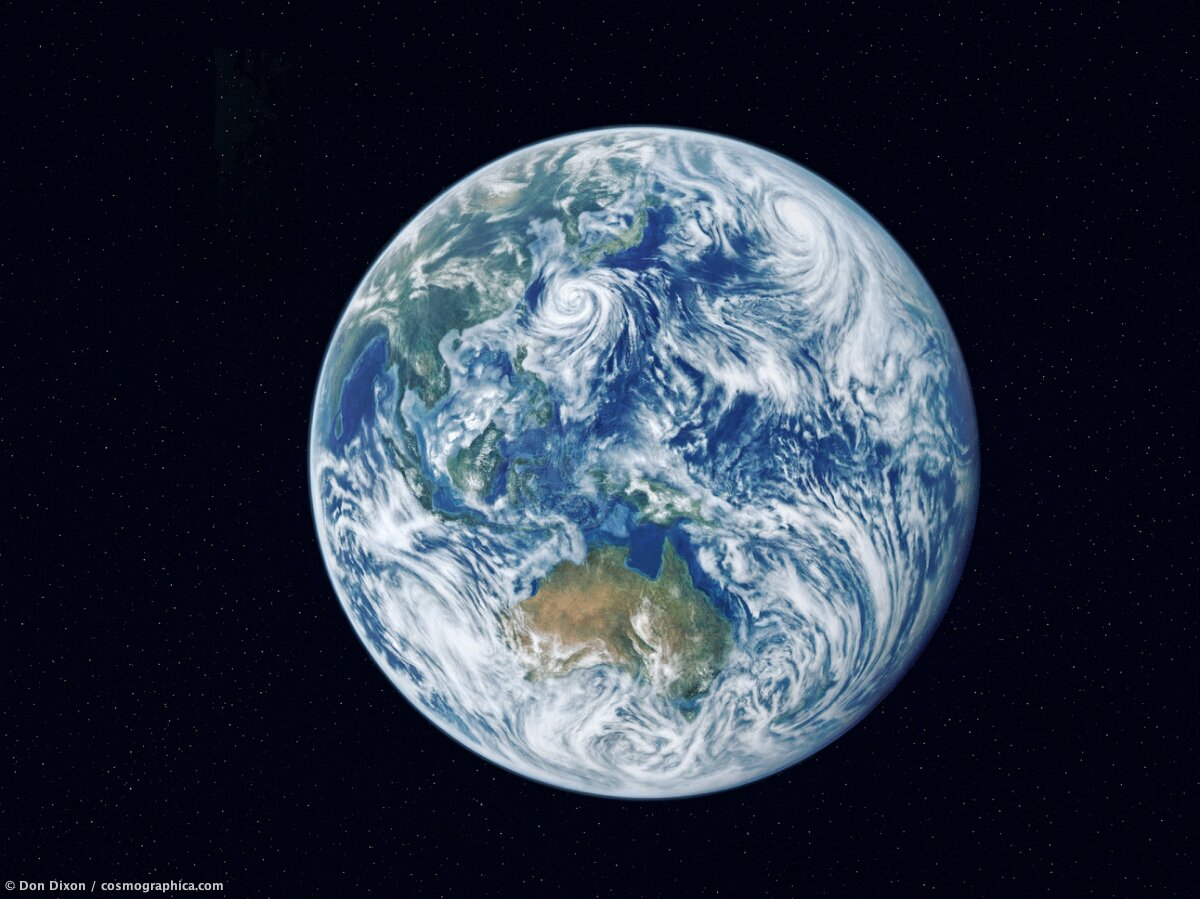
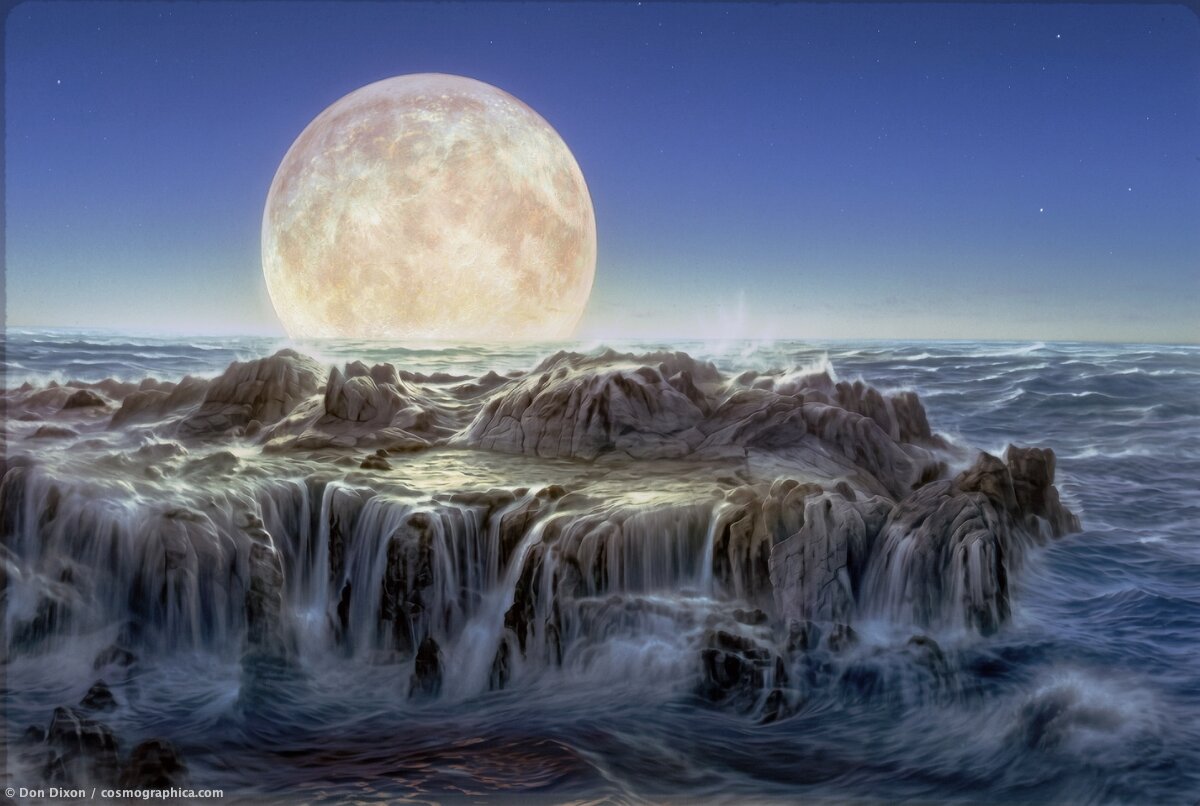
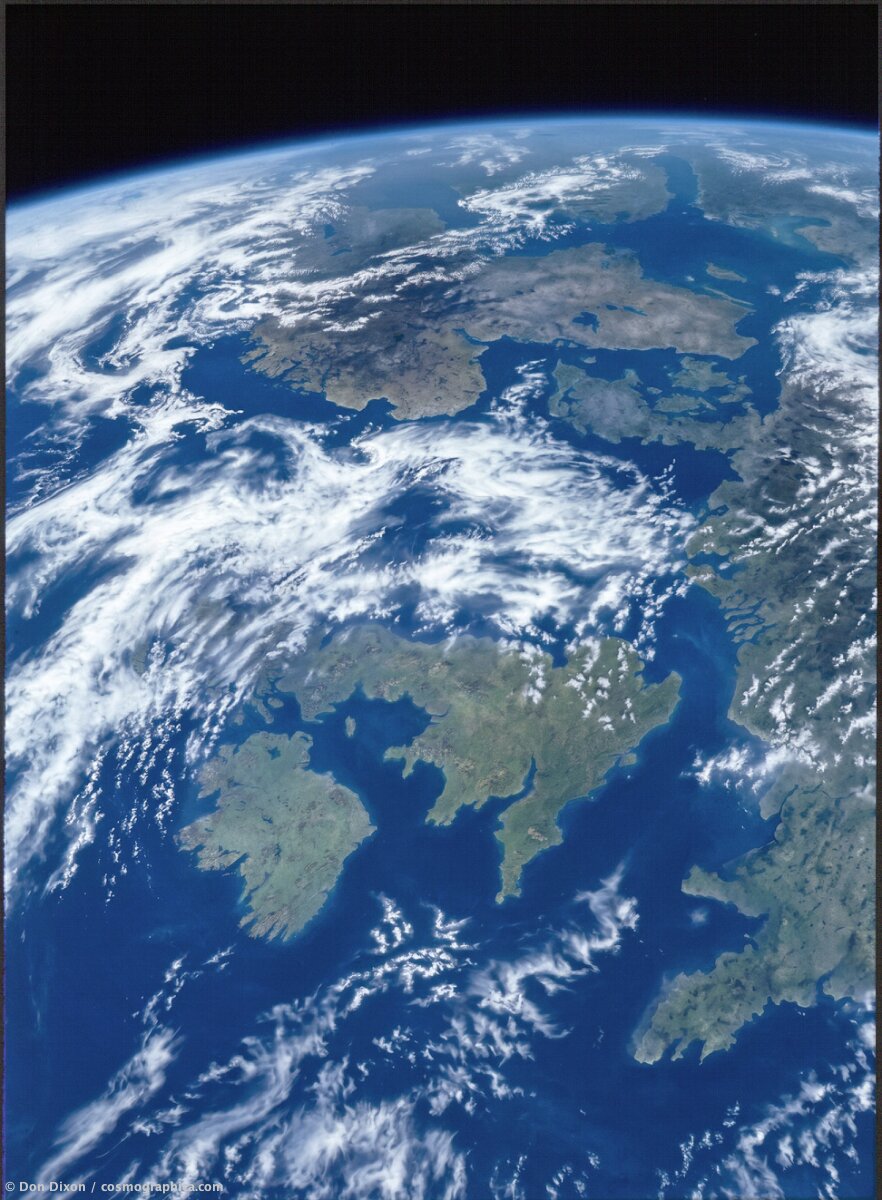
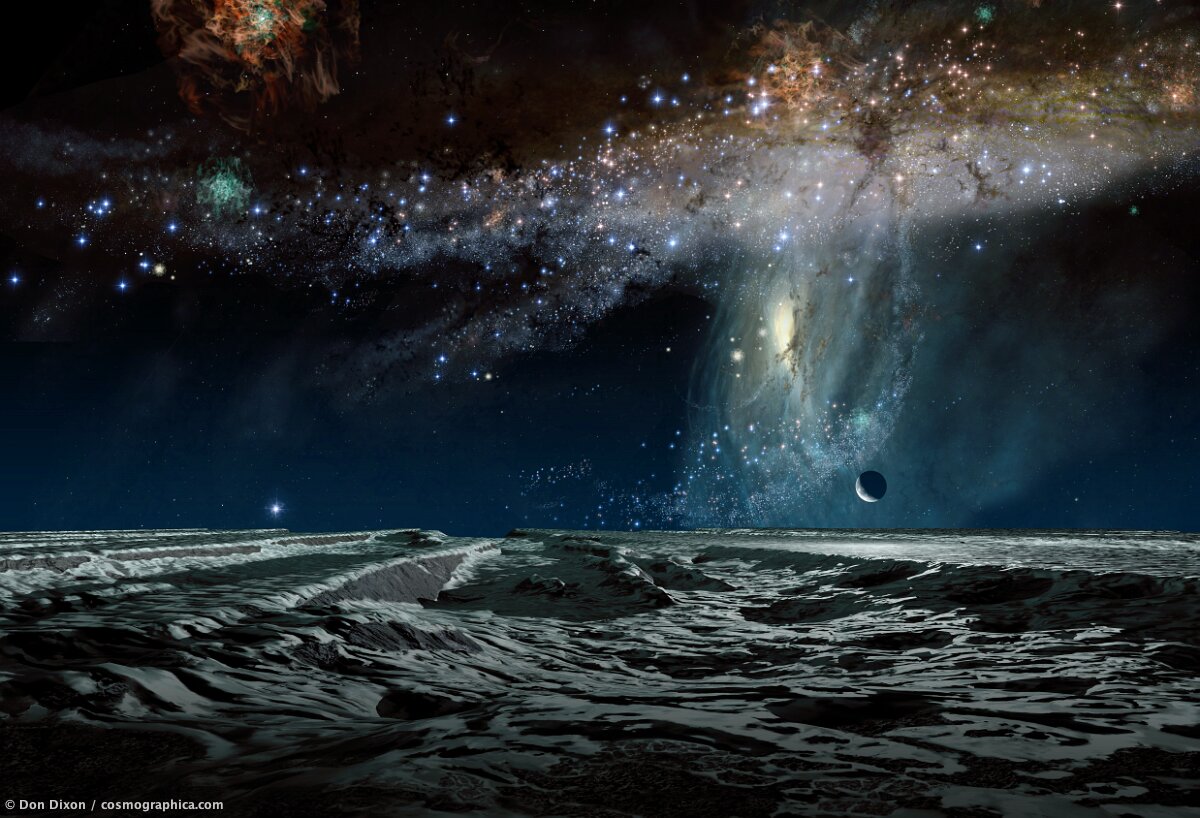
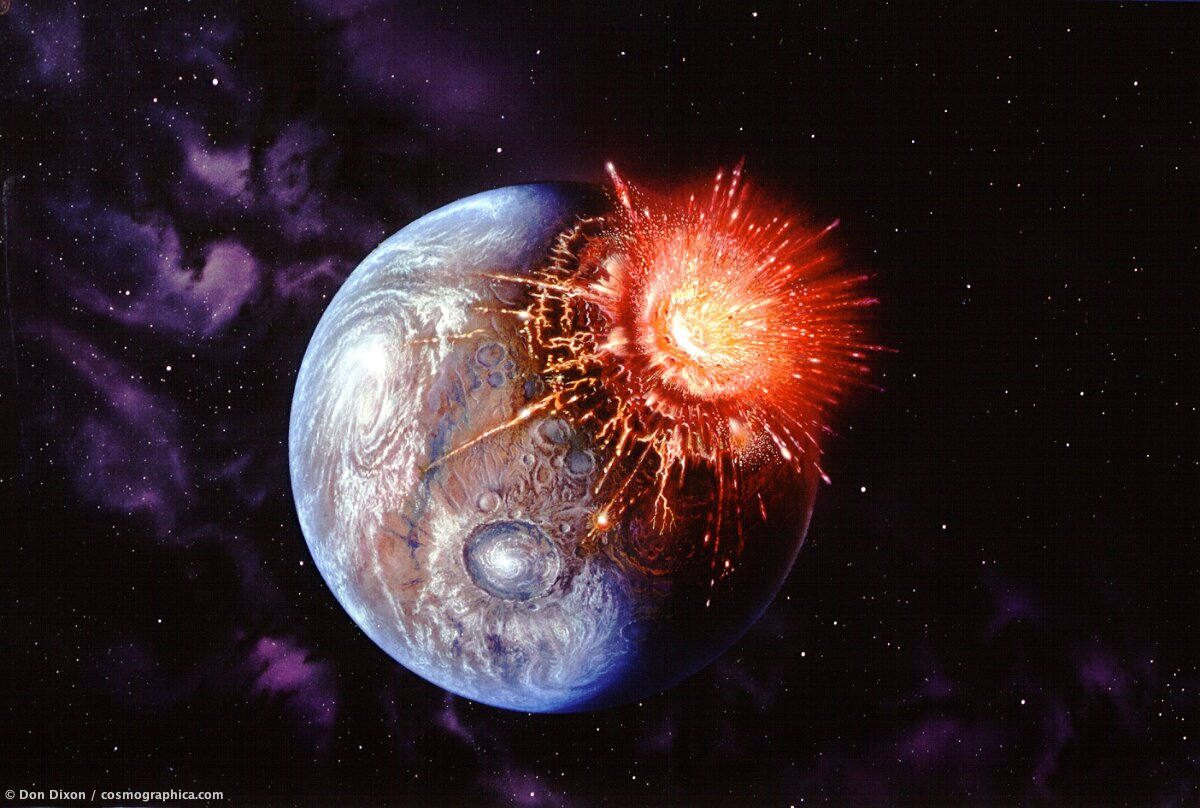
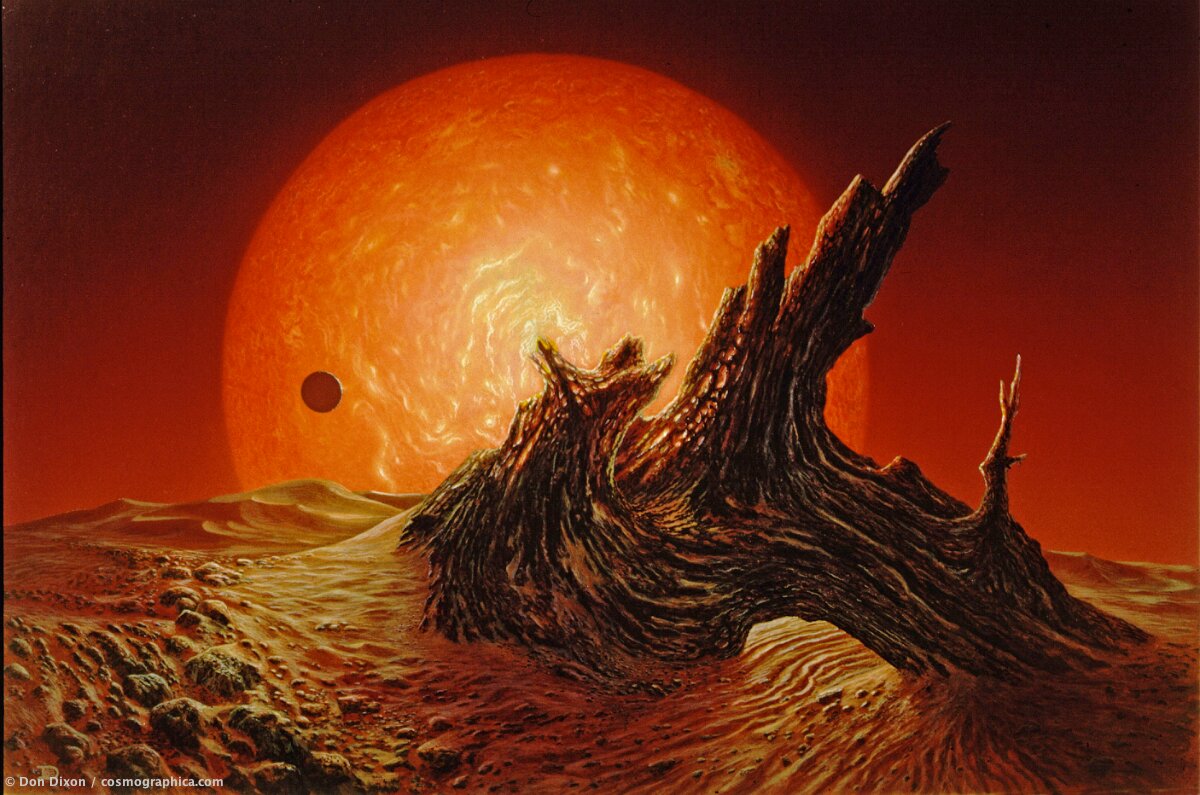
172-red-giant-sun-dixon – This astronomical illustration envisions the distant future of our solar system, depicting a dying Earth scorched by an expanded red giant sun. A massive, textured orange star dominates the hazy red sky, showing convective cell patterns on its surface while a small, dark planetary silhouette transits across its disk. In the foreground, a barren, heat-blasted landscape features rolling sand dunes, rocky terrain, and a jagged, petrified structure resembling a twisted rock formation or ancient remnants under the intense solar radiation. acrylic and gouache, 1989
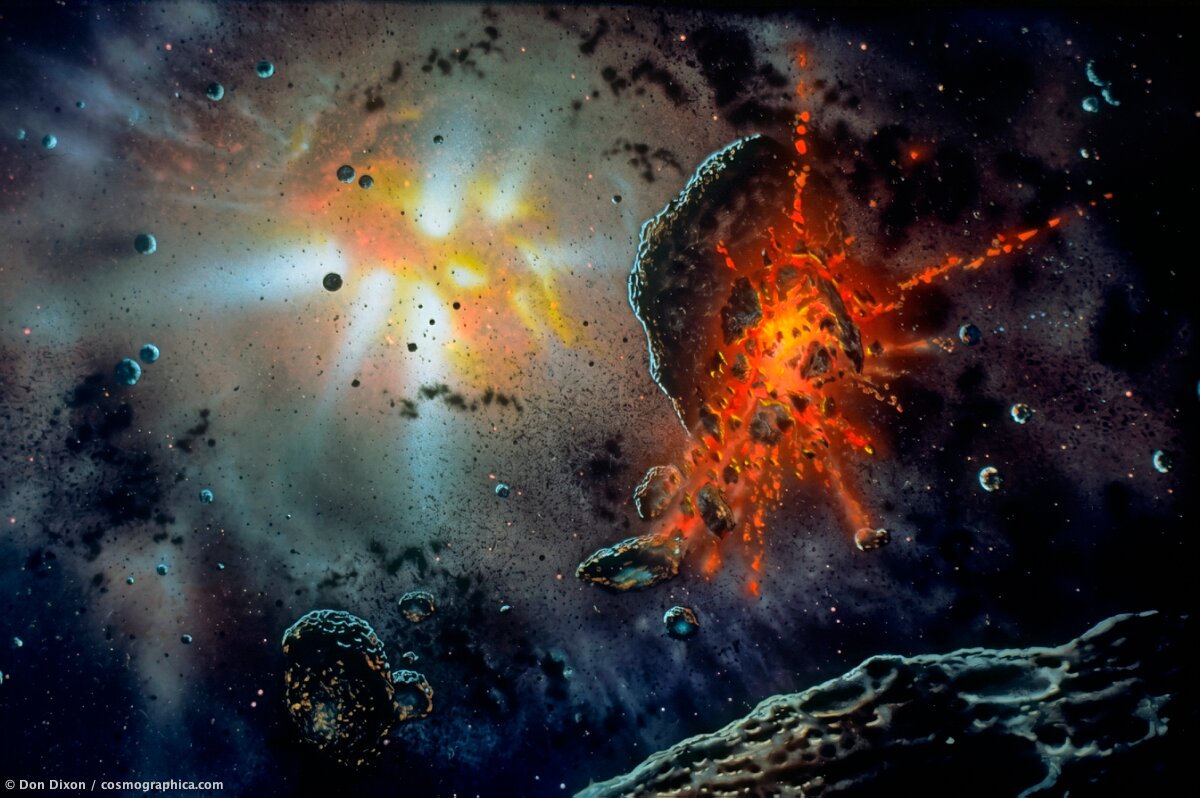
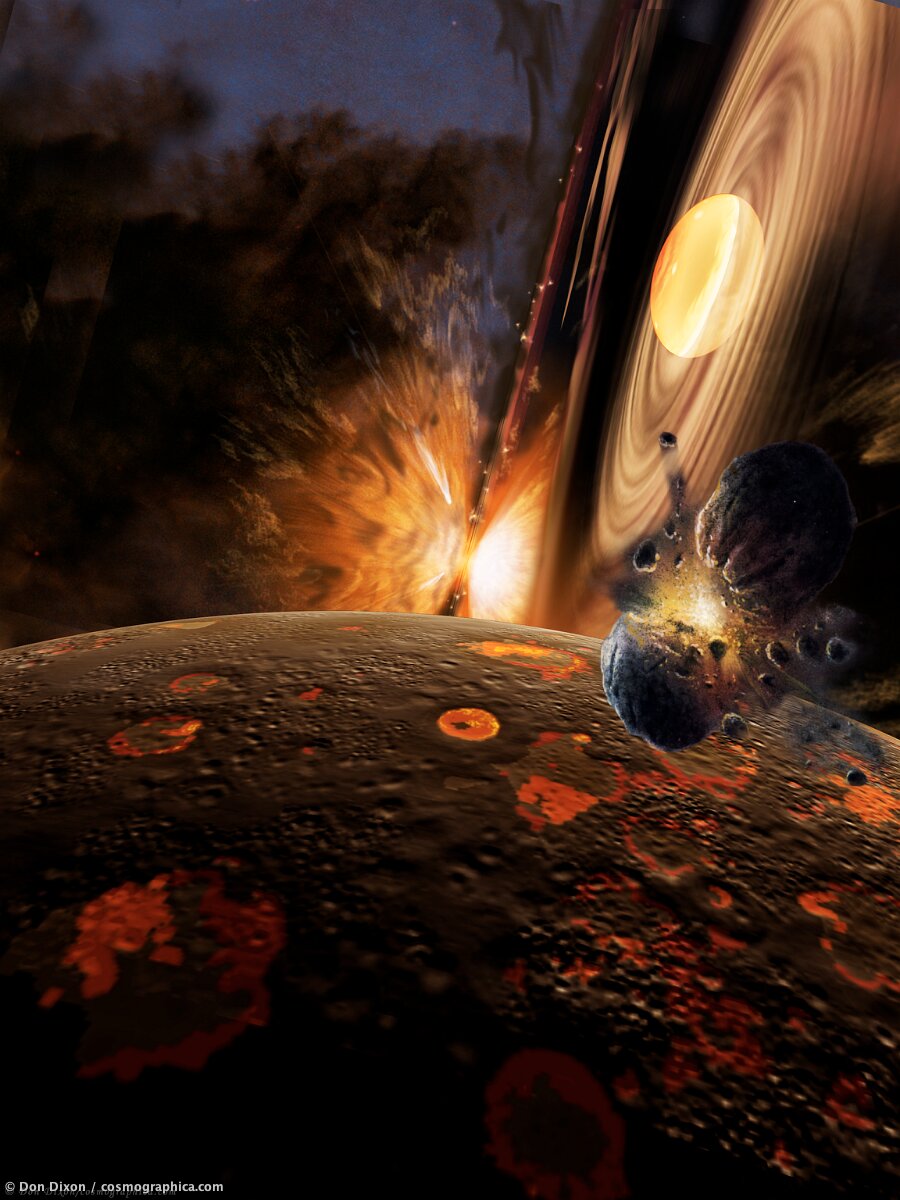
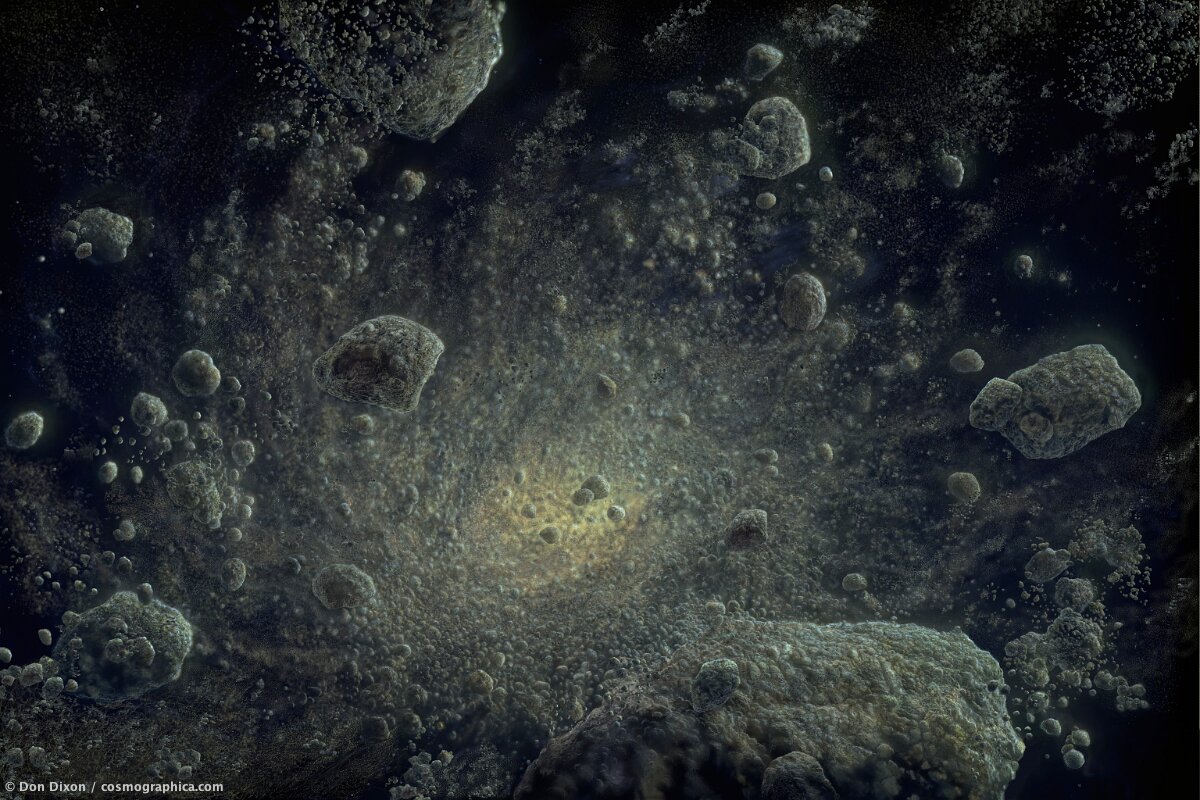
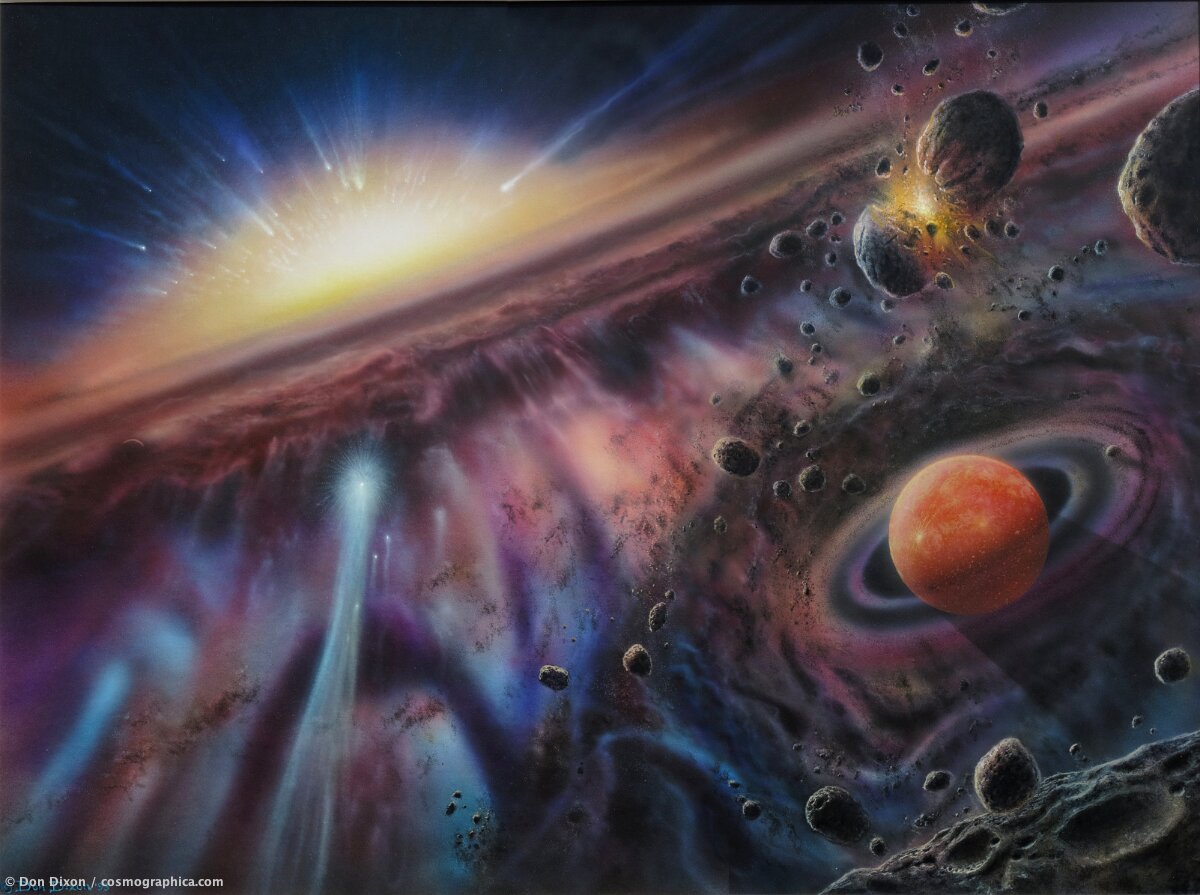
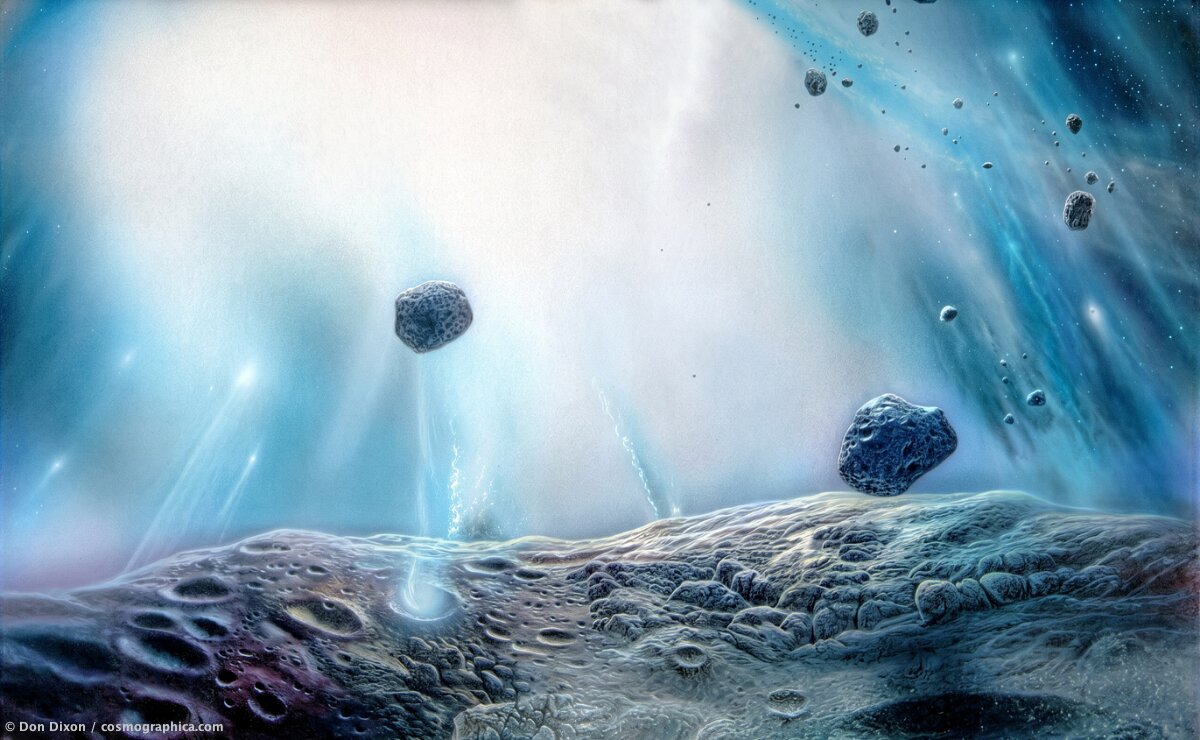
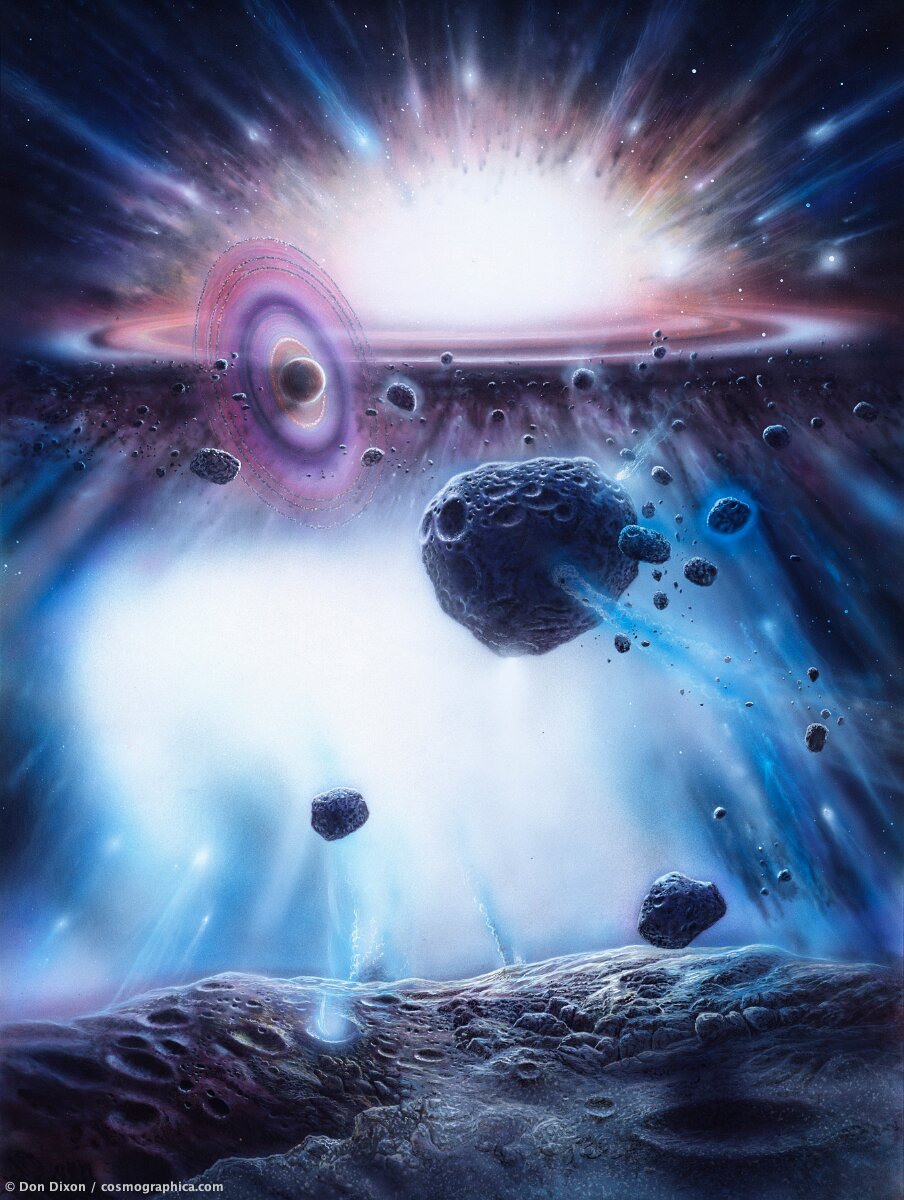
126-planetesimals-dixon - This astronomical illustration visualizes the chaotic environment of the early solar system during the accretion phase of planetary formation. In the center-right foreground, a large planetesimal undergoes a violent fragmentation event, its rocky crust splitting apart to reveal a glowing, molten interior under energetic impact. The surrounding space is filled with dense debris disks, smaller rocky bodies, and cosmic dust clouds, all illuminated by the bright, hazy glare of the young, active proto-Sun visible in the background. ; acrylic and gouache 1985